A home can have a clean interior, a recently painted exterior, and a roof that looks perfectly acceptable from the street – yet still have a water-management problem that deserves close attention. Foundation drainage controls where rainwater goes after it reaches the roof and ground. In the Greater Houston area, where heavy rain, flat lots, and expansive clay soils are common, that detail can affect both a home’s long-term performance and the repair costs a buyer may face.
For a homebuyer, the question is not whether every drop of water can be eliminated. It cannot. The question is whether water is being directed away from the foundation in a controlled, sensible way. A thorough home inspection can help identify visible conditions that may allow water to collect near the structure, so you can make a better-informed decision before closing.
Why Foundation Drainage Matters
Most homes in this area are built on slab foundations. Soil around the home naturally expands when it becomes saturated and contracts as it dries. Some movement is normal, but repeated or uneven moisture changes around a slab can place stress on the structure over time.
Poor drainage does not automatically mean a home has foundation damage. That distinction matters. A home may have negative grading, short downspouts, or standing water near the exterior without visible structural distress at the time of inspection. Still, those conditions should not be ignored. They can contribute to avoidable moisture exposure and may increase the likelihood of future movement, erosion, or water intrusion.
Drainage concerns can also affect more than the foundation. Water that remains against the house may deteriorate siding and trim, create conditions favorable to wood-destroying insects, wash out soil, or enter a garage or interior space during a severe storm. A small drainage correction made early is often far less disruptive than repairing the consequences later.
How Water Should Move Around a Home
Effective drainage starts at the roofline and continues across the property. Gutters collect roof runoff, downspouts carry it to the ground, and the landscape should move water away from the house without directing it toward a neighboring property or creating a hazard.
The ground immediately beside the foundation should generally slope away from the structure. On a relatively flat lot, even a modest slope can make a meaningful difference. The goal is to prevent water from ponding against exterior walls or repeatedly soaking the soil at the slab perimeter.
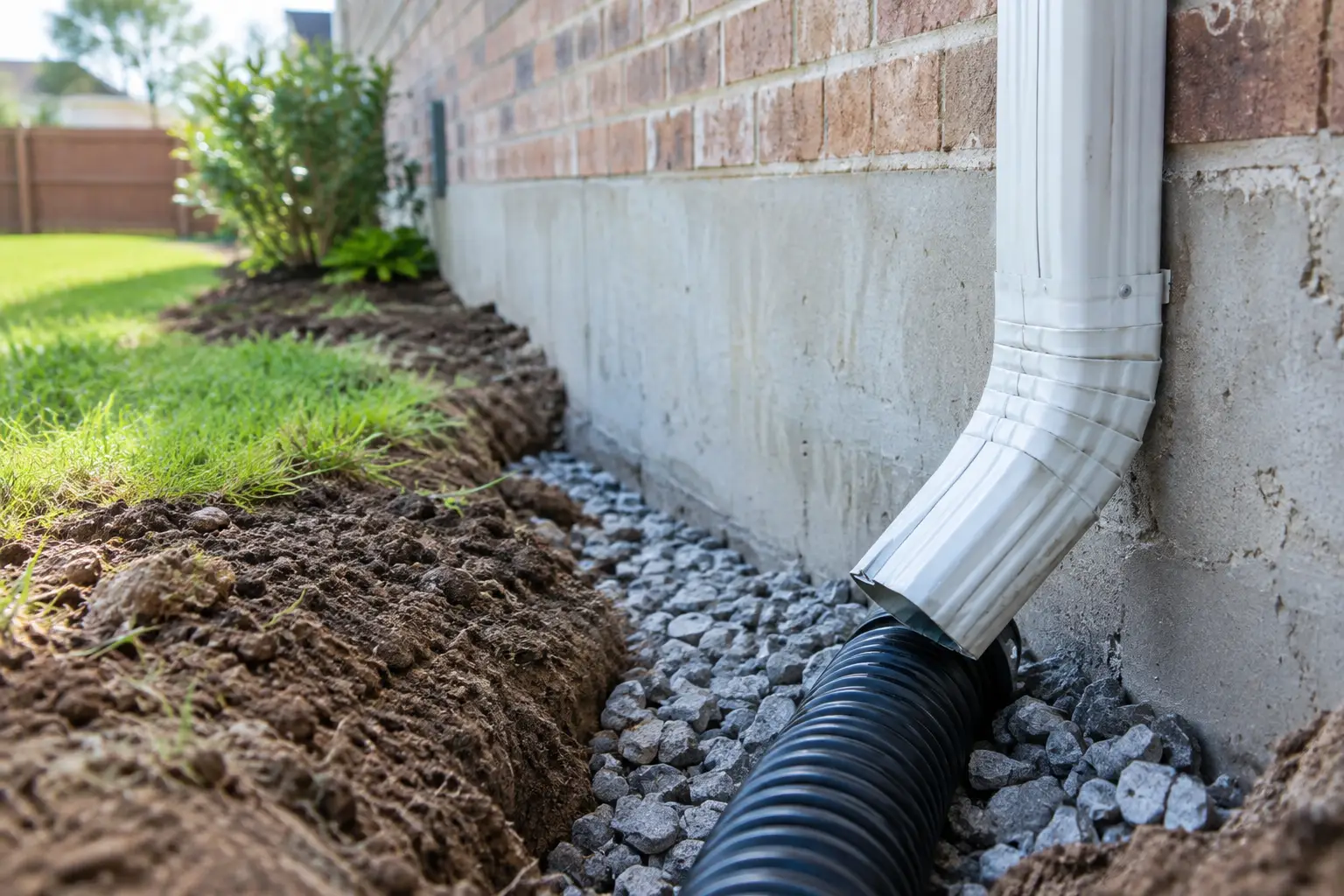
Where lot conditions do not allow surface water to drain naturally, a properly designed drainage system may be needed. That can include swales, area drains, buried downspout extensions, or other site-specific solutions. There is no one drainage fix that works for every property. The best approach depends on the home’s elevation, roof runoff, soil, landscaping, hardscapes, and local drainage patterns.
Roof Runoff Deserves Attention
A large roof can shed a surprising amount of water during a Texas downpour. If a downspout empties directly next to the foundation, that concentrated flow may saturate one small area over and over again.
Downspout extensions are a common and relatively simple way to move water farther from the house. However, extensions must discharge where water can continue to flow away. Extending a downspout into a low spot, onto a walkway, or toward a neighboring lot can simply move the problem somewhere else.
Buyers should also look for missing, disconnected, damaged, or poorly positioned gutters and downspouts. Not every home needs gutters on every roof edge, but roof valleys and high-flow areas deserve particular attention because they can concentrate runoff in a short period of time.
Grading Can Change Over Time
Grading is not always permanent. Landscaping projects, mulch buildup, soil settlement, new patios, and flower beds can gradually change how water moves around a home. A yard that originally drained well may develop low areas years later.
One common issue is soil or mulch built too high against exterior cladding or brick weep holes. Besides affecting drainage, this can reduce clearance between the ground and moisture-sensitive building materials. Landscaping should enhance the property, not trap water against it or conceal areas that need periodic observation.
Signs Buyers Can Notice During a Showing
A buyer should not diagnose a foundation based on a quick walk around the yard. Still, a few visible conditions are worth noting and discussing during the inspection period. Standing water near the home, especially if it is present days after rain, may indicate a low area or slow drainage. Bare or washed-out soil below roof edges can suggest concentrated runoff.
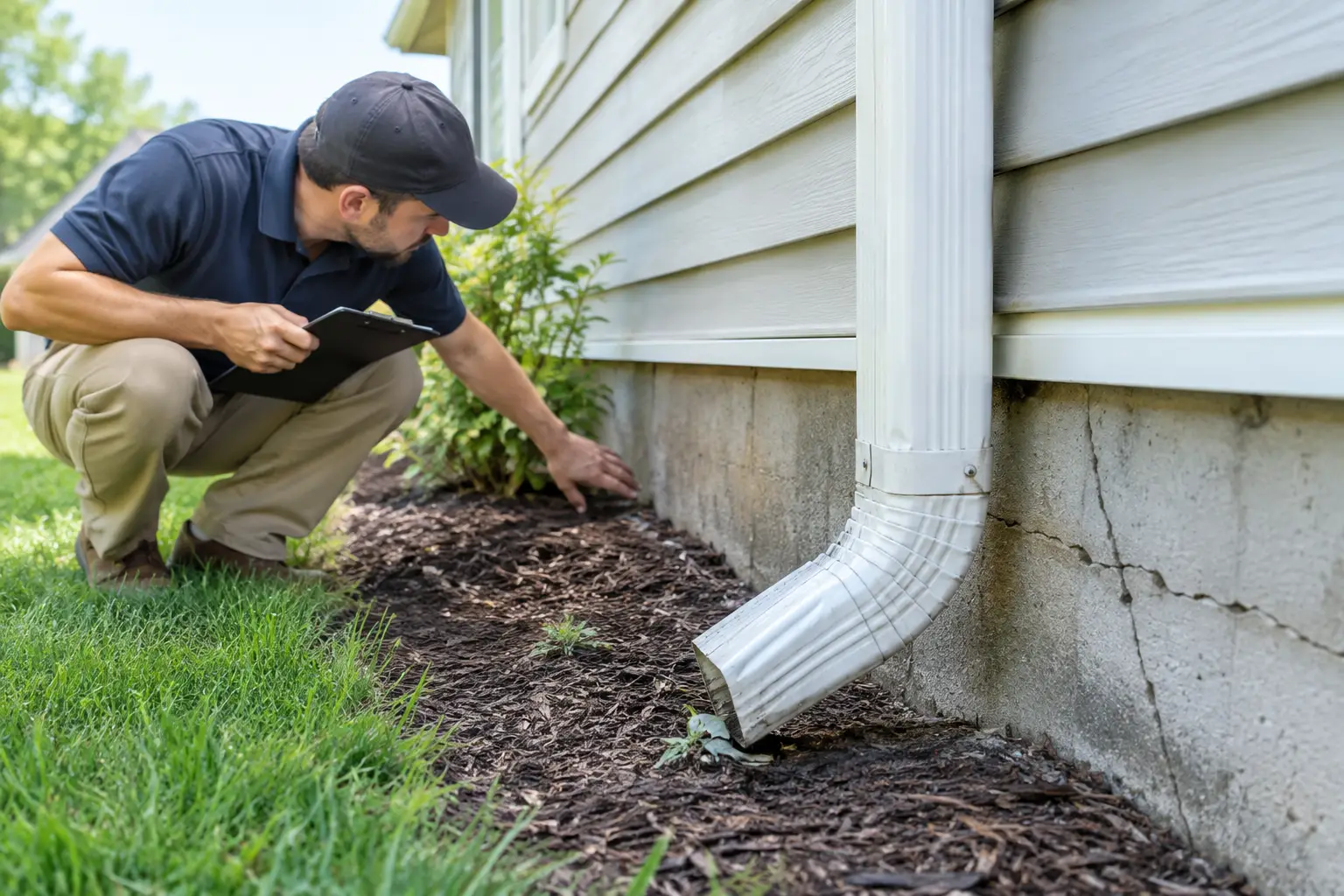
Look for downspouts that discharge at the base of the wall, splash blocks that are missing or tilted toward the home, and paved surfaces that appear to slope back toward the structure. In some cases, patios, driveways, and walkways settle or are installed in a way that channels water toward doors, garages, or the foundation edge.
Interior observations can add context, but they are not proof of a drainage-related structural problem. Doors that stick, cracks in finishes, or gaps at trim can result from many causes, including normal seasonal movement, age, installation quality, or prior repairs. A qualified inspector considers the overall pattern rather than relying on one isolated sign.
What a Home Inspection Can and Cannot Tell You
During a standard inspection, the inspector evaluates readily accessible, visible conditions at the time of the appointment. That may include the condition and placement of gutters and downspouts, apparent site grading, drainage pathways, ponding evidence, erosion, and visible foundation or exterior-wall conditions.
This evaluation is valuable because it puts related observations into practical context. For example, a short downspout alone may be a straightforward maintenance item. A short downspout, recurring ponding, soil erosion, and visible distress in nearby finishes may justify further evaluation by an appropriate specialist.
An inspection is not a guarantee of future drainage performance. Rainfall intensity, irrigation habits, seasonal soil conditions, underground drainage components, and landscaping changes can all affect how a property performs later. Inspections are also typically conducted under the weather conditions present that day, not during a major storm.
When concerns are significant or the evidence is unclear, buyers may need additional evaluation. Depending on the condition, that could involve a drainage contractor, licensed engineer, plumber, or foundation specialist. The right next step depends on what was observed. Getting the correct professional involved is more useful than making assumptions from a single crack or wet spot.
Drainage Issues Are Not Always Deal Breakers
Many drainage deficiencies are correctable, and buyers should not automatically walk away because a report identifies a grading or gutter concern. The real issue is the scope, likely cost, and whether the condition appears to be contributing to broader problems.
A missing downspout extension or minor low spot in a yard may be an ordinary maintenance correction. Extensive standing water, drainage that flows toward the home from multiple directions, damaged exterior materials, or signs of significant movement deserve a more careful response. For a buyer, the best decision may involve requesting repairs, negotiating for the anticipated cost, seeking specialist input, or choosing a different property if the risks do not fit the budget.
The most practical approach is to prioritize. Address conditions that actively direct water toward the home or allow it to collect against the foundation first. Then create a plan for routine upkeep, including cleaning gutters, checking downspout discharge points, maintaining appropriate soil clearance, and watching for changes after heavy rain.
Ask the Right Questions Before Closing
If drainage concerns appear during the inspection, ask whether the condition is localized or widespread, whether there is visible evidence of active water impact, and what type of professional should evaluate it further. Ask the seller about prior flooding, past drainage work, foundation repairs, and any warranties or documentation that may apply. Written records can provide helpful context, although they should not replace an independent evaluation.
It is also wise to revisit the property after a substantial rain if timing allows. That simple visit may show how roof runoff, driveways, patios, and yard elevations work together in real conditions. Just remember that a dry-day appearance is only part of the picture.
CK Inspections helps buyers understand visible drainage concerns in plain language, with clear reporting that separates routine maintenance from conditions that may warrant further review. Don’t buy blind when a careful look at how water moves around the home can help you avoid costly surprises after closing.
A well-maintained home does not need a perfect yard. It needs a sensible path for water to leave the structure behind.