A small water stain below a bathroom vanity can be a simple supply-line drip. It can also be the visible edge of a longer problem behind a wall, under a floor, or beneath a slab. Knowing how to spot plumbing leaks before you buy gives you a better chance to ask the right questions, request appropriate repairs, and avoid taking on a preventable expense after closing.
For Houston-area buyers, this matters because plumbing problems do not always announce themselves with a flooded room. Many leaks are intermittent, concealed, or temporarily hidden by fresh paint, a cleaned cabinet, or a recently dried surface. A careful walk-through can reveal warning signs, but it cannot replace a professional home inspection and, when conditions warrant it, further evaluation by a qualified plumber.
Start With the Water Meter
The water meter can offer a useful clue about whether water is moving through the system when it should not be. If the home is occupied and you have permission during the inspection period, ask that all water-using fixtures and appliances be turned off. That includes faucets, toilets, washing machines, dishwashers, ice makers, irrigation systems, and pool autofill equipment.
Check the meter’s low-flow indicator, often a small dial or triangle, then wait several minutes without using water. Movement may point to a leak, but it is not a diagnosis by itself. An irrigation line, a toilet that quietly refills, or a water-treatment system can affect the reading. In a vacant home, a meter test may be easier, but it still needs context.
Also look at the meter box for standing water, excessive mud, or signs that water has been repeatedly pooling around it. Those conditions can come from rain or irrigation, so the key is to notice them rather than jump to a conclusion.
How to Spot Plumbing Leaks Inside the House
Your eyes, ears, and sense of smell are useful tools during a showing. Slow leaks commonly leave evidence around fixtures and in the rooms directly below bathrooms, laundry areas, and kitchens.
Look under every sink
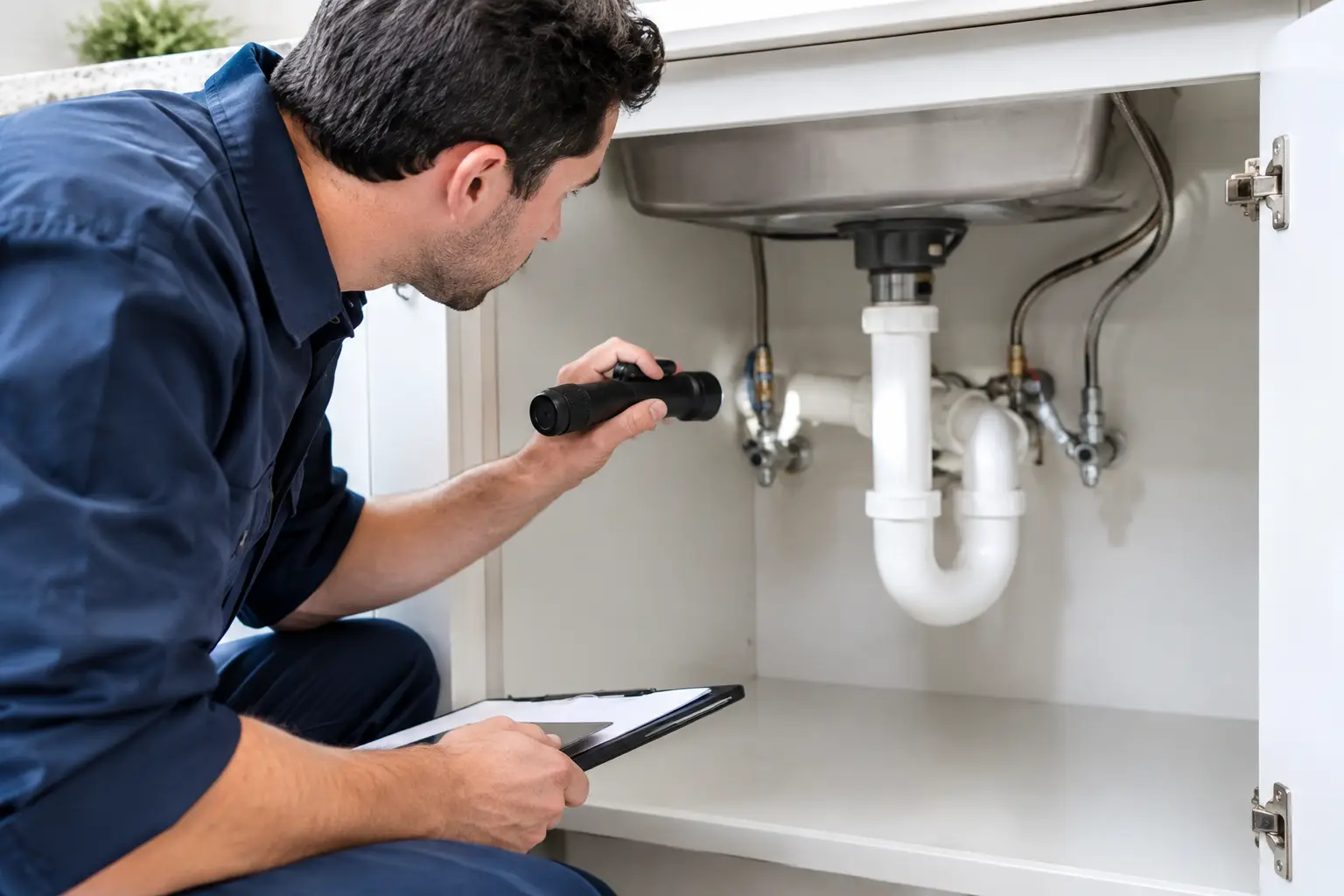
Open the cabinets under kitchen, bathroom, and utility sinks. Do not just glance at the pipes. Feel carefully around the cabinet floor and look for swollen particleboard, dark rings, peeling cabinet finish, corrosion on shutoff valves, or a musty smell. A dry cabinet during one visit does not prove the plumbing is problem-free, especially if a leak occurs only while the sink is draining or when a faucet is running.
Pay attention to improvised materials, such as towels, buckets, tape, or containers placed under piping. They may indicate a known leak. Newly replaced cabinet bottoms can also deserve a question: Was there a past leak, and was the damaged area fully repaired?
Check ceilings, walls, and floors near wet areas
Water does not always appear directly below its source. Still, a stain, bubbling paint, soft drywall, or patched ceiling near an upstairs bathroom is worth investigating. In one-story homes, inspect ceilings around bathrooms, kitchens, laundry rooms, and water-heater locations. In two-story homes, check the ceilings beneath upstairs fixtures.
Flooring can provide clues as well. Warped laminate, loose tile, staining at baseboards, or persistent discoloration around a toilet may suggest past or active moisture exposure. These signs can have other causes, including spills or failed caulking, which is why a thorough assessment focuses on the pattern of evidence rather than one isolated mark.
Listen to toilets and test fixtures
A toilet that refills every few minutes may be wasting water through a failing flapper or fill-valve issue. That is often a modest repair, but it can also mask a more significant concern if the base is loose, the floor feels soft, or staining is present around the toilet.
Run faucets one at a time and observe what happens below the sink and at the drain. Watch for drips at supply connections, leakage from drain traps, slow drainage, or water backing up in another fixture. Low water pressure deserves attention too, although it can result from a variety of causes, including municipal supply conditions, fixture restrictions, aging pipes, or a pressure-regulation issue.
Do not overlook the shower. Staining at the ceiling below a shower can indicate a drain, supply, shower pan, or enclosure issue. Cracked grout and worn caulk are common maintenance items, but they should not be treated as proof that the area behind the wall is dry.
Check the Water Heater and Laundry Area
Water heaters and washing-machine connections are frequent places for small leaks to develop. Around a water heater, look for corrosion at fittings, moisture on the floor, rust at the lower portion of the tank, or a discharge pipe that shows signs of ongoing flow. A temperature-pressure relief valve discharge line should be evaluated if it is dripping or if there is staining beneath its termination.
At the laundry area, inspect the washing-machine hoses, shutoff valves, drain connection, and surrounding floor. Hoses that are heavily worn, kinked, or visibly deteriorated are a practical concern even if they are not leaking during the showing. Water damage behind or beside a washer may be difficult to see, so check for baseboard swelling, floor discoloration, and musty odors.
Do Not Ignore Outdoor Clues
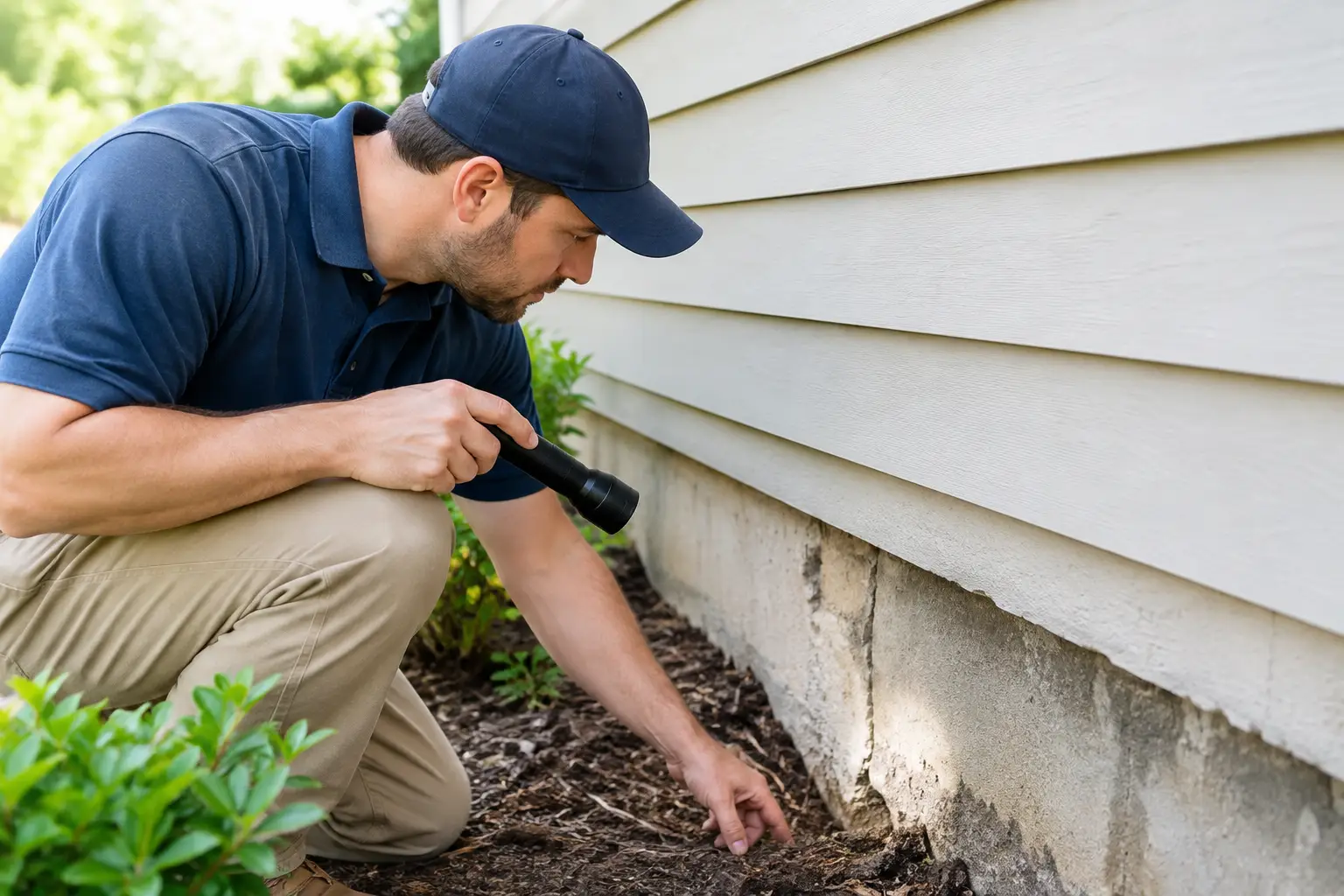
Plumbing leaks can show up outside long before they are obvious indoors. Walk around the home and look for unusually lush patches of grass, soggy areas during dry weather, standing water near the foundation, or soil erosion around hose bibs and exterior walls. These signs can come from drainage or irrigation issues, but they can also point to a leaking water line.
Test accessible exterior faucets if the conditions allow. A hose bib that leaks at the handle, drips after shutoff, or has no working vacuum breaker may need attention. Inspect the area below exterior faucets for water staining or deterioration on siding and trim.
For homes built on slab foundations, a leak beneath the slab can be harder to identify. Possible warning signs include unexplained warm spots on flooring, a sudden increase in water use, damp flooring, or persistent water sounds when no fixtures are operating. None of these signs confirms a slab leak, but together they justify prompt follow-up. Waiting until after closing can turn a manageable negotiation issue into your responsibility.
Watch for Drain and Sewer Warning Signs
Not every plumbing leak involves pressurized water lines. Drain and sewer problems can create their own warning signs, including slow or gurgling drains, sewage odors, recurring backups, damp soil near a sewer route, or staining around cleanouts. A drain may appear to work normally during a short visit yet still have a damaged, offset, or obstructed line farther from the house.
This is especially relevant with older homes, homes with mature trees, and properties where the condition of buried piping is unknown. A sewer camera inspection can provide a clearer view of the line’s interior condition and may identify issues that a standard visual inspection cannot fully assess.
Ask for Context, Not Just Reassurance
When you find evidence of prior moisture or repairs, ask focused questions. What caused the issue? When was it repaired? Who completed the work? Is there documentation, a warranty, or an invoice? Has the problem returned?
Sellers may not know every detail, particularly in an inherited or recently purchased property. That does not make the concern disappear. It simply means the inspection findings and any follow-up evaluation become more valuable. Be cautious about accepting “it was fixed” without understanding what was repaired and whether the affected materials were properly addressed.
Know the Limits of a Walk-Through
A home inspection is a visual, noninvasive evaluation conducted under the conditions present that day. Furniture, stored items, closed walls, inaccessible crawlspaces, inactive utilities, and vacant-home conditions can limit what can be observed. Pipes may not leak during the inspection, and a clean surface does not guarantee there has never been moisture behind it.
That is why a strong inspection report should distinguish between observed defects, signs of prior damage, and conditions that need further evaluation. CK Inspections helps buyers understand what was observed, what may require a specialist, and which concerns deserve attention before the transaction moves forward.
A home does not have to be flawless to be a sound purchase. The goal is to avoid buying blind. If a plumbing concern appears during your due-diligence period, get clear information while you still have choices – then move ahead with confidence, not assumptions.