A home can look clean, updated, and move-in ready, then surprise a buyer with electrical problems hiding behind the panel cover, inside the attic, or at a handful of outlets that never get tested during a showing. That is why electrical issues found in home inspection reports often carry so much weight. They are not just repair items on paper. They can affect safety, insurance, financing, and your real cost of ownership after closing.
For buyers in Houston, Cypress, Katy, and nearby Texas communities, electrical concerns show up in homes of every age. Older houses may have outdated materials or amateur repairs. Newer homes are not immune either. Even recently built properties can have wiring defects, missing safety devices, or installation shortcuts that deserve attention before you move in.
Why electrical defects matter so much
Electrical systems are easy to ignore because most of them are out of sight. If the lights turn on and the air conditioner runs, buyers often assume the system is fine. A home inspection looks deeper than that. The goal is to identify visible deficiencies, signs of unsafe conditions, and indicators that the system may need repair or further evaluation.
This matters because electrical problems are rarely just cosmetic. Some are simple fixes, like a reversed polarity outlet or a missing cover plate. Others point to bigger concerns, such as overheating conductors, double-tapped breakers, damaged service equipment, or improper grounding. The difference between a minor correction and a major safety issue is exactly why a careful inspection can protect a buyer from costly surprises.
Common electrical issues found in home inspection reports
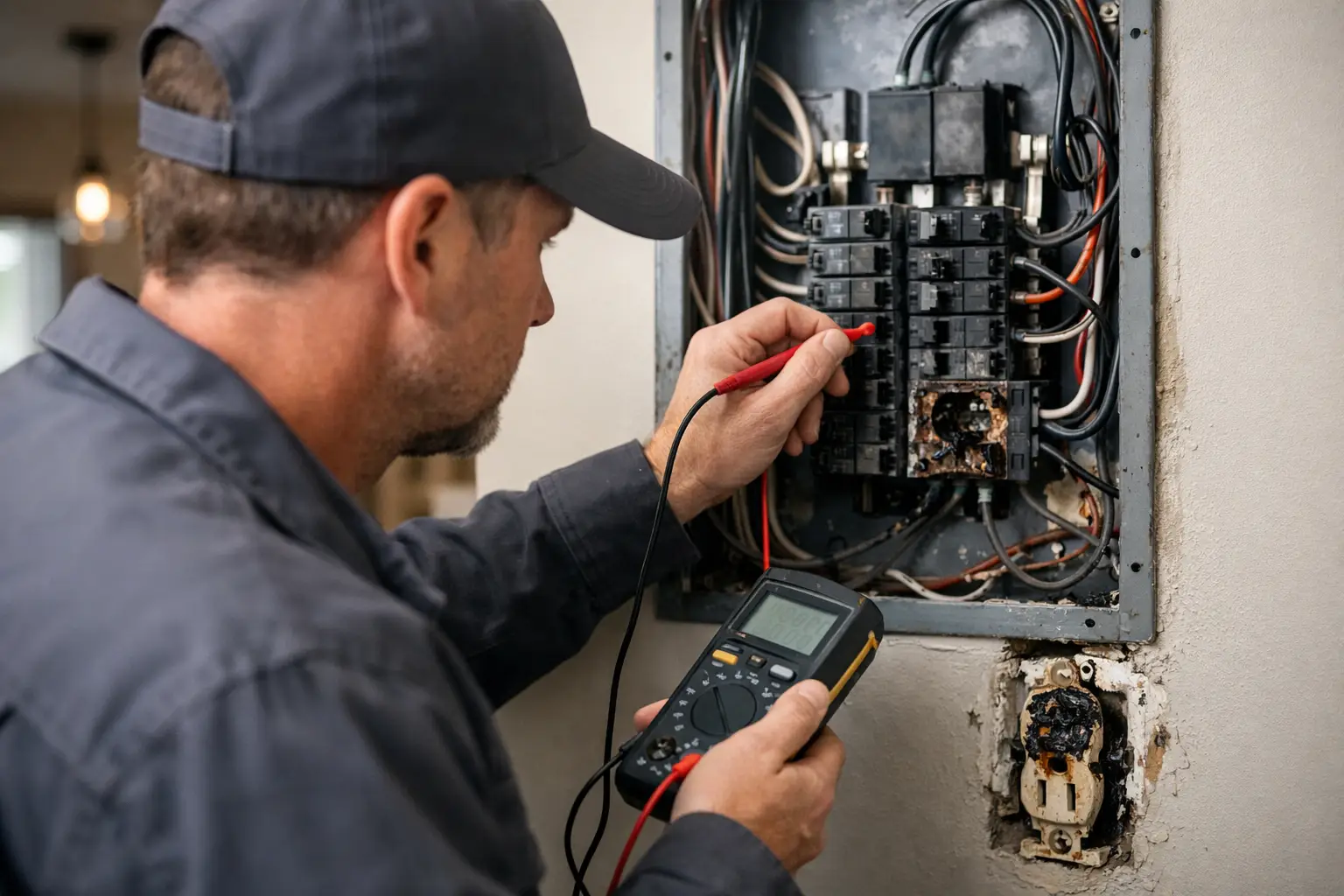
One of the most common findings is a problem inside the main electrical panel. Inspectors often see double-tapped breakers, where two conductors are connected to a breaker not designed for two wires. This does not always mean the whole system is failing, but it does mean the panel should be corrected. Improper terminations can lead to loose connections, arcing, and overheating.
Another frequent issue is missing or improper grounding and bonding. These are critical safety features that help manage fault current and reduce shock risk. In practical terms, a house may appear to function normally while still lacking proper grounding at receptacles, service equipment, or supplemental systems. That kind of defect may not announce itself during a walkthrough, but it can matter a great deal when safety is on the line.
GFCI protection is another area where homes often fall short. Ground-fault circuit interrupter outlets are designed to reduce shock risk in wet or damp areas such as kitchens, bathrooms, garages, exterior locations, laundry rooms, and certain other areas depending on the home’s age and applicable standards. In many inspection reports, missing GFCI protection is one of the easiest issues to understand and one of the most important to address.
A close cousin to that is missing AFCI protection. Arc-fault circuit interrupters are intended to reduce the risk of electrical fires caused by arcing faults in branch circuits. Requirements vary by age of home and location, so this is one of those it-depends situations. Not every older house will be expected to meet current standards in every respect, but when fire-safety devices are absent where they should be present, it deserves attention.
Inspectors also regularly document damaged, loose, or improperly installed receptacles and switches. A dead outlet may seem minor, but it can be a clue. It might point to a tripped GFCI, a failed device, a disconnected wire, or a larger circuit problem. Warm switches, buzzing outlets, scorched covers, and flickering lights can all suggest conditions that need more than a quick DIY fix.
Electrical issues found in home inspection of older homes
In older homes, electrical findings tend to have more history behind them. Some properties have had several rounds of renovations, additions, and handyman work over the years. That is when inspectors may find abandoned wiring, spliced conductors outside approved junction boxes, mixed wiring methods, or panels that have been altered in ways that are no longer considered safe.
Outdated wiring materials are another concern. Depending on the age of the property, an inspector may note aluminum branch wiring, cloth-covered wiring, or other older components that warrant closer review. These materials do not automatically mean a house should be avoided, but they can affect repair strategy, insurance questions, and future upgrade costs.
Older service panels can also raise red flags. Some panel brands and models have long histories of performance concerns or known defects. When a panel is obsolete, damaged, improperly installed, or associated with safety issues, the recommendation may be evaluation by a qualified licensed electrician. Buyers should take those recommendations seriously, because panel replacement is not a small budgeting detail.
Problems outside the panel matter too
Electrical defects are not limited to the breaker box. The inspection may reveal unsafe exterior wiring, missing junction box covers, open splices in attics or garages, improper wiring at water heaters or HVAC equipment, and disconnected or unsupported conductors. These issues often show up where systems intersect, especially in garages, utility areas, and home additions.
Exterior electrical components are especially important in Texas, where weather exposure can wear out covers, conduit fittings, and weather-resistant devices. Missing covers at outdoor receptacles, improper wiring at condensers, and unsafe pool or spa electrical conditions are all findings that can affect both safety and repair negotiations.
What these findings can mean for buyers
Not every electrical defect should trigger panic, but every meaningful one should shape your decision-making. Sometimes the right response is to request repair before closing. In other cases, it makes more sense to ask for a credit, get estimates, or bring in an electrician for a more detailed evaluation.
The age of the home, the number of findings, and the type of defect all matter. A few missing GFCI devices in an otherwise solid house is very different from evidence of overheating in the panel or widespread amateur wiring. Good inspection reporting helps buyers separate manageable corrections from larger concerns that affect risk, cost, or future insurability.
That is where clear visual documentation and organized findings become valuable. Buyers do not just need a list of defects. They need enough context to understand which issues are routine, which are safety-related, and which could lead to significant expense after move-in.
When an electrician should get involved
A home inspector is not there to redesign the electrical system or perform destructive testing. The role is to identify visible deficiencies and recommend next steps when needed. If the report notes panel defects, unsafe wiring practices, overheating indicators, service entry concerns, or multiple unresolved electrical problems, a licensed electrician should evaluate the system further.
This extra step is often worth it. An electrician can determine the scope of repairs, identify hidden conditions not visible during the inspection, and provide pricing that helps with negotiations. For buyers trying to stay within budget, that information can make the difference between moving forward confidently and buying blind.
How buyers can protect themselves
The smartest approach is not to assume all electrical findings are equal and not to dismiss them because the house still has power. Read the report carefully. Pay attention to safety recommendations. Ask questions if terminology is unfamiliar. If the inspector recommends specialist evaluation, treat that as part of your due diligence, not as an optional extra.
It also helps to think beyond the immediate repair bill. Some electrical corrections are inexpensive, while others can trigger drywall access, permit requirements, panel upgrades, or broader system improvements. A thorough inspection gives you a better chance to see those costs before the home becomes your responsibility.
For many buyers, peace of mind comes from knowing the issues before closing, not after the first breaker trips or outlet fails. That is the real value of a detailed inspection. At CK Inspections, the goal is to help buyers understand what they are taking on, where the real risks are, and what deserves action before they commit to one of the biggest purchases of their lives.
A home does not need to be perfect to be a good purchase. It does need to be understood clearly enough that you can make a confident decision with your eyes open.