A house can look clean, updated, and move-in ready – and still have structural movement hiding in plain sight. That is why foundation issues in home inspection deserve close attention, especially in the Houston area, where expansive soils, drainage problems, and seasonal moisture changes can all affect how a home performs over time.
For buyers, the foundation is not just another line item on a report. It can influence doors and windows, wall finishes, flooring, plumbing performance, and long-term repair costs. The goal of a home inspection is not to create fear. It is to identify visible warning signs, document the condition at the time of the inspection, and help you make a more informed decision before closing.
Why foundation issues matter so much
Most home systems can be repaired or replaced in a fairly direct way. A water heater can be swapped out. An HVAC system can be serviced or replaced. Foundation movement is different because it can affect multiple parts of the home at once.
When a foundation shifts, the symptoms may show up far from the actual source of the problem. A buyer may notice a sticking back door, a stair-step crack in brick veneer, sloping floors, or gaps around window frames. Those signs do not always mean major structural failure, but they do tell a story about movement, settlement, or moisture-related stress.
In Texas, that story often starts with soil. Many homes in and around Houston sit on clay-rich soils that expand when wet and shrink when dry. Over time, uneven moisture levels under and around the home can lead to differential movement. That does not mean every crack is serious, but it does mean foundation observations should never be brushed aside as cosmetic without proper evaluation.
What inspectors look for when checking foundation issues in home inspection
A general home inspection is a visual inspection. Inspectors do not perform destructive testing or engineering design work, but they do look for patterns that suggest past or ongoing foundation movement.
Inside the home, an inspector may note cracks in drywall, especially above doors and windows, separation at trim, uneven flooring, doors that rub or do not latch properly, and windows that are difficult to open or close. On their own, any one of these items may be minor. When several appear together, they can point to a broader structural concern.
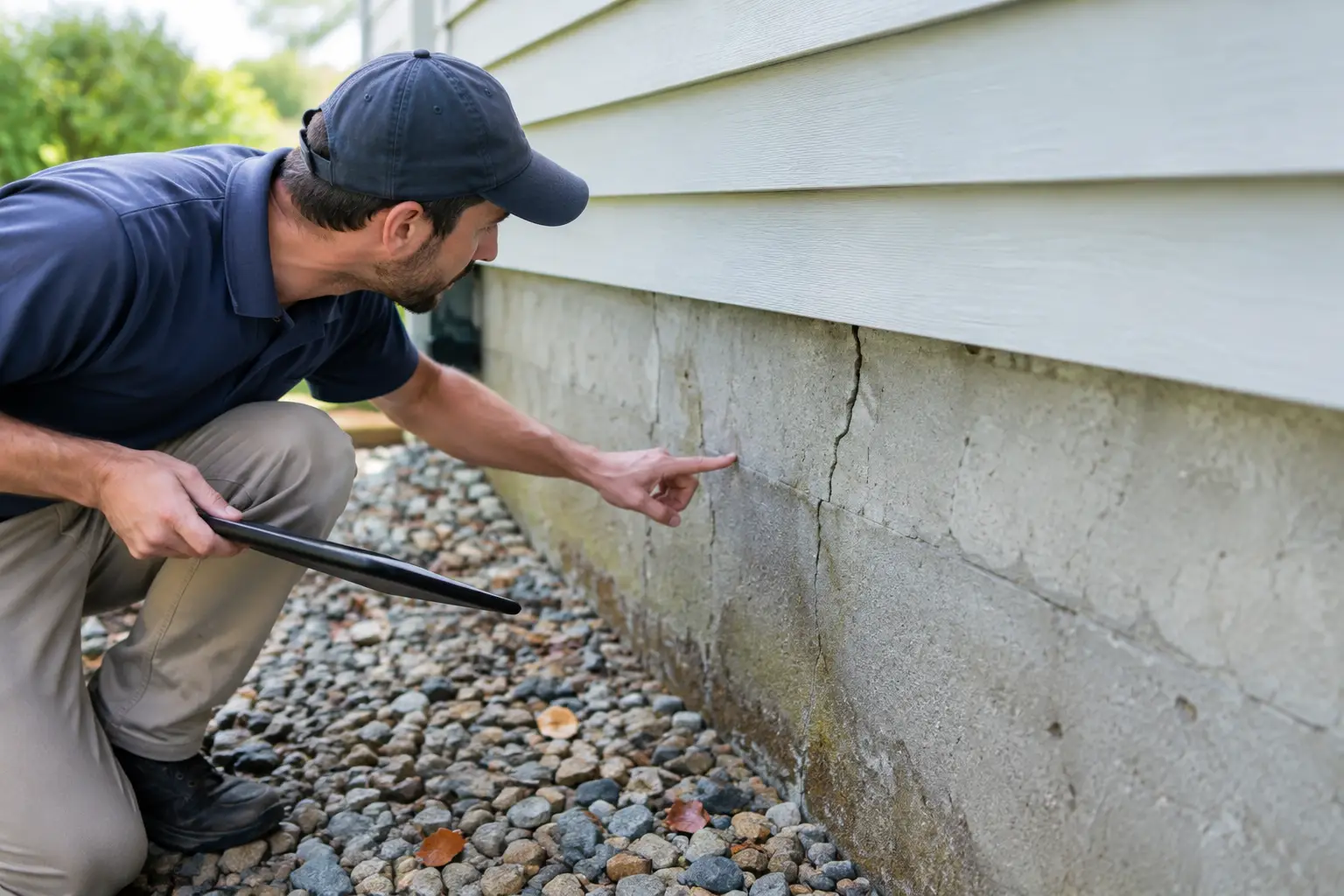
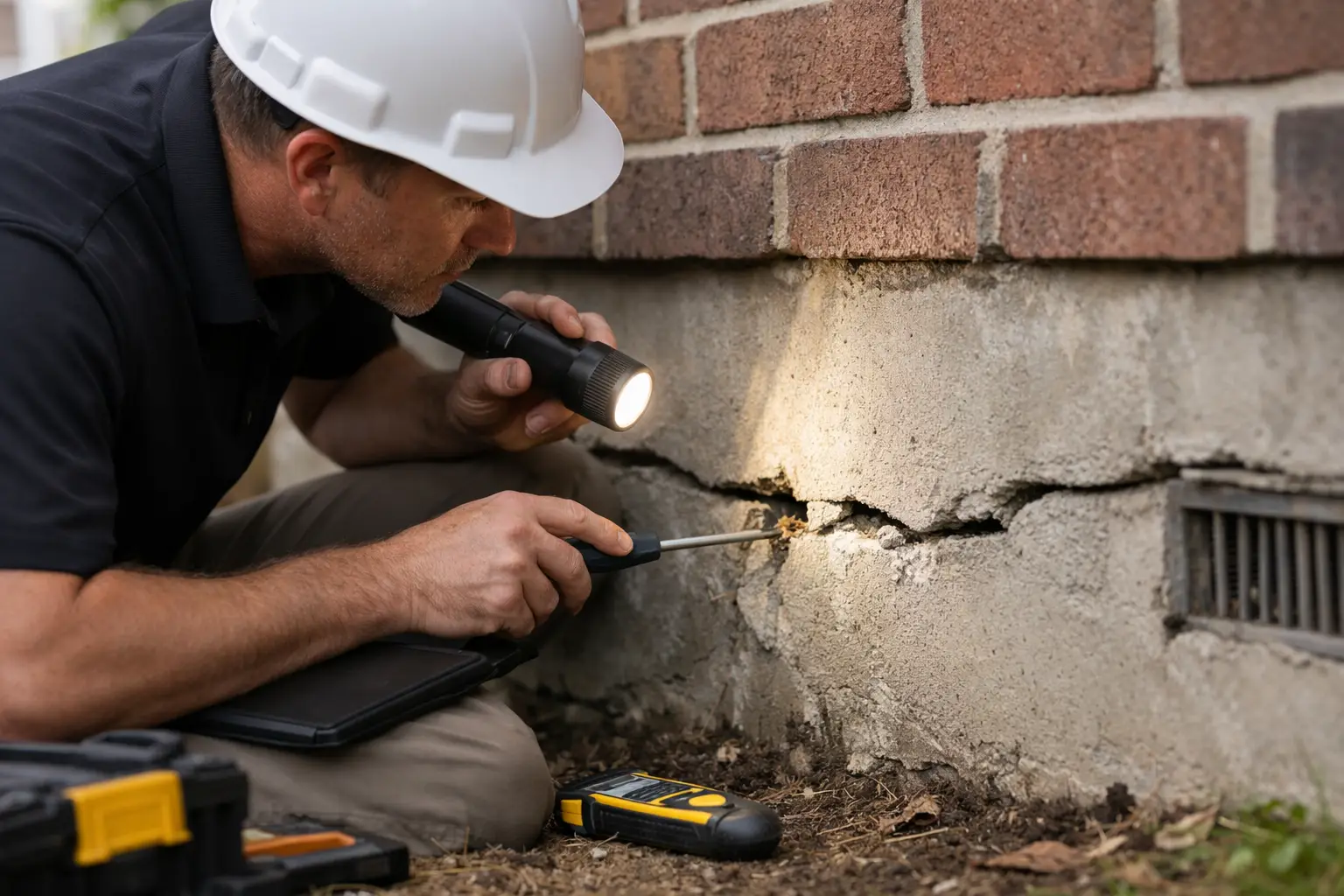
Outside the home, the inspection often includes looking at the exterior walls, brick veneer, siding, visible slab edges, and grading around the house. Cracks in masonry, separation at expansion joints, and drainage issues near the perimeter can all add context. Poor grading is especially important because water management plays a major role in foundation performance.
Inspectors also pay attention to related systems. Plumbing leaks under a slab, roof drainage that dumps water too close to the house, or missing gutters can all contribute to moisture imbalance. Foundation conditions rarely exist in isolation. The surrounding conditions matter.
Common signs buyers should not ignore
Some homes show a few minor settlement-related blemishes that have remained stable for years. Others show active movement that may require further evaluation. The difference is not always obvious to a buyer walking through an open house.
Cracks are one of the most misunderstood signs. Hairline drywall cracks can be common in homes of many ages. Wider cracks, repeated patching, diagonal cracks, or stair-step cracking in brick deserve a closer look. The location, size, direction, and pattern all matter.
Doors and windows can also be revealing. If one bedroom door sticks during humid weather, that may not mean much. If multiple interior doors are out of square and several windows bind at the same time, that pattern is more significant.
Floor movement matters too. A slightly uneven floor in an older home is not unusual. Pronounced sloping, bounce, or visible separation where flooring meets baseboards should be documented and considered in context with other findings.
Then there is water. Standing water near the foundation, negative grading, clogged gutters, short downspouts, and signs of chronic moisture intrusion can all increase risk. Often, the conversation about structure is really a conversation about water control.
What a home inspection can and cannot tell you
This is where clarity matters. A home inspection can identify visible signs consistent with possible foundation movement, settlement, or structural concerns. It can also document conditions that may be contributing to those issues, such as drainage deficiencies or moisture intrusion.
What it cannot do is guarantee the future performance of the foundation or provide a structural engineering opinion unless the inspector also holds those specific qualifications and is engaged for that purpose. In many cases, the right next step is a recommendation for further evaluation by a licensed structural engineer or a qualified foundation specialist.
That recommendation should not automatically scare a buyer away. Sometimes the issue turns out to be limited and manageable. Sometimes it confirms a larger repair need. What matters is getting the right information before you are fully committed.
Foundation issues in home inspection and real estate negotiations
Foundation concerns can change the tone of a transaction quickly. Buyers may worry they are inheriting a major problem. Sellers may insist the house has been that way for years. Agents may be trying to keep the deal moving while everyone waits for better answers.
This is where organized reporting and visual documentation become valuable. Clear photos, location-specific notes, and practical explanations help remove guesswork. Instead of vague concern, you have documented observations that support next steps.
Sometimes the result is a request for additional evaluation. Sometimes it leads to repairs, seller concessions, or price adjustments. In other cases, the findings help a buyer decide the risk is greater than they want to take on. That is exactly what the inspection process is supposed to do – protect your decision with better information.
Why Texas homes need a careful foundation review
The local environment matters. In Greater Houston, heavy rain, drought cycles, drainage challenges, and expansive soils create conditions where structural movement is not rare. Even homes that appear well maintained can have hidden stress below the surface.
That does not mean every Texas home has a major foundation problem. It means buyers should be realistic. A strong inspection process should include careful attention to structural indicators and the site conditions that affect them.
Older homes may show long-term settlement that has stabilized. Newer homes can still have movement if drainage is poor or soils were not managed well. Repair history also deserves attention. A previously repaired foundation is not automatically a deal breaker, but buyers should understand what was done, whether warranties exist, and whether current symptoms suggest continued movement.
What buyers should do if foundation concerns appear
First, do not panic. Foundation issues exist on a spectrum. Some observations point to routine maintenance and moisture management. Others justify immediate specialist review.
Second, focus on the pattern, not just one crack or one sticky door. A professional inspection helps connect those dots. The more complete the picture, the better your decision will be.
Third, act before closing. Once you own the home, the cost and responsibility become yours. If the inspection raises concerns, ask the right follow-up questions while you still have options. That may include requesting repair documentation, obtaining an engineer evaluation, or negotiating based on the findings.
For buyers who want a clearer picture before making a major investment, a detailed inspection from a company like CK Inspections can help uncover the visible warning signs, explain what they may mean, and point you toward the right next step without unnecessary alarm.
The value of a practical, buyer-focused inspection
The best inspection experience does more than list defects. It helps you understand which findings are minor, which ones deserve monitoring, and which ones could affect safety, performance, or future costs. That matters with any house, but especially with structural concerns.
Foundation observations should be explained in plain language. Buyers should not have to sort through technical notes and guess what actually matters. When the reporting is clear, the photos are organized, and the inspector is available for post-inspection questions, you are in a better position to move forward with confidence.
Buying a home always involves some level of risk. The point is not to find a perfect house. It is to avoid costly surprises you could have identified before the papers were signed. If a home is showing signs of movement, you want to know now, while there is still time to evaluate the issue, understand the trade-offs, and make a decision that protects your investment.
A careful look at the structure today can save you from a very expensive lesson later.