A roof can look fine from the driveway and still hide expensive problems. That is why knowing how to spot roof damage before closing matters so much for buyers who want to avoid costly surprises after move-in. A home may have fresh paint, clean landscaping, and a strong first impression, but the roof is one of the biggest systems protecting everything underneath it.
If the roof has active leaks, storm damage, poor repairs, or advanced wear, the cost does not stay on the roof. It can affect insulation, ceilings, framing, electrical components, and even indoor air quality if moisture has been present long enough. Before you get to the closing table, you want a clear picture of what you are taking on.
Why roof issues get missed before closing
Roof damage is easy to underestimate because much of it is not visible from the ground. Buyers often notice obvious cosmetic defects inside a home but have a harder time evaluating the roof safely and accurately. Sellers may not know the full condition themselves, especially if there has not been a recent leak or if prior patching made the problem less obvious.
In Texas, that risk increases because roofs take a beating. Sun exposure, heavy rain, wind, hail, and rapid weather changes can shorten roofing life or damage vulnerable areas long before the whole roof looks old. A roof may still have years left in some sections while flashing, penetrations, valleys, or decking in other areas are already failing. That is where a professional inspection becomes valuable.
How to spot roof damage before closing from the ground
You should never climb onto a roof during a property showing or walkthrough. Start with what you can safely observe from the ground and from the home’s interior.
Look first for uneven roof lines. A roof should generally appear straight and consistent. If you notice sagging sections, dips, waviness, or areas that look sunken, that can suggest underlying structural concerns, deteriorated decking, or long-term moisture damage. Not every uneven line means major failure, but it is not something to ignore.
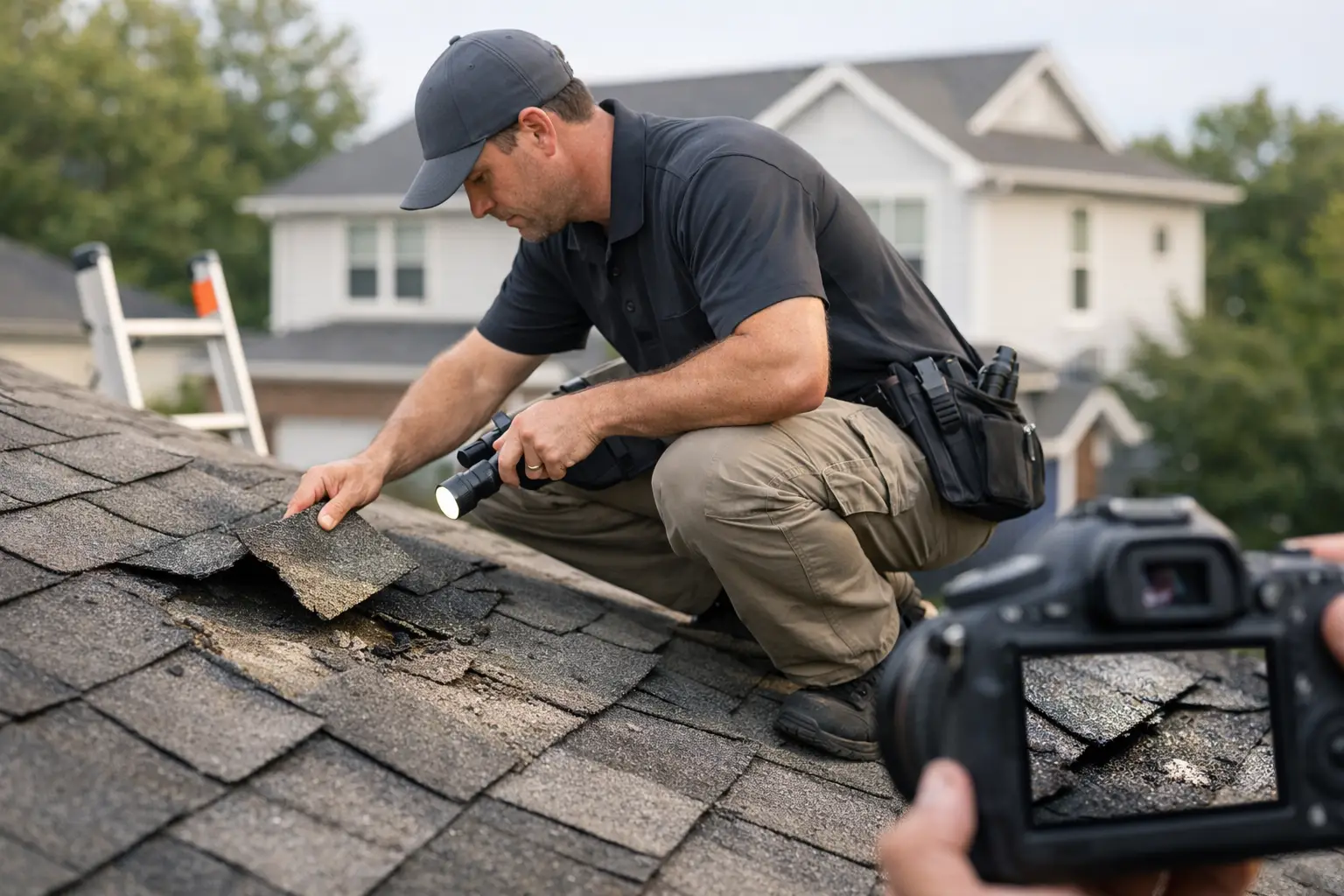
Next, study the surface materials. On shingle roofs, watch for missing shingles, curled edges, cracked tabs, exposed fasteners, patchy coloring, or areas that appear excessively worn compared with the surrounding sections. Granule loss can also be a warning sign, especially on older asphalt shingles. If parts of the roof look newer than others, that may simply reflect a past repair, but it can also signal prior storm damage or repeated leak areas.
Pay attention to roof penetrations and transitions. Chimneys, vents, skylights, and roof-to-wall intersections are common leak points. From the ground, you may not see every flashing detail, but you can sometimes spot loose materials, staining, or sloppy repair work around these areas.
Gutters can also tell a story. If they are pulling away, overflowing, dented, or filled with shingle granules, the roof may be aging or draining poorly. Poor drainage does not always mean roof replacement is needed, but it often points to deferred maintenance.
Interior clues that the roof may have a problem
Sometimes the strongest signs of roof trouble are inside the house, not outside. Ceiling stains are the classic red flag, but look beyond obvious brown spots. Fresh paint patches on ceilings, bubbling drywall, peeling texture, or warped trim near the upper portions of walls can all suggest prior moisture intrusion.
In the attic, a trained inspector may find dark staining on the underside of roof decking, active moisture, daylight coming through gaps, damaged insulation, or signs of poor ventilation. Poor ventilation is worth mentioning because it can shorten roof life even when leaks are not obvious. In hot Texas attics, excess heat and trapped moisture can accelerate shingle aging and contribute to hidden deterioration.
A musty smell in upper rooms or the attic should also get your attention. It does not always come from the roof, but moisture issues near the top of the home deserve a closer look before closing.
Check the age, materials, and repair history
If you are trying to figure out how to spot roof damage before closing, appearance is only part of the answer. Ask questions about age, material type, and repair history. A roof near the end of its expected life may not have visible active leaks today, but that does not mean it is a low-risk system.
Asphalt shingle roofs are common in the Houston area, and their lifespan can vary widely based on product quality, installation, ventilation, weather exposure, and storm history. A 15-year-old roof may still be serviceable in some cases, while a younger roof with poor installation or repeated storm damage may already need significant work.
If the seller has receipts for repairs or replacement, review them carefully. A documented repair is not automatically a concern. In fact, it can be reassuring when work was done properly. The issue is when there is a pattern of patching the same area, vague answers about prior leaks, or no documentation for major work.
What storm damage can look like
Texas buyers should be especially alert to storm-related roof damage. Hail can bruise shingles, dislodge granules, crack materials, and reduce the roof’s remaining life even when it does not create an immediate leak. Wind can lift shingles, loosen flashing, and expose vulnerable areas to future water intrusion.
The challenge is that storm damage is not always obvious to an untrained eye. A roof can still look generally intact while having enough impact damage to justify repair or replacement. That is one reason buyers should avoid relying on seller assurances alone. If a home has been through recent hail or wind events, the roof deserves close attention as part of the inspection process.
When a roof issue is minor and when it is a bigger deal
Not every roof finding should stop a transaction. A few damaged shingles, minor sealant defects, or small maintenance items may be manageable if the roof is otherwise performing as intended. Buyers sometimes hear the word roof and immediately assume full replacement. That is not always the case.
What matters is the pattern and severity of the findings. Widespread shingle damage, signs of active leaks, sagging areas, poor prior repairs, deteriorated flashing at multiple locations, or evidence of moisture intrusion into the attic are more serious concerns. At that point, you are not just talking about routine upkeep. You may be looking at a major repair negotiation, insurance questions, or the need for further evaluation by a roofing contractor.
Why a home inspection matters before you negotiate
A professional home inspection gives you more than a quick opinion. It gives you documented findings, photos, context, and a clearer understanding of whether the roof issue appears isolated or part of a larger problem. That matters when you are deciding whether to move forward, request repairs, ask for credits, or adjust your budget after closing.
For buyers, the value is confidence. For agents, the value is clarity and a more organized path through negotiations. A good inspection report helps separate cosmetic concerns from defects that can affect safety, performance, or future cost.
At CK Inspections, roof conditions are evaluated as part of the larger home picture because roofing problems often connect to attic conditions, moisture patterns, drainage concerns, and interior damage. That broader view helps buyers avoid making decisions based on guesswork.
Smart questions to ask before closing
If roof concerns come up, ask direct questions. Has the roof ever leaked? How old is it? Has it been repaired or replaced? Was there storm damage insurance claim history? Are there warranties that transfer to a new owner? Has any contractor recommended replacement?
You should also ask whether the seller is willing to address documented issues before closing or provide concessions instead. Sometimes a seller repair makes sense. In other cases, a credit gives the buyer more control over the quality of the repair after closing. It depends on timing, contractor availability, and how extensive the issue is.
Don’t let a clean showing hide a costly roof problem
A well-presented home can still have a roof that is one storm away from becoming a much larger expense. If you want to know how to spot roof damage before closing, the real answer is to combine careful observation with a thorough inspection and clear documentation. That is how you protect your investment, negotiate from a position of knowledge, and move forward with fewer surprises.
Before you commit to the house, make sure the roof has earned your confidence too. Peace of mind is worth a closer look.