A hot attic is expected in Greater Houston. An attic that is excessively hot, damp, mold-stained, or visibly stressed is not. Knowing how to evaluate attic ventilation before you buy can help you identify conditions that may shorten roof life, strain the HVAC system, damage insulation, and create expensive repairs after closing.
Attic ventilation is easy to overlook because it is hidden above the ceiling. Yet in Texas homes, where long cooling seasons, humidity, heavy rain, and intense sun all affect the roof system, it deserves close attention during a pre-purchase inspection. The goal is not simply to find a vent. It is to determine whether the attic has a clear, balanced path for airflow and whether moisture or heat has already caused damage.
What Attic Ventilation Is Supposed to Do
A conventional vented attic needs two things: intake air near the lower edge of the roof and exhaust air near the top. Intake commonly enters through soffit or eave vents. Exhaust may leave through ridge vents, roof vents, gable vents, or powered attic ventilators.
As warm air rises, the system should allow heat and moisture to escape while drawing in replacement air at the eaves. This helps keep roof decking and framing drier, reduces heat buildup above the living space, and supports the long-term performance of roofing materials.
Ventilation is only one part of attic performance. Insulation, air sealing, bathroom fan discharge, roof leaks, duct condition, and the home’s HVAC design also matter. A well-vented attic can still have problems if humid indoor air leaks into it or a bathroom exhaust fan ends in the attic instead of outdoors.
Start With the Roofline and Exterior Vents
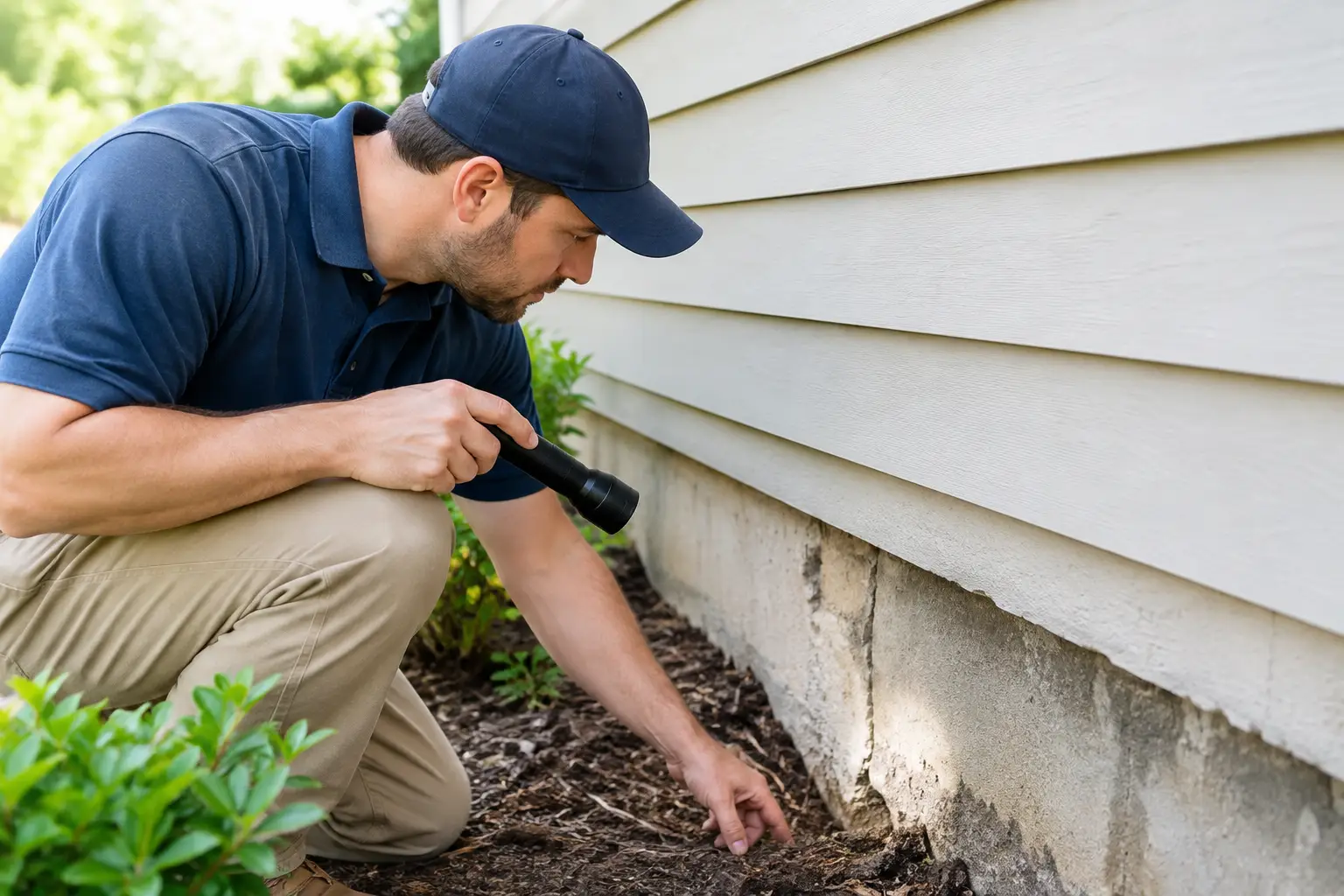
A visual review from outside often provides the first clues. Look along the roofline for ridge vents, box-style roof vents, gable vents, and soffit vents beneath the eaves. Their presence does not automatically mean the system is working properly, but missing or damaged components can be a concern.
Pay attention to roof areas that appear wavy, sagging, or deteriorated. Those conditions may be related to age, water intrusion, structural movement, or poor attic conditions. Ventilation alone is rarely the answer to every roof issue, so a qualified inspector should separate the symptoms from the likely cause.
Soffit vents deserve particular attention. They supply the intake air that allows upper-level exhaust vents to work. If soffit openings are painted shut, clogged with debris, covered by insulation, or missing altogether, roof vents may not move air effectively. In some homes, insulation has been installed tightly against the roof edge without baffles to maintain an airflow channel.
How to Evaluate Attic Ventilation From Inside
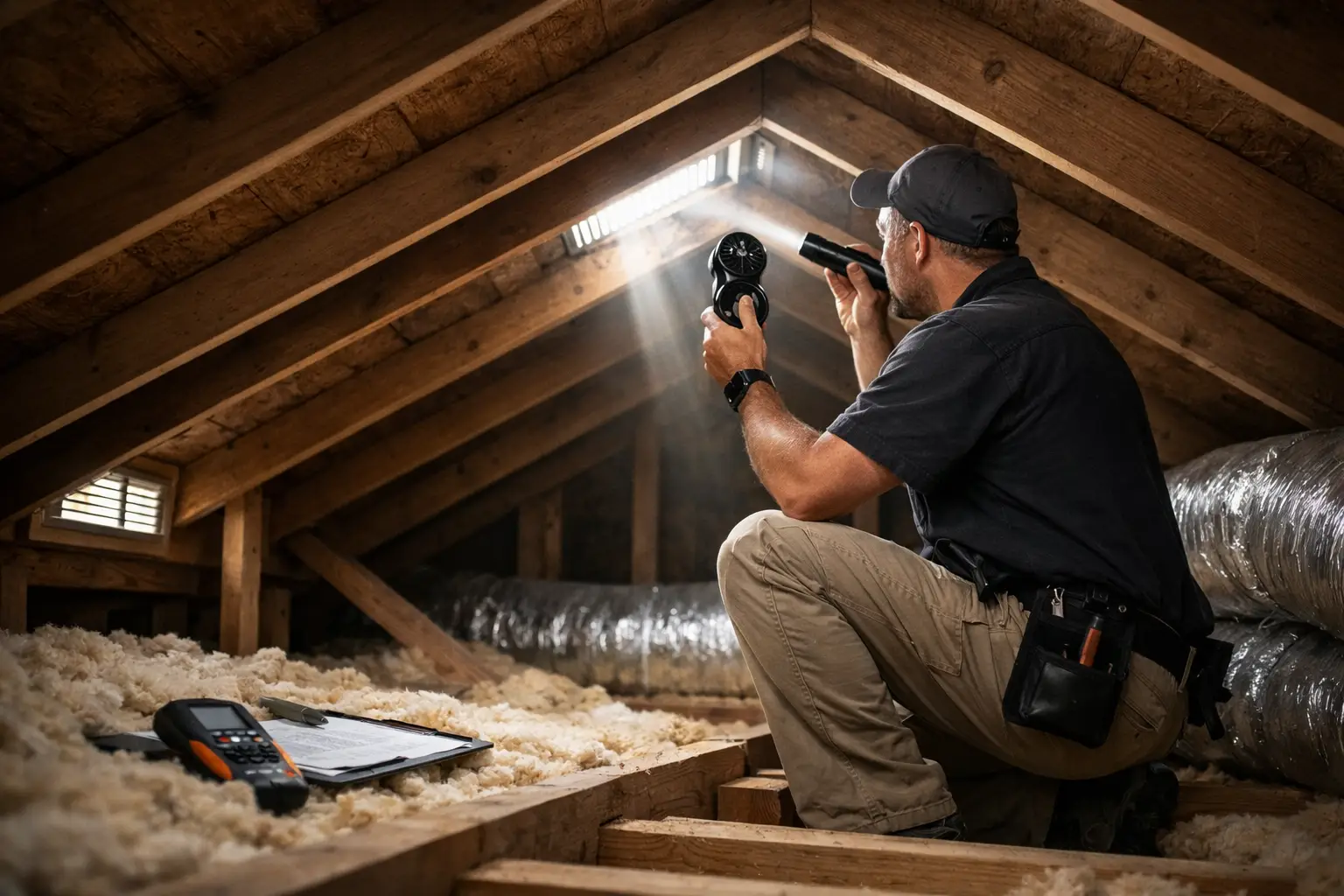
When attic access is safe and available, the interior attic review is where hidden concerns often become visible. A professional inspector looks beyond the temperature and checks the roof structure, insulation, ventilation openings, mechanical components, and signs of moisture.
Look for moisture evidence, not just active leaks
Dark staining, wet insulation, rusted fasteners, deteriorated roof decking, fungal-like growth, and water marks on rafters can all signal a moisture problem. The source could be a roof leak, condensation, a plumbing leak, or humid air entering the attic from the home below.
In the Houston area, humidity can make condensation risks more noticeable when warm, moist indoor air reaches cooler surfaces. This can happen around unsealed recessed lights, attic hatches, plumbing penetrations, and poorly sealed duct openings. A moisture stain is not something to dismiss as “old” without further evaluation. Even if it is dry on inspection day, buyers need to understand the condition and consider whether repair or monitoring is warranted.
Check whether insulation is blocking intake
Insulation should cover the attic floor consistently, but it should not block soffit ventilation at the eaves. From the attic, an inspector may look for baffles or other provisions that preserve the path from soffit vents into the attic.
This is a common trade-off in older homes. Adding insulation can improve energy efficiency, but installation that obstructs intake can reduce ventilation. Correcting it may involve repositioning insulation and adding baffles, rather than removing useful insulation throughout the attic.
Identify the type and placement of exhaust vents
Ridge vents are designed to exhaust air along the roof peak. Box vents, turbines, and gable vents can also serve as exhaust, depending on the roof design. Problems can arise when vents are too limited for the attic area, are covered by roofing materials, are improperly installed, or are mixed in ways that disrupt the intended airflow.
For example, a ridge vent combined with gable vents may cause air to enter through the gables instead of drawing consistently from the soffits. That does not mean every mixed system is defective, but it is a reason to examine the design more closely. Ventilation is not a matter of counting every visible vent and assuming more is better. The location, net free vent area, attic layout, and intake-to-exhaust balance all affect performance.
Watch for disconnected ducts and improper exhaust terminations
Bathroom fans, kitchen exhaust systems, and dryer vents should not discharge directly into the attic. Warm, humid air released there can saturate insulation and contribute to staining, microbial growth, and wood deterioration.
An inspector may also find disconnected HVAC ducts or ducts with damaged insulation. Besides wasting conditioned air, these issues can raise attic humidity and make the home less comfortable. In a Texas summer, a duct leak in a hot attic can have a noticeable effect on cooling performance and utility costs.
Heat Is a Clue, But Not a Diagnosis
Attics in Texas can become extremely hot, particularly on sunny afternoons. A high attic temperature by itself does not prove inadequate ventilation. Roof color, sun exposure, insulation levels, attic configuration, radiant barriers, and the time of day all influence the reading.
What matters is whether heat is accompanied by other warning signs: brittle or prematurely aging roof materials, moisture evidence, inadequate intake openings, compressed insulation, stressed HVAC equipment, or occupants reporting rooms that are consistently difficult to cool. Thermal imaging can sometimes help identify temperature irregularities, but it is one tool within a larger evaluation, not a stand-alone answer.
Powered attic fans also require context. They can remove hot air, but if intake is insufficient, a fan may pull conditioned air from the house through ceiling leaks. That can increase energy use rather than solve the underlying problem. Before recommending a powered solution, the existing intake, exhaust, air sealing, and insulation should be assessed.
Understand What an Inspection Can and Cannot Confirm
A home inspection provides a visual, noninvasive evaluation of accessible attic conditions. It can identify visible defects, inadequate or obstructed venting, moisture indicators, damaged insulation, and improper exhaust terminations. It can also document concerns clearly so buyers can discuss repairs, further evaluation, or credits before closing.
However, an inspector cannot see through every enclosed cavity, verify airflow under all weather conditions, or guarantee that a roof will never leak. Some low-slope sections, limited-access attics, and heavily stored areas may restrict the inspection. When evidence suggests an active roof leak, widespread growth, major decking deterioration, or a complex ventilation design issue, a roofing contractor, HVAC professional, insulation specialist, or qualified remediation professional may be appropriate for further evaluation.
This is why photos and clear report language matter. A vague note that an attic is “warm” does little to protect a buyer. Documentation should explain what was observed, where it was found, why it may matter, and what next step is reasonable.
Questions Buyers Should Ask Before Closing
If attic ventilation concerns appear in the inspection report, ask whether there is visible damage to roof decking or framing, whether insulation is obstructing soffit intake, and whether any exhaust fans or ducts terminate improperly. Ask if the roof covering has signs of premature wear and whether a specialist should evaluate the condition before the option period ends.
It also helps to ask about prior roof repairs, water intrusion, HVAC replacement, and recurring comfort issues. Sellers may not have every answer, but the questions can reveal useful history. A recently replaced roof with continuing attic moisture, for example, may point to an issue beyond the roof covering itself.
Do not climb into an attic that feels unsafe, has questionable flooring, exposed wiring, unstable framing, or extreme heat. A careful inspection is protective, not risky. The value comes from identifying what you can see and knowing when conditions call for a closer professional review.
A home should not become a costly surprise after closing. When the attic is evaluated as part of the full roof, insulation, HVAC, and moisture picture, buyers have a clearer path to request repairs, plan future maintenance, or move forward with greater confidence. CK Inspections helps buyers make those decisions with detailed findings and visual documentation before the home becomes theirs.