
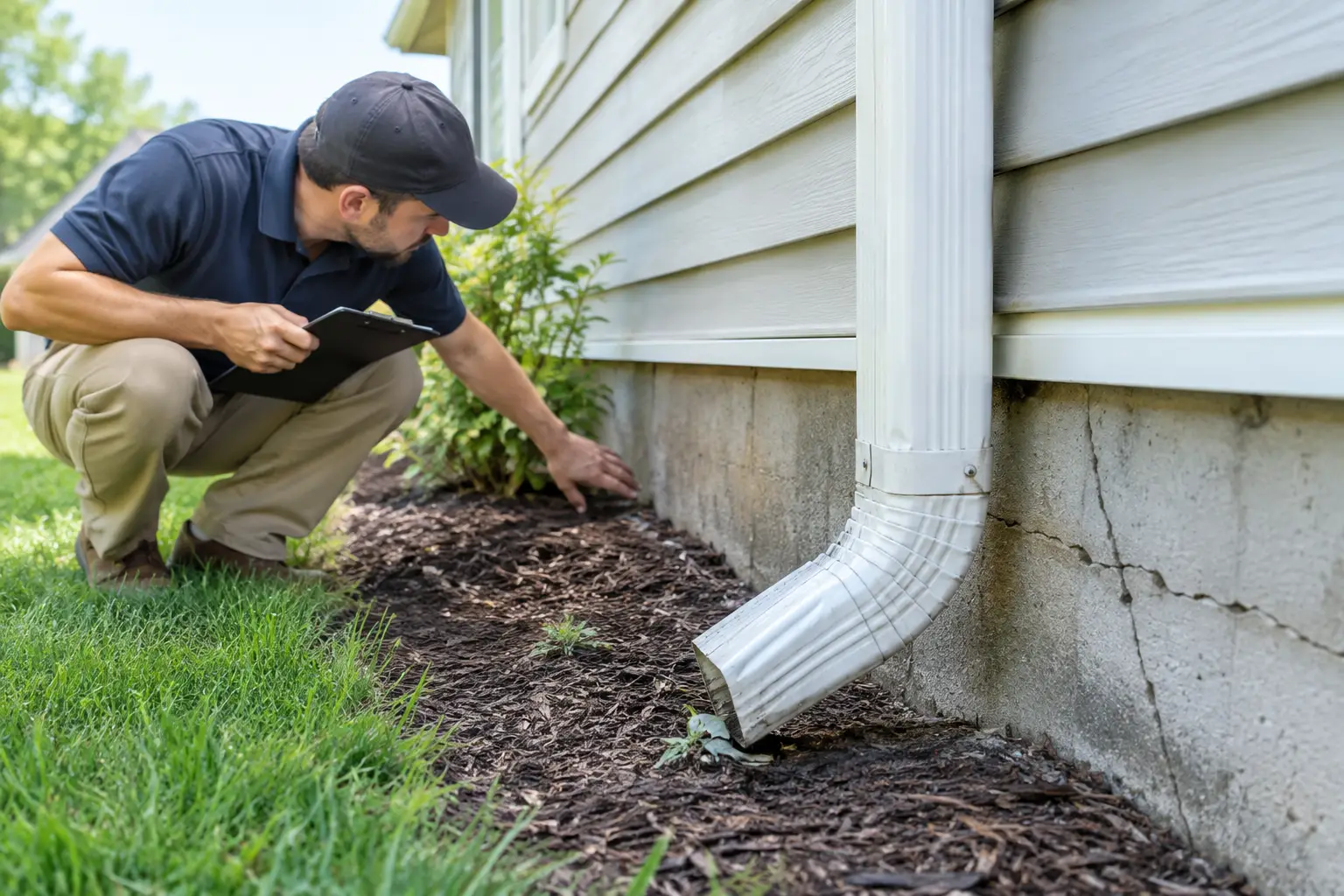
A gutter system can look like a minor detail during a home tour, especially compared with the roof, HVAC system, or a visible foundation crack. But water management is one of the systems that protects the entire house. So, can gutters cause foundation issues? Yes. When gutters overflow, leak, or discharge water too close to the home, they can contribute to soil movement and moisture conditions that place stress on a foundation.
For buyers in Greater Houston and surrounding communities, this deserves close attention. Many area homes are built on expansive clay soils that can swell when saturated and shrink during dry periods. That constant change beneath and around the home can affect how a foundation performs over time. Gutters do not create every foundation problem, but poor drainage can make an existing weakness worse or create conditions that deserve further evaluation.
Can Gutters Cause Foundation Issues? The Water Has to Go Somewhere
A gutter’s job is simple: collect roof runoff and move it away from the house in a controlled manner. When that system fails, roof water often lands directly along the foundation perimeter. During a heavy Texas rainstorm, even a modest roof can shed a substantial volume of water in a short period.
If downspouts are missing, disconnected, crushed, or aimed at the base of the wall, water can repeatedly soak the soil next to the foundation. That soil may expand as it absorbs moisture. When dry weather returns, it may contract. Uneven moisture around the house can lead to uneven soil movement, and foundations are not designed to perform their best under inconsistent support.
The concern is not limited to standing water. A downspout can appear to be working while still ending only a few inches from the home. That concentrated discharge may erode soil, create a low spot, or keep one section of the foundation perimeter wetter than the rest. Over months or years, the effect can be more significant than a single storm suggests.
In some homes, the opposite condition is also a concern. Gutters that are undersized or poorly sloped may overflow in selected areas, while other parts of the roofline drain correctly. This creates an uneven water pattern around the home, which is exactly what a foundation drainage plan should avoid.
How Poor Gutter Drainage Shows Up Around a Home
A gutter issue does not automatically mean the foundation has been damaged. Many drainage defects are relatively straightforward to correct when caught early. The key is recognizing when a small exterior issue may be part of a larger pattern.
During a property inspection, signs worth documenting can include gutters pulling away from the fascia, sagging sections that hold water, debris buildup, open seams, rusted components, or evidence that water has been spilling over the edge. Downspouts may be absent, disconnected, improperly routed, or terminating too close to the structure.
The ground below can offer useful clues as well. Look for eroded soil, mulch washed away from the wall, persistent ponding, or a negative grade that directs water back toward the house. Splash marks or staining on siding and masonry can indicate repeated overflow. These conditions do not prove structural movement by themselves, but they help explain why water may be collecting where it should not.
Inside the home, buyers may notice cracks at drywall corners, doors that rub or do not latch smoothly, gaps at trim, or cracks in exterior masonry. These observations require context. Homes naturally settle, and small cosmetic cracks are common. A qualified inspector looks at the location, direction, extent, and overall pattern of visible conditions rather than treating every crack as a foundation failure.
Why Houston-Area Soil Makes Drainage More Important
The Houston area presents a combination that makes gutter performance especially relevant: frequent intense rainfall, flat lots in many neighborhoods, and soil that can be sensitive to changing moisture levels. A home may have excellent gutters but still experience drainage trouble if the lot slopes toward the structure or if water has no practical path away after leaving the downspout.
Older homes can have additional complications. Extensions may have been added over time, landscaping may have changed the grade, and previous owners may have altered downspout routing. Concrete walkways, patios, and pool decking can also limit where water can drain. A solution that works on one side of a home may not work on another.
This is why buyers should avoid oversimplified conclusions. A visible crack does not necessarily mean gutters caused a foundation issue. Likewise, clean-looking gutters do not guarantee that drainage is adequate. The condition of the roof drainage system, the grading, the foundation perimeter, and the visible structure all need to be considered together.
What a Home Inspection Can and Cannot Tell You
A thorough pre-purchase inspection can identify visible gutter and drainage deficiencies, document accessible signs of possible structural movement, and help a buyer understand where further review may be appropriate. It gives you practical information before closing, when you still have the ability to ask questions, request repairs, negotiate, or seek a specialist’s opinion.
An inspector does not redesign a drainage system or perform foundation repairs. If visible conditions suggest a more significant concern, the appropriate next step may be consultation with a qualified drainage contractor, structural engineer, or foundation specialist, depending on the evidence. The goal is not to overreact to every defect. It is to avoid buying blind when several warning signs point in the same direction.
For example, a missing downspout extension on an otherwise well-maintained home may be a manageable maintenance item. Overflowing gutters, low grading, erosion at the perimeter, interior cracking, and sticking doors together tell a more complete story. That is the difference between a punch-list item and a condition that deserves additional evaluation before the transaction moves forward.
Practical Steps Homebuyers Should Take Before Closing
If you are evaluating a home, start by looking at where roof water will go during the next hard rain, not just how the gutters look on a sunny day. Check whether every downspout is connected and whether discharge is directed away from the foundation. Note obvious ponding, washed-out areas, and sections where soil or paving slopes back toward the home.
Ask for clarity when the inspection report identifies gutter or drainage concerns. Is the issue isolated or present around multiple sides of the house? Is there visible evidence of overflow or erosion? Are there related observations at the foundation, walls, doors, or masonry? Clear answers help you prioritize the issue without guessing.
It is also reasonable to ask the seller about past drainage work, previous foundation repairs, and recurring water problems. Documentation matters. A prior repair is not automatically a reason to walk away, but it should be understood before you commit to the purchase.
After purchase, regular gutter maintenance remains part of protecting the property. Gutters need to stay clear enough to flow, securely attached enough to hold their intended slope, and connected to downspouts that direct water away from the foundation. Landscaping should not block drainage paths or create low areas against the exterior walls.
Don’t Let a Small Drainage Detail Become a Costly Surprise
Gutters are easy to overlook because they sit above eye level, but their performance affects what happens at ground level. For a buyer, the right question is not simply whether gutters are present. It is whether the full drainage path moves water away from the house consistently and safely.
A careful inspection can put gutter, grading, and visible foundation conditions into perspective before closing. That clarity helps you make decisions with confidence, protect your investment, and address the right concerns before they become expensive surprises.