
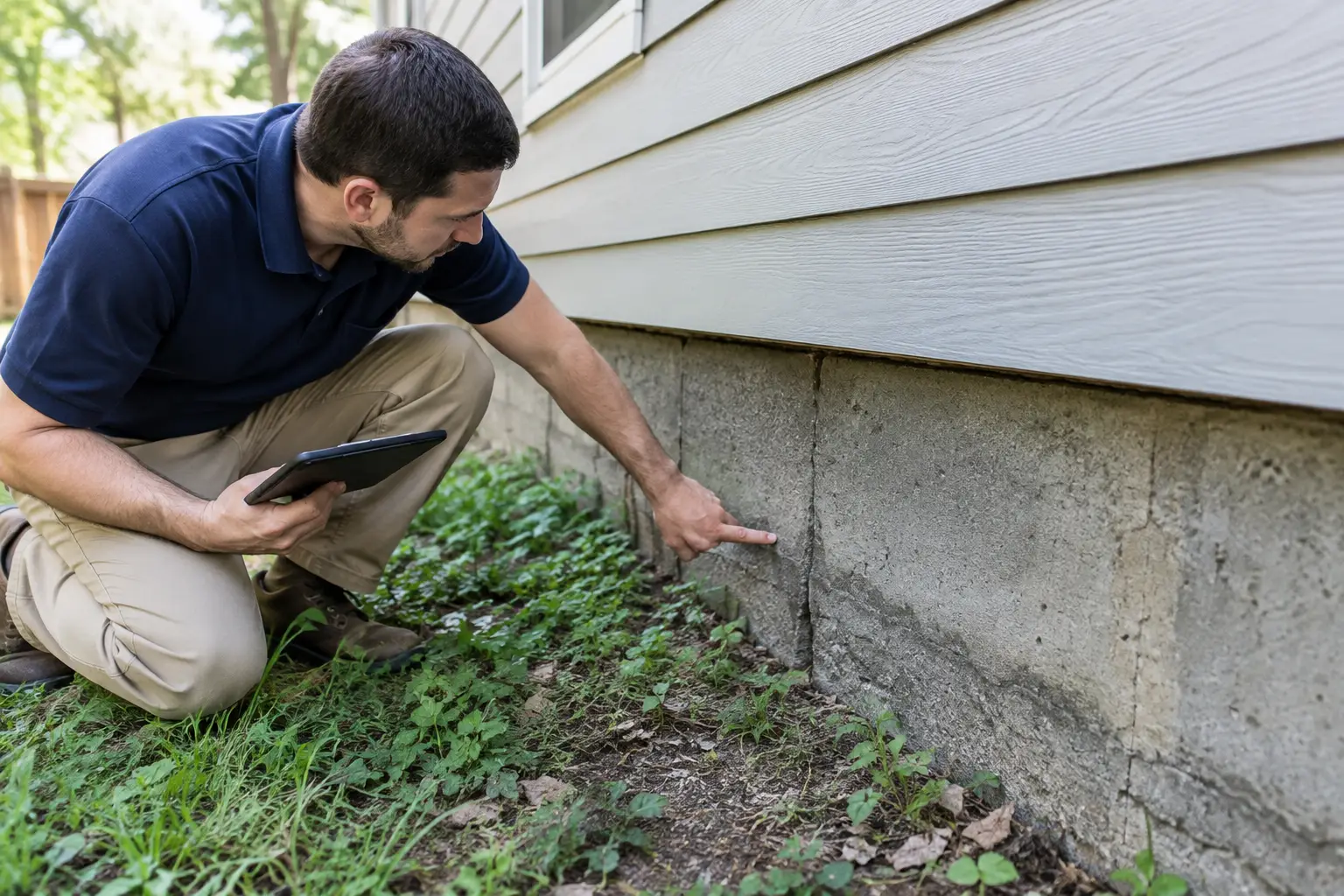
A hairline crack above a bedroom door may be ordinary settling. A cracked wall paired with a sticking exterior door, a sloping floor, and water collecting near the slab deserves a closer look. That distinction matters when buying in Greater Houston, where expansive clay soils, intense rain, dry spells, and aging drainage systems can all affect how a home performs over time.
Learning the common Houston foundation warning signs helps you ask better questions before closing. It does not mean every crack signals a major structural problem or that a home with movement is automatically a bad purchase. It means you can separate minor cosmetic issues from conditions that may require further evaluation, repair estimates, or careful negotiation.
Why Houston Homes Need a Closer Look
Many Houston-area homes are built on concrete slab foundations. The soil beneath those slabs can expand when it becomes saturated and shrink during extended dry periods. That seasonal movement does not affect every property equally. Soil conditions, grading, roof drainage, landscaping, plumbing leaks, tree placement, foundation design, and previous repairs all influence the result.
A home can also show signs of past movement that have remained stable for years. Conversely, a house with fresh paint and few obvious cracks may still have drainage conditions that could create future trouble. The practical question for a buyer is not simply, “Does this house have cracks?” It is, “What does the overall pattern of evidence suggest, and what should be investigated before I commit?”
Common Houston Foundation Warning Signs to Watch
Cracks in brick, drywall, or trim
Cracks are one of the most visible signs buyers notice, but their location, direction, width, and repetition matter more than their existence alone. Small drywall cracks at door corners or ceiling joints can result from normal material movement, past settling, or changes in humidity. They should still be documented, especially if several appear in the same area.
More concerning patterns can include stair-step cracks through brick mortar, diagonal cracks extending from window or door corners, separation between trim and wall surfaces, or cracks that appear to widen from one end to the other. A single crack does not tell the full story. Multiple cracks that align with uneven floors or binding doors provide more useful context.
Exterior brick deserves particular attention because it can make movement patterns easier to see. Cosmetic brick cracking may be repairable, but its cause should not be assumed. A thorough inspection considers the visible masonry along with the slab perimeter, drainage, interior finishes, and operation of nearby doors and windows.
Doors and windows that do not operate normally
A door that rubs the frame, will not latch, swings open by itself, or has a growing gap at the top or bottom can sometimes indicate movement. The same is true of windows that bind, stick, or no longer lock smoothly. However, wood expansion, humidity, worn hardware, poor installation, and ordinary age can produce similar symptoms.
The key is consistency. One stubborn interior door may be a minor adjustment. Several doors in different areas of the home that are out of square may point to a broader condition. Buyers should also look for doors that were recently shaved at the edge, unusually large gaps around frames, or patched drywall near openings. Those details do not prove a foundation issue, but they help build the story.
Uneven or sloping floors
Floors that feel noticeably out of level can be unsettling during a showing. In a slab-on-grade home, unevenness may be related to foundation movement, but it can also be connected to floor-covering installation, framing transitions, prior alterations, or a localized issue. A gradual slope can be difficult to judge by sight alone, especially in a furnished house.
Pay attention to changes in elevation between rooms, tile cracks near transitions, separated baseboards, or a floor that feels lower near an exterior wall. In older homes, some irregularity may be expected. What matters is whether the condition appears isolated, widespread, or connected to other visible warning signs.
Gaps where materials should meet
Foundation movement can reveal itself at connection points. Look at the spaces between walls and ceilings, cabinets and walls, countertops and backsplashes, or exterior trim and siding. Gaps around garage doors and changes at the joint between an attached garage and the main structure can also be worth noting.
These conditions are especially useful because they may show whether different parts of the house are moving differently. Still, they require careful interpretation. Caulk can shrink, cabinetry can settle, and finish work is not always perfectly square even in a newer home. An inspector looks beyond one gap to identify whether there is a meaningful pattern.
Cracked or displaced concrete outside the home
Cracks in a driveway, sidewalk, patio, or pool deck are common in Houston and do not automatically mean the house foundation is failing. Exterior flatwork is often thinner and constructed separately from the home’s slab, so it can move independently.
That said, exterior concrete can reveal drainage and soil conditions around the property. Areas that slope toward the home, sections that hold standing water, or pavement that has settled enough to direct runoff against the slab deserve attention. The goal is to understand where water goes during a heavy storm, not just how the concrete looks on a dry day.
Water management problems at the foundation perimeter
Water is often part of the foundation conversation in Southeast Texas. Gutters that discharge beside the slab, downspouts without extensions, negative grading, clogged drains, and low spots near exterior walls can keep soil overly wet. On the other hand, prolonged dry conditions can cause clay soil to shrink. Large swings in moisture are often more problematic than a consistently managed moisture level.
During an inspection, visible drainage conditions can be evaluated, but a dry-weather visit cannot recreate a major rain event. Ask the seller about areas that pond after storms, prior drainage work, and whether gutters or underground drain lines have been maintained. A buyer should also consider how landscaping and irrigation will affect water around the house after move-in.
Signs of Previous Foundation Work
Previous foundation repair is not automatically a reason to walk away. Many homes with properly designed repairs and good water management continue to perform well. The right next step depends on documentation, current conditions, and whether there are signs of ongoing movement.
Look for records that identify the repair company, repair date, scope of work, transferable warranty terms, and any engineering documentation. Exterior clues may include patched brick, exposed pier locations, altered landscaping, or repaired interior cracks. If prior work is disclosed, buyers should verify what was done rather than relying on a verbal description.
A home inspection can identify visible conditions and help determine whether specialized evaluation is appropriate. It cannot certify that a foundation will never move again, and no responsible inspector should make that promise. Soil, drainage, and weather continue to affect homes long after closing.
What to Do When You Notice Warning Signs
First, avoid making a decision from one symptom. Take note of the location and ask whether similar conditions appear elsewhere. Review seller disclosures, repair invoices, and permits when available. If the evidence suggests significant movement, obtain the right level of additional assessment before the option period ends.
For a buyer, timing matters. A structural or foundation specialist may be needed when visible conditions exceed the scope of a general inspection or when repair history raises unanswered questions. If repairs are recommended, request clear documentation of the scope, warranty, and any limitations. Estimates should reflect the actual condition, not a guess based on a single crack.
CK Inspections approaches foundation concerns as part of the whole home. Doors, finishes, drainage, exterior surfaces, roof runoff, and the structure itself are considered together, so buyers receive practical information rather than an alarming label with no context. That clarity can help you decide whether to proceed, negotiate, seek further evaluation, or keep looking.
A house does not need to be perfect to be a sound purchase. Before you buy, make sure its visible warning signs have been examined in context, its history has been documented where possible, and your decision is based on facts you can carry confidently to the closing table.