A water heater can look like a minor utility appliance tucked into a garage, closet, or attic – until it leaks. For homebuyers, water heaters leaking during an inspection or showing can point to anything from a manageable maintenance issue to a tank near the end of its service life. The difference matters because a failed water heater can damage flooring, walls, ceilings, stored belongings, and nearby building materials long before the replacement unit is installed.
A leak does not automatically mean you should walk away from a home. It does mean you need clear answers before closing: Where is the water coming from? Is the unit still operating safely? Has the leak damaged surrounding materials? And is this a repair item, a replacement item, or evidence of a larger plumbing concern?
Why a Leaking Water Heater Deserves Attention
Water heaters operate under pressure, heat water continuously, and connect to both plumbing and energy systems. When one begins to leak, the source and location of the water tell an important story. A small drip at a pipe connection is not the same as corrosion at the bottom of the tank. Likewise, moisture around a water heater installed in an attic creates a different level of risk than a similar issue in a garage with a properly installed drain pan.
For buyers, the immediate concern is not simply whether water is present. It is whether the condition could create an unexpected expense after move-in. A unit may still produce hot water while showing signs that failure is approaching. Sellers may not notice a slow leak, particularly when the water heater is in a utility closet, garage corner, or attic space that is rarely accessed.
In the Greater Houston area, water heaters are commonly located in garages, closets, attics, and utility rooms. Each location affects how much damage a leak can cause and how quickly it may be discovered. An attic leak can travel into ceilings and wall cavities below. A garage leak may be less destructive, but it can still indicate a failing appliance or improper drainage arrangement.
Common Reasons Water Heaters Leak
The location of the leak is one of the most useful clues. During a home inspection, a visible leak may be active, intermittent, or represented only by staining, corrosion, or mineral deposits from past moisture.
Leaks at Supply Connections or Valves
Cold-water supply and hot-water outlet connections at the top of the heater can drip because of loose fittings, deteriorated materials, or plumbing connections that need attention. Shutoff valves near the appliance can also seep around the valve stem or connection point.
These issues are often more limited than a tank failure, but they should not be dismissed. Continued dripping can corrode components, stain finishes, and damage nearby framing or drywall. The buyer should understand whether a qualified plumber needs to correct the condition before closing or whether it is a reasonable post-closing repair.
Temperature and Pressure Relief Valve Discharge
The temperature and pressure relief valve, often called the TPR valve, is a safety device. It is designed to release water if temperature or pressure inside the tank becomes excessive. Water at this valve or its discharge pipe may indicate that the valve itself is leaking, but it can also point to pressure or temperature conditions that need further evaluation.
A discharge pipe should be installed to safely direct released water to an appropriate location. Missing, improperly installed, blocked, or capped discharge piping is a safety concern. Buyers should not assume a wet area around this component is just condensation. The cause needs to be identified by a qualified plumbing professional.
Drain Valve Seepage
The drain valve near the lower portion of the tank may drip after routine flushing or because the valve no longer seals properly. This can be a relatively straightforward repair, depending on the valve type and the condition of the appliance.
However, a drain valve leak can be confused with water escaping from the tank itself. The distinction is significant. Water from a serviceable valve may be repairable. Water emerging from corroded tank seams generally means replacement is the practical solution.
Corrosion or Leakage From the Tank
Rust, corrosion, or moisture at the bottom of a water heater is one of the more concerning findings. Steel storage tanks have a finite service life. Once the internal tank or its seams deteriorate, repairs are usually not a dependable answer.
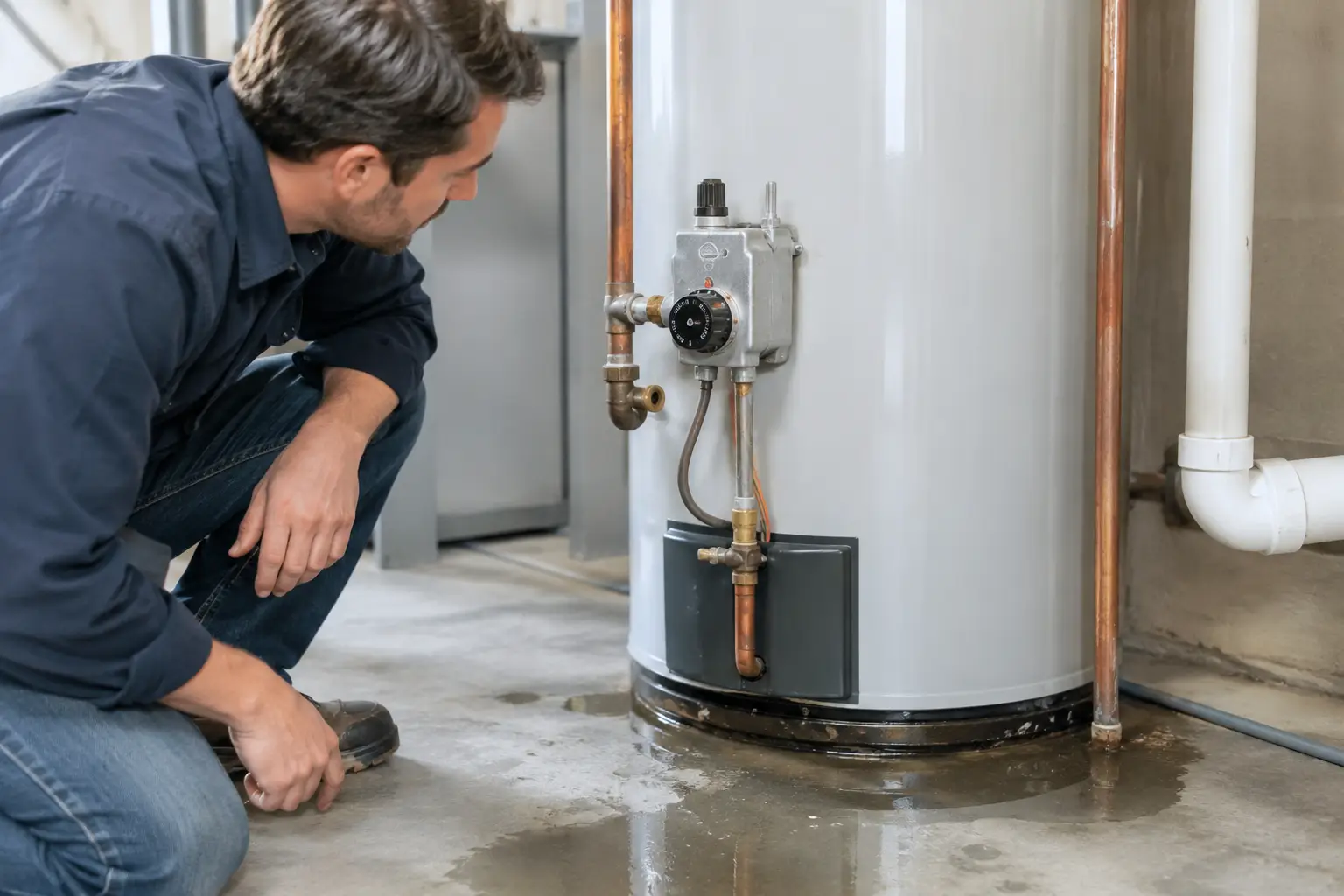
Look for rust at the base, flaking metal, water collecting beneath the unit, or heavy mineral staining. A pan can contain small amounts of water temporarily, but it does not solve a failing tank. If the source appears to be the tank, buyers should plan for replacement and ask whether surrounding materials have been affected.
What Buyers Should Look for During a Showing
You do not need to diagnose a water heater during a walkthrough, but a few observations can help you raise the right questions. Look around the base of the unit for standing water, rust trails, white mineral deposits, or dark staining. Check whether there is a drain pan where one would be prudent, especially for a water heater above finished areas.
Also notice the age label, usually found on the manufacturer data plate. Age alone does not determine whether a water heater is defective, but it provides useful context. An older unit with active leakage deserves more attention than a newer unit with a minor drip at an accessible connection.
If the water heater is in an attic, look for evidence of past overflow in the surrounding area, including ceiling stains in rooms below. Do not climb into unsafe or restricted spaces, and do not operate valves or attempt to test safety devices yourself. A home inspection is the appropriate time for a trained professional to evaluate visible conditions and report concerns.
Questions to Ask After an Inspection
When an inspection report identifies a leaking water heater, avoid vague requests such as “fix the leak.” A better approach is to seek documentation and a clear scope of work. Ask what component is leaking, whether the appliance can be safely operated as-is, and whether replacement is recommended.
It is also reasonable to ask whether the leak has caused damage outside the appliance itself. Water can affect drywall, flooring, trim, framing, insulation, and ceilings below attic installations. The visible drip may be the smallest part of the issue.
For a property purchase, your options depend on the transaction and the condition found. You may request repair by a qualified professional, request replacement when the tank is failing, negotiate a credit, or accept the condition with a realistic budget and plan. The right choice depends on the age of the unit, the severity of the leak, the risk of secondary damage, and the overall condition of the home.
Safety Considerations for Gas and Electric Units
A leaking water heater is not only a water-management issue. Gas-fired units have fuel connections, venting components, and combustion-related safety requirements. Electric units have electrical connections that should remain protected from water exposure. If water is near electrical components, if you smell gas, or if the appliance is making unusual sounds, the condition should be addressed promptly by the appropriate qualified professional.
Do not rely on a seller’s statement that a water heater “just needs a part” without supporting evaluation. That may be true, but the condition and recommended correction should be documented. A practical decision requires more than reassurance from someone who wants the transaction to move forward.
Avoid Costly Surprises Before Closing
A home inspection can identify visible leakage, corrosion, improper installation conditions, and signs that a water heater may need further evaluation. It cannot predict the exact day any appliance will fail, but it gives buyers the information needed to make a more confident decision.
CK Inspections helps buyers understand which findings are routine, which call for further review, and which may affect the cost of ownership soon after closing. That clarity matters when a water heater is hidden in an attic or tucked behind stored items, where small warning signs are easy to miss.
Before you commit to a home, treat a leaking water heater as a question that deserves a specific answer, not a condition to overlook. A clear diagnosis now can help protect your budget, your new home, and your peace of mind after the keys are in your hand.