A house can look clean, updated, and move-in ready from the living room down – while the attic is quietly telling a very different story. For homebuyers, attic moisture warning signs matter because they can point to roof leaks, ventilation problems, insulation damage, mold growth, and repair costs that do not stay small for long.
In the Houston area, attic moisture is not a rare issue. Heat, humidity, sudden storms, and aging roofing materials can all work together to trap moisture where most buyers never think to look. That is one reason attic conditions deserve close attention during a pre-purchase inspection. A problem overhead can affect the roof structure, indoor air quality, energy efficiency, and even what you end up negotiating before closing.
Why attic moisture is a bigger deal than it seems
Moisture in an attic is rarely just about a few damp spots. It usually means water is entering from somewhere, or warm humid air is getting trapped where it should be venting out. Sometimes the source is a roof leak. Other times it is poor attic ventilation, disconnected bathroom exhaust ducts, air leaks from the living space below, or HVAC issues in the attic.
The challenge is that these problems can stay hidden for a long time. Sellers may not notice them. Fresh insulation can mask older staining. Cosmetic updates inside the home do nothing to fix what is happening above the ceiling. By the time the signs are obvious, the repairs may involve more than one trade – roofing, insulation, ventilation, drywall, and sometimes mold remediation.
8 attic moisture warning signs buyers should not ignore
1. Dark stains on roof decking or framing
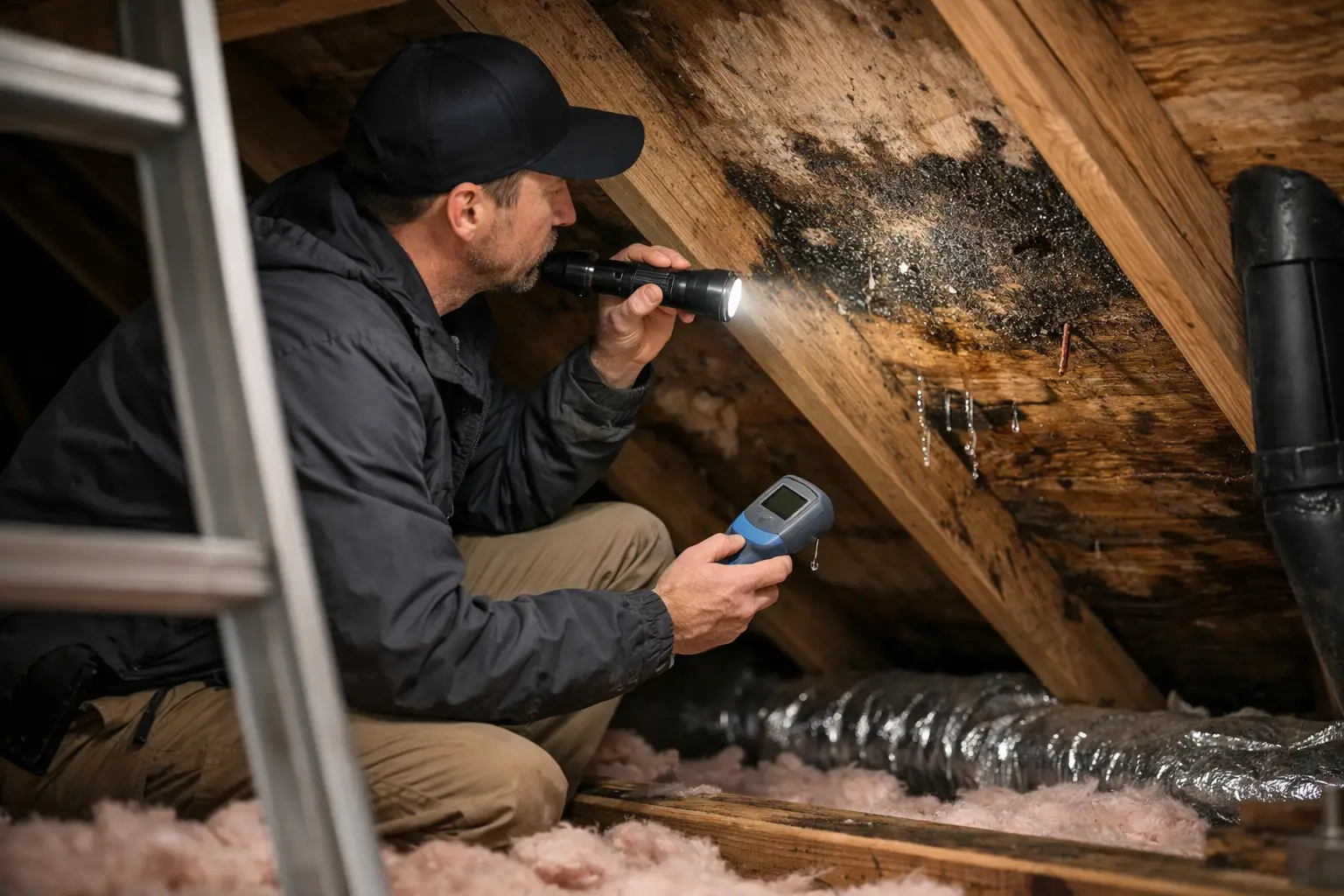
One of the clearest attic moisture warning signs is visible staining on the underside of the roof decking or on rafters and trusses. These stains may look brown, black, or gray, and they often show up near roof penetrations, valleys, chimneys, or previous repair areas.
Not every stain means the leak is active today. Some may be from an older issue that was repaired. But that distinction matters, and it is not something buyers should guess at during a showing. An inspection helps determine whether the staining appears historic, ongoing, or tied to a broader moisture pattern.
2. Mold-like growth or fuzzy discoloration
If wood surfaces in the attic show patchy black, white, or greenish growth, moisture has likely been present long enough to support organic growth. This can happen when humid air stays trapped in the attic, especially in hot Texas conditions.
The exact substance cannot be identified by sight alone, but visible microbial growth is still a red flag. It points to excess moisture and often to ventilation or air sealing problems. Even when the roof itself is not actively leaking, the attic environment may be creating conditions that should be corrected.
3. Rusted nails, metal fasteners, or hardware
Buyers often overlook rust in the attic, but it can be a useful clue. When nail tips and metal connectors show corrosion, it may mean condensation is regularly forming inside the attic. That usually happens when warm, moist indoor air rises into the attic and meets cooler surfaces.
Rust does not always mean major structural damage is present, but it does suggest the attic is too damp. In many homes, this is tied to inadequate ventilation, missing vapor controls, or air leakage from the rooms below.
4. Damp, compressed, or matted insulation
Insulation should be dry and fluffy enough to do its job. When it becomes damp, flattened, or clumped together, its performance drops. Wet insulation can also hide active roof leaks and support mold growth on surrounding materials.
This is one of the more costly attic moisture warning signs because the fix may involve more than drying things out. If the moisture source is still active, damaged insulation may need to be removed and replaced after the underlying issue is corrected.
5. A musty smell inside the attic or upper floors
Odor is not proof by itself, but it is often an early warning. A stale, musty smell in the attic can indicate elevated humidity, wet materials, or microbial growth. Sometimes buyers notice a similar smell in closets, upstairs bedrooms, or near attic access panels.
Odors can have more than one source, so context matters. Still, when a musty smell lines up with staining, rust, or insulation problems, it becomes much harder to dismiss.
6. Poor ventilation or blocked attic airflow
An attic does not need to feel comfortable, but it does need to breathe properly. If soffit vents are blocked by insulation, ridge vents are missing or ineffective, or the attic lacks balanced intake and exhaust ventilation, moisture can build up and stay trapped.
This issue is especially common in homes where insulation upgrades were done without protecting soffit ventilation paths. It also shows up in older homes that were not designed for current ventilation standards. Poor ventilation alone may not create a leak, but it can turn normal humidity into a damaging moisture problem.
What causes attic moisture problems?
The source is not always obvious, and that is where many buyers get caught off guard. A roof leak is the most familiar cause, but it is far from the only one.
Bathroom fans that vent into the attic instead of outside can dump warm, wet air directly into the space. HVAC duct leaks can create condensation. Gaps around recessed lights, attic hatches, plumbing penetrations, and wiring openings can allow indoor humidity to rise into the attic. In some homes, a combination of small issues creates one larger moisture pattern.
Texas weather adds another layer. High outdoor humidity, heavy rain, and intense heat can stress roof systems and ventilation performance. That does not mean every attic in the region has a moisture problem. It does mean buyers should take attic clues seriously rather than treating them as minor cosmetic concerns.
Why homebuyers should care before closing
Attic moisture can affect far more than the attic itself. Persistent moisture can damage roof decking, shorten the life of roofing materials, reduce insulation efficiency, and contribute to staining or drywall issues inside the home. If the problem has been ongoing, repair costs can stack up quickly.
There is also a negotiation issue. Once you close, hidden moisture damage becomes your problem. Before closing, it may be possible to request repairs, ask for specialist evaluation, negotiate credits, or at minimum make a more informed buying decision. That is the real value of identifying these concerns early.
For first-time buyers, this is especially important. A home may pass the eye test during a showing and still have attic conditions that deserve attention. You do not need to become a roofing or ventilation expert. You do need enough information to avoid costly surprises.
How an inspection helps identify attic moisture warning signs
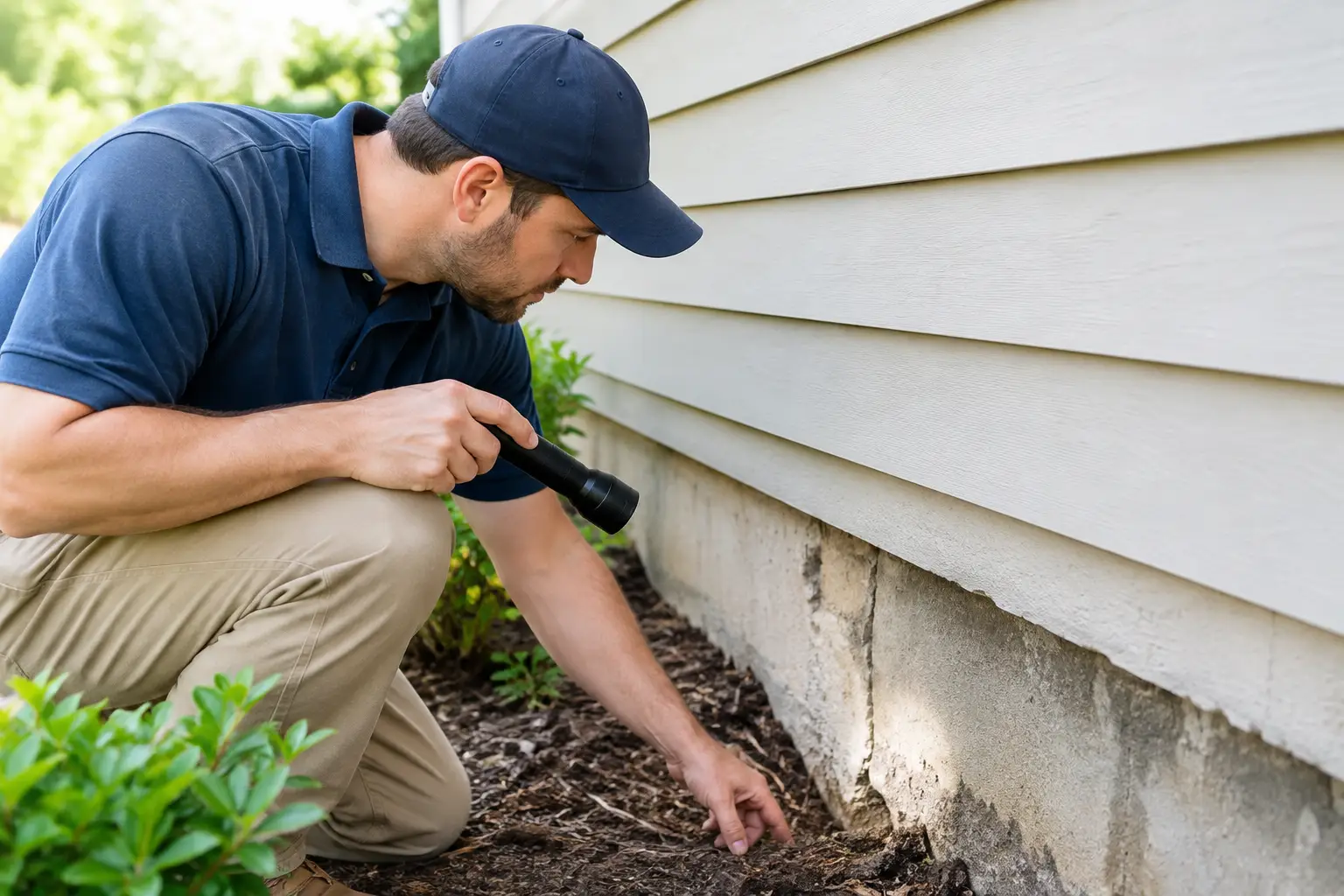
A thorough home inspection brings the attic into focus in a way a typical walkthrough never will. Inspectors look for visible signs of leaks, staining, damaged framing, insulation concerns, ventilation deficiencies, and other red flags that could point to moisture intrusion or condensation issues.
Just as important, findings are organized in a way that helps buyers act. Instead of vague concern, you get documented observations and visual support that can be used in repair discussions or next-step evaluations. For buyers in Greater Houston, Cypress, Katy, and surrounding communities, that level of clarity matters. CK Inspections approaches attics the same way it approaches the rest of the home – with a practical goal of helping clients make confident decisions before they are committed.
When a moisture sign is minor – and when it is not
Not every attic issue means you should walk away from a house. Some moisture-related findings are straightforward to correct, especially when caught early. A disconnected vent duct or localized past leak may be manageable if the scope is limited and properly addressed.
What raises the stakes is pattern and severity. Widespread staining, visible growth, heavily rusted fasteners, soaked insulation, or signs of structural deterioration point to a longer-term issue. In those cases, the smartest move is not panic. It is getting clear documentation and understanding the repair path before you move forward.
A house does not need to be perfect to be worth buying. But hidden moisture in the attic is the kind of issue that should never be brushed aside. If the attic is showing warning signs, treat that as valuable information. It gives you the chance to ask better questions, protect your budget, and move toward closing with your eyes open instead of buying blind.