A home can look perfectly normal a few weeks after a severe Texas storm. The debris is gone, the lawn has been cleaned up, and a fresh coat of paint may hide prior water entry. But storm damage does not always announce itself at the front door. For a buyer, the concern is not simply whether a property has been through wind, hail, or heavy rain. It is whether the home was properly evaluated and repaired afterward – and whether any remaining conditions could become your expense after closing.
In Greater Houston, a home’s ability to shed water, resist wind, and protect its systems matters every year. A careful pre-purchase inspection helps put visible conditions into context so you can make decisions based on the home’s current condition, not assumptions about its history.
Storm Damage Is More Than a Roof Question
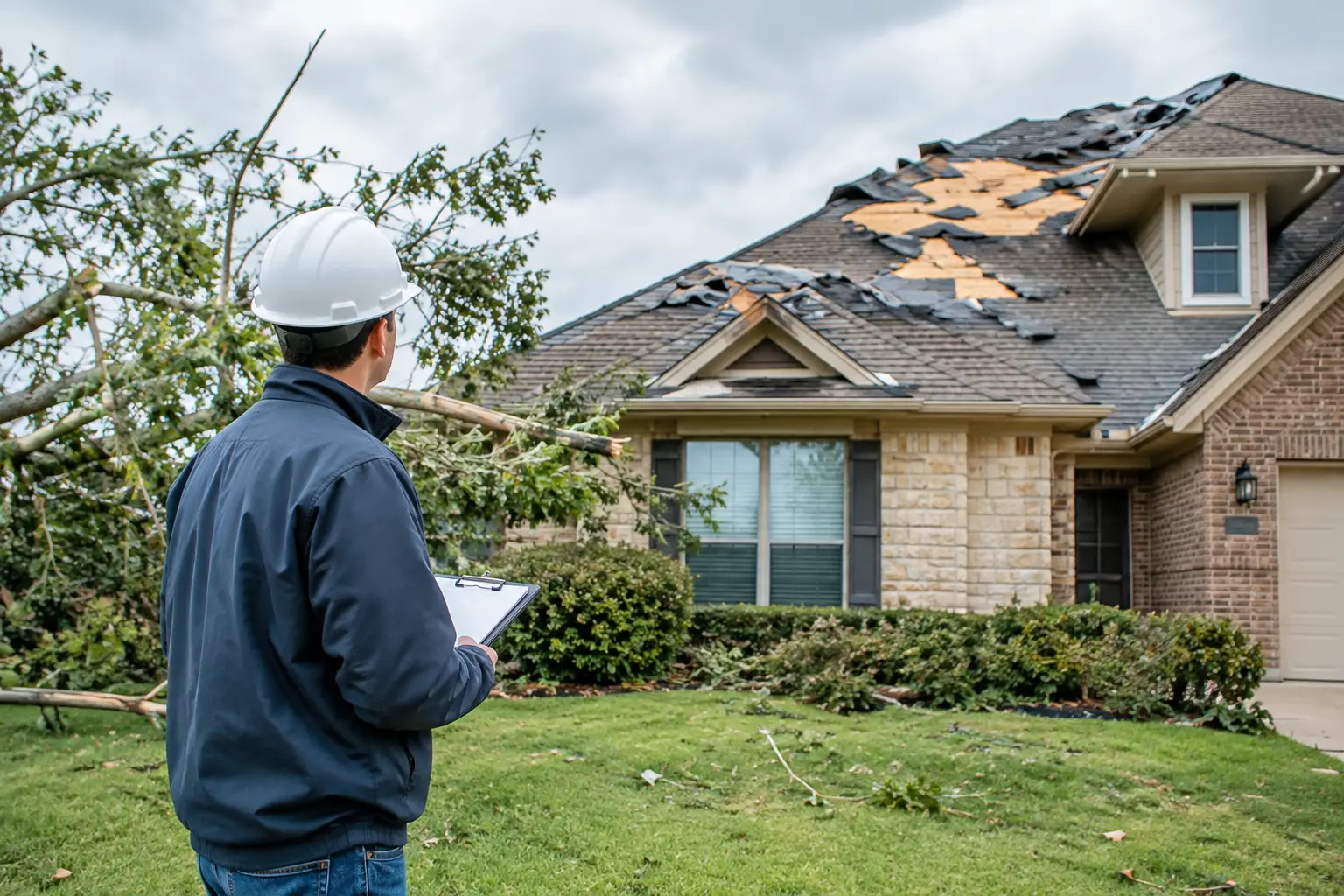
When buyers hear “storm damage,” they often think of missing shingles or obvious roof leaks. Roofing is an important part of the picture, but a storm affects a house as a connected system. Wind can loosen exterior materials, hail can affect roof coverings and metal components, and heavy rain can expose weaknesses in drainage, seals, siding, windows, doors, and attic ventilation.
A home may have had repairs that look acceptable from the ground but leave unanswered questions. For example, a repaired roof covering does not automatically confirm that related flashing, penetrations, gutters, or interior finishes were addressed correctly. Likewise, water stains that have been painted over may be old and inactive, or they may point to a condition that still deserves further evaluation.
The goal is not to assume every imperfection is evidence of a major loss. It is to identify conditions that need clarification before your option period ends or before you remove inspection contingencies.
Wind, Hail, and Heavy Rain Leave Different Clues
High winds may affect shingles, ridge materials, soffits, fascia, fencing, screens, and exterior trim. Hail can leave marks on roof coverings, gutters, vents, downspouts, and air-conditioning equipment. Heavy rainfall tends to reveal drainage problems, roof leaks, window and door seepage, and areas where water collects near the foundation.
Each of these events creates different risks, and the age of the home matters. An older roof with normal wear may be more susceptible to wind-related damage than a newer roof, but a newer roof can still have installation or flashing concerns. A recently renovated home may look updated while still having grading or drainage issues that were never corrected.
Start With the Property’s Water Management
Water should move away from the house, not toward it. That sounds simple, but it is one of the most useful principles a buyer can carry into a showing.
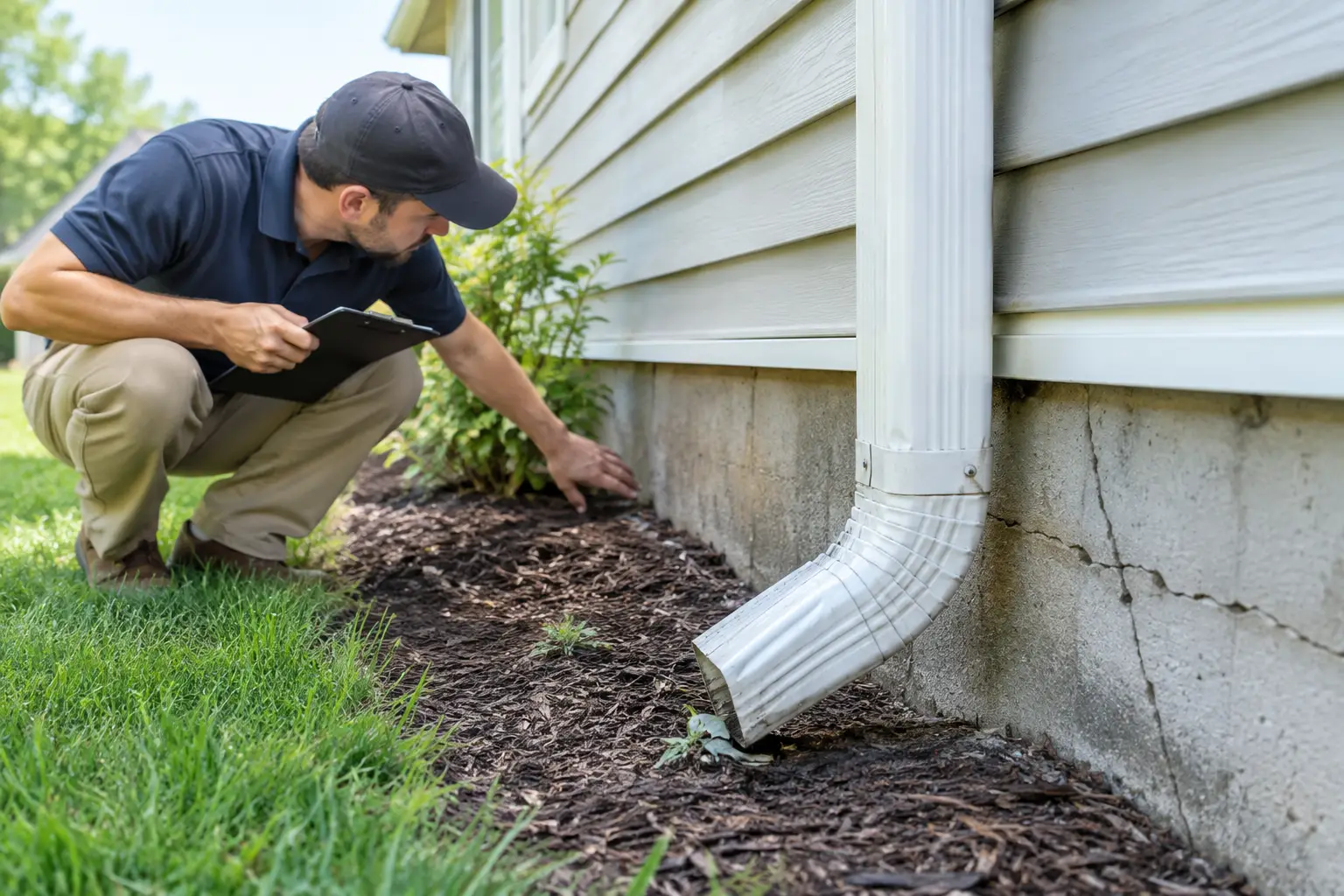
Look at the grade around the foundation, the condition and placement of gutters and downspouts, and whether downspouts discharge near the home. Notice areas of standing water, bare soil caused by runoff, eroded mulch, or low spots near exterior walls. These conditions do not prove interior damage, but they can indicate that the house has been exposed to repeated moisture stress.
Pay attention to patios, walkways, and driveways as well. Settling, cracking, or poor slope can send water in the wrong direction during a strong rain. In the Houston area, where intense downpours can occur quickly, even a modest drainage deficiency can become more significant over time.
A professional inspection can identify observable drainage concerns and their potential impact. If conditions suggest a more complex issue, further review by the appropriate specialist may be recommended before closing.
Check the Exterior as a Connected Protective Layer
The roof, exterior cladding, windows, doors, trim, vents, and flashing all work together to keep weather outside. A problem in one area can affect another, especially after a severe storm.
From the ground, buyers should be cautious about obvious signs such as loose materials, bent gutters, damaged screens, cracked window panes, deteriorated caulking, or gaps around exterior openings. Inside, look for discoloration at ceilings, exterior walls, window trim, and around skylights. Fresh paint is not automatically a red flag, but it should not end the conversation if it appears in an area where water entry would be plausible.
The attic can also provide useful context. Inspectors look for accessible signs of roof leaks, staining, damaged framing, improper ventilation, and insulation concerns. An attic condition may be old and dry, active, or impossible to date with certainty. That distinction matters because an old repaired leak may be manageable, while evidence of ongoing water intrusion requires prompt attention.
Do Not Overlook Mechanical and Electrical Components
Outdoor equipment is exposed to weather, and storm events can affect more than the building envelope. Air-conditioning condensers may show hail-related impact, bent fins, or storm debris concerns. Exterior electrical equipment, service connections, and disconnects can be affected by water exposure, physical damage, or improper repairs.
A home inspector evaluates accessible, visible conditions and the functional operation of major systems within the scope of the inspection. That does not replace an in-depth evaluation by a licensed HVAC technician, electrician, roofer, or engineer when a concern is identified. It does give you a clear starting point for deciding whether additional review is warranted.
This is where a detailed report is valuable. Clear photographs and straightforward explanations help buyers, agents, and sellers discuss the actual condition observed rather than relying on vague descriptions such as “possible storm issue.”
Ask for Documentation, Not Just Reassurance
If the seller reports prior storm repairs, ask practical questions. A repair history is not necessarily a reason to walk away. In fact, a documented repair completed by qualified professionals can be more reassuring than an unresolved issue that was never addressed.
Before closing, it is reasonable to ask about:
- The date and nature of any storm-related insurance claim
- Repair invoices, warranties, permits, or contractor information when available
- The age of the roof and whether it was repaired or fully replaced
- Any known leaks, drainage events, flooding, or water entry since repairs were completed
Documentation can help establish a timeline, but it should be compared with the property’s present condition. A paid invoice does not guarantee that every related issue was corrected. On the other hand, a lack of paperwork does not automatically mean the home is defective. Your inspection findings, the seller’s disclosures, and any specialist evaluations should be considered together.
How Storm Damage Can Affect Your Negotiation
Inspection findings are not a pass-fail grade for a home. Nearly every property has maintenance needs, and storm exposure is common in Texas. The more useful question is whether the condition creates a meaningful cost, safety concern, risk of future damage, or uncertainty that should be resolved before you proceed.
For minor conditions, you may simply plan for maintenance after closing. For more significant concerns, you may request repairs, seek a credit, renegotiate the purchase price, or ask for additional evaluations. The right approach depends on the seriousness of the issue, the home’s price and condition, the local market, and your own tolerance for repairs after moving in.
Be careful about accepting broad promises such as “the roof is fine” or “it was fixed after the storm” without supporting information. Specific documentation and professional evaluations are more useful than general reassurance. If a repair is negotiated, make sure expectations are clear regarding who will perform the work, what work is included, and what documentation will be provided.
The Inspection Timing Matters
A home inspection is most useful when you still have time to act on the findings. Schedule it early enough in your option period to review the report, ask questions, obtain any recommended specialist evaluations, and make informed decisions without unnecessary pressure.
CK Inspections helps buyers understand the condition of major home systems in practical terms, including how observed concerns may affect ownership after closing. The purpose is not to create fear around every stain or repair. It is to help you avoid costly surprises and move forward with confidence when the facts support the decision.
A storm-tested home can still be an excellent purchase. Before you commit, make sure its current condition tells the same story as the listing, the disclosures, and the repairs you have been told about.