
A home can look clean, updated, and move-in ready while still hiding foundation trouble. That is why a foundation inspection checklist matters so much during the buying process. Cosmetic upgrades can distract from cracks, drainage problems, and structural movement that may lead to expensive repairs after closing.
In the Houston area and across many Texas communities, foundation performance is a real concern. Expansive clay soils, heavy rain, drought cycles, poor drainage, and long-term settling can all affect how a home behaves over time. For a buyer, the goal is not to diagnose every structural issue on the spot. The goal is to recognize the signs, understand the risk, and make sure the home gets the level of evaluation it needs before you commit.
What a foundation inspection checklist should help you catch
A useful checklist does more than tell you to look for cracks. It helps you connect visible symptoms to the bigger picture. A single hairline crack in concrete may be normal. A pattern of cracking, sloping floors, sticking doors, and exterior drainage problems deserves much closer attention.
That distinction matters because foundation concerns are rarely just about one isolated defect. Often, the warning signs show up in different parts of the house at the same time. What you see around windows, flooring, brick veneer, and grading can help tell the story of whether the movement is minor, typical, or potentially significant.
For buyers, this is also where expectations need to stay realistic. Not every older home will be perfectly level, and not every crack means structural failure. At the same time, dismissing foundation symptoms as “normal settling” without a careful inspection can be an expensive mistake.
Start outside before you look inside
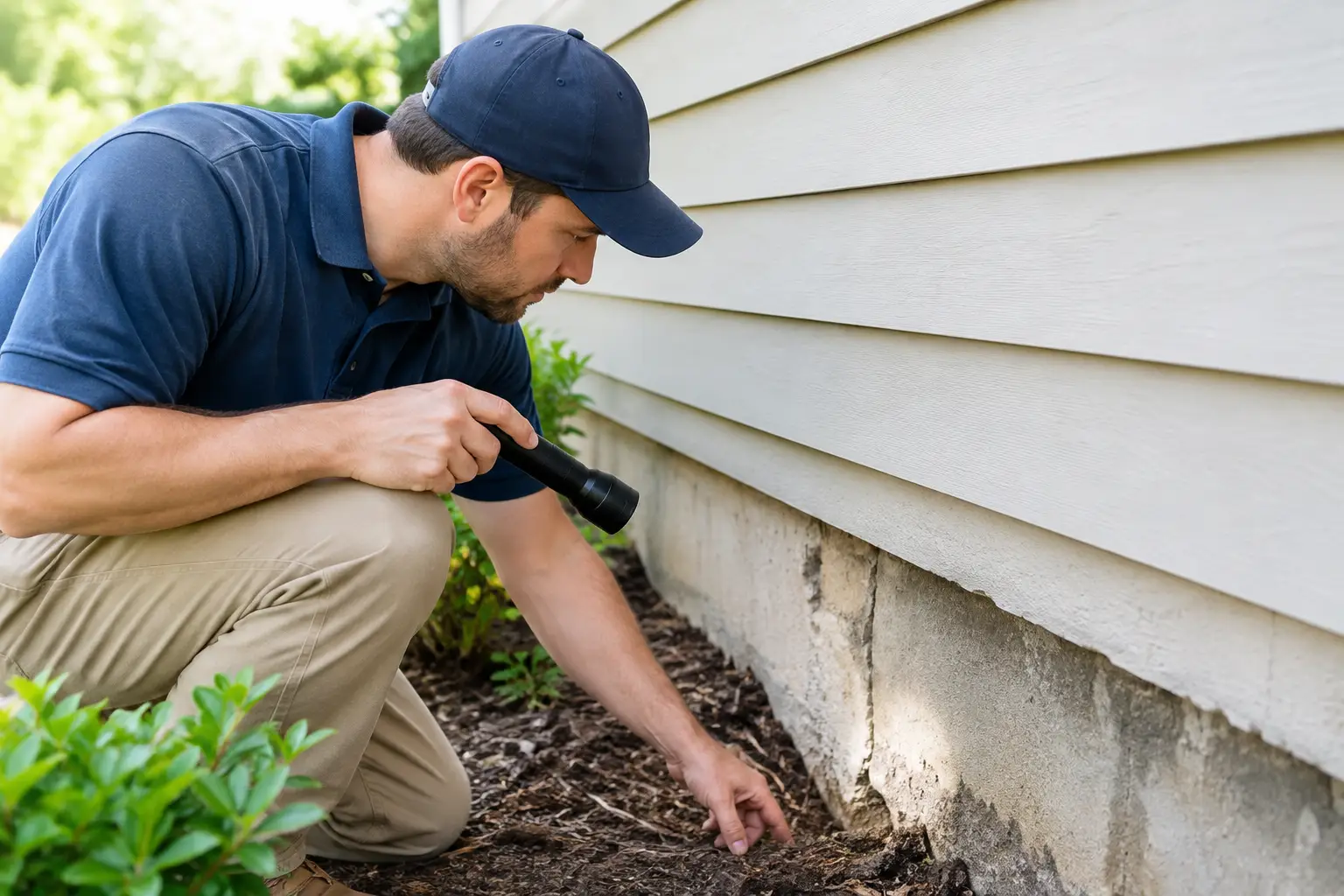
The exterior often gives early clues about foundation performance. Walk the perimeter and pay attention to how water moves around the house. In Texas, drainage is a major factor. If the soil around the home slopes toward the foundation instead of away from it, moisture can collect where it should not. If large areas of soil are pulling away from the slab during dry conditions, that can also signal movement-related stress.
Look closely at the foundation line, brick veneer, and siding. Cracks in exterior masonry, especially stair-step cracks in brick mortar joints, can point to settlement or differential movement. Gaps around trim, separated sealant joints, and areas where exterior finishes look distorted may also suggest that portions of the structure have shifted.
You should also notice whether trees are planted very close to the home. Mature roots can affect moisture levels in the soil, and in some cases that contributes to uneven movement. That does not automatically mean there is damage, but it adds context.
Gutters and downspouts deserve attention too. If roof runoff is dumping near the foundation, water may be saturating the soil in ways that increase risk over time. One of the simplest but most overlooked parts of a foundation inspection checklist is checking whether water is being carried away from the home.
Inside the house, look for patterns instead of isolated flaws
Once you are indoors, focus less on cosmetic imperfections and more on repeated symptoms. Doors that rub, latch poorly, or swing open on their own can sometimes reflect shifting frames. Windows that stick or show uneven gaps may point to the same issue. Again, one stubborn door is not proof of a major problem, but several in different areas of the home deserve attention.
Walls and ceilings often reveal movement in subtle ways. Look for cracks above doorways, at window corners, and where walls meet ceilings. Pay attention to whether repairs appear fresh. A newly painted patch is not necessarily suspicious, but when a home shows multiple recently covered crack areas, buyers should ask why.
Floor performance matters just as much. Walk slowly and notice whether the floor feels sloped, uneven, soft, or bouncy. Tile cracks can be especially useful clues because rigid finishes tend to reveal movement more clearly than carpet or vinyl. If one area feels noticeably different from the rest of the house, that is worth documenting.
Cabinets, countertops, and trim can also show signs of movement. Watch for separation at backsplashes, visible gaps between built-ins and walls, and trim that no longer sits tight. These are not dramatic defects on their own, but they can support a larger pattern.
A practical foundation inspection checklist for homebuyers
When buyers want to stay organized, a simple field checklist helps. During a showing or walk-through, pay attention to these conditions:
- Exterior cracks in brick, stucco, or foundation surfaces
- Poor grading or standing water near the home
- Gutters or downspouts that discharge too close to the foundation
- Soil pulling away from the slab or signs of chronic moisture imbalance
- Interior wall or ceiling cracks, especially around openings
- Doors and windows that stick, bind, or do not close evenly
- Sloping, uneven, or cracked floors
- Gaps at trim, cabinets, countertops, or exterior penetrations
- Evidence of past foundation repair, such as patched areas or disclosure documents
- Signs that cosmetic repairs may be covering recurring movement
This checklist is not a substitute for a professional inspection, but it can help you ask smarter questions before the option period gets away from you.
When foundation repair history is a good sign and when it is not
Buyers sometimes panic when they hear that a home has had prior foundation repair. That reaction is understandable, but the reality is more nuanced. Previous repairs are not automatically a deal-breaker. In some cases, a properly repaired and well-documented foundation issue may be less concerning than an active problem that has never been addressed.
What matters is the quality of the repair, whether the movement appears ongoing, and whether supporting documentation exists. Ask for engineer evaluations, repair invoices, transferable warranties, and any monitoring records if available. If the seller cannot provide much information, that does not prove the repair was poor, but it does increase uncertainty.
This is one of those areas where professional guidance protects buyers. A general home inspection may identify signs of movement and recommend further evaluation when conditions warrant it. If the evidence suggests structural concerns beyond the scope of a standard inspection, a licensed structural engineer may be the right next step.
Why drainage and moisture conditions matter so much in Texas
Foundation performance is closely tied to moisture. In the Greater Houston region, weather swings can be hard on structures. Long dry periods may cause soil shrinkage. Heavy rain can rapidly re-saturate the ground. Repeated expansion and contraction put stress on slabs, piers, and structural components.
That is why a foundation inspection checklist should always include drainage observations. A home may show only mild interior symptoms today, but if the grading is poor and water management is inadequate, the risk of future movement can be much higher. Buyers are not just purchasing the house as it looks on inspection day. They are also inheriting the conditions that affect how it performs over time.
This does not mean every home with imperfect grading has a foundation problem. It means drainage should be treated as part of the structural conversation, not as a separate cosmetic issue.
What a home inspection can and cannot tell you
A professional home inspection is one of the best ways to avoid buying blind, but it is important to understand the scope. An inspector can identify visible signs of foundation movement, document concerning conditions, and explain how those signs fit into the larger condition of the home. That includes related symptoms in walls, doors, floors, exterior finishes, and drainage.
What an inspection cannot do in every case is offer destructive testing, confirm hidden subsurface conditions, or replace engineering analysis where major structural questions exist. Sometimes the right answer is not immediate alarm. It is targeted follow-up.
That is actually good news for buyers because it keeps decisions grounded in evidence. Instead of guessing, you can move forward with organized findings, visual documentation, and clear recommendations.
Use the checklist to make better decisions, not rushed ones
The most helpful foundation inspection checklist is the one that helps you slow down and think clearly. If you see one small crack in an otherwise stable home, that may simply be part of normal aging. If you see multiple signs across the exterior, interior, and drainage conditions, the home deserves closer review before negotiations move forward.
For buyers, the biggest risk is not always the defect itself. It is missing the chance to understand it before closing. A careful inspection gives you leverage, whether that means requesting repairs, negotiating price, budgeting for future work, or deciding a property carries more risk than you want to take on.
At CK Inspections, that is the point of the process – helping buyers understand what they are really purchasing so costly surprises do not show up after the keys are in hand. If a home raises foundation concerns, the right next step is not panic. It is getting clear information from a professional who knows what to look for and how to explain what it means.
A house does not have to be perfect to be a good purchase, but you should know where the warning signs are before you say yes.