A home can have an attractive kitchen, a solid-looking roof, and a clean inspection report from a seller’s disclosure, yet still carry a costly plumbing concern behind the walls. Galvanized pipe failure is one of the more common risks in older Houston-area homes because the pipe may look acceptable from the outside while corrosion is steadily restricting water flow within.
For a buyer, this is not simply a question of whether a faucet works during a showing. It is a question of remaining service life, the likelihood of leaks, water quality concerns, and whether a plumbing replacement could be waiting shortly after closing. Knowing where galvanized piping is present and what its condition suggests can help you make a better-informed decision before you buy.
What Is Galvanized Plumbing Pipe?
Galvanized steel pipe was widely used for residential water supply lines for decades, particularly in homes built before the 1960s. The steel pipe was coated with zinc to slow rust and corrosion. When new, it was a practical and durable plumbing material.
The problem is that the zinc coating does not last forever. As it breaks down, the steel beneath becomes vulnerable to corrosion. Mineral deposits, rust, and scale can develop on the pipe’s interior walls. Over time, a pipe that began with a clear opening can become significantly narrowed.
Many older homes have been updated in stages. A buyer may see copper, CPVC, or PEX piping near the water heater or beneath a sink, then assume the entire home was replumbed. That is not always the case. Newer piping may have been connected to older galvanized sections that remain in walls, crawlspaces, or other concealed areas.
Why Galvanized Pipe Failure Matters to Homebuyers
A galvanized water line does not necessarily fail all at once. In many cases, it declines gradually. Low water pressure may begin at one bathroom, hot water may flow more slowly than cold water, or a homeowner may notice rusty-looking water after the plumbing has not been used for several hours.
That gradual decline can make the issue easy to overlook. However, a restricted line can eventually leak, and older threaded fittings are often vulnerable points. A leak inside a wall, beneath a slab, or in an inaccessible area can lead to repairs that extend beyond plumbing work. Damaged drywall, flooring, cabinets, and finishes may also need attention.
For buyers, the largest concern is often the scope of a future repipe. Replacing a short exposed section is very different from replacing deteriorated supply lines throughout an occupied home. The right path depends on the home’s layout, the type and extent of piping present, accessibility, previous alterations, and evidence of active problems.
A home with galvanized plumbing is not automatically a deal breaker. But it deserves a clear evaluation before you remove contingencies or move forward without a plan.
Common Signs of Galvanized Pipe Failure
During a home inspection, visible piping and accessible plumbing components can provide useful clues. The inspection cannot see every pipe inside every wall, but observable conditions often help identify when further evaluation is warranted.
Low or Uneven Water Pressure
A slow flow at one fixture can have several causes, including a clogged aerator or a failing fixture valve. Low pressure at multiple fixtures, especially when it is more noticeable on the hot-water side, can point to interior corrosion or mineral buildup in older supply pipes.
Pay attention to the difference between pressure and flow. Municipal water pressure can be adequate while deteriorated piping limits the amount of water reaching fixtures. A shower that weakens when another faucet is used may be a practical sign that the plumbing system is struggling to deliver water where it is needed.
Corrosion at Exposed Pipe and Fittings
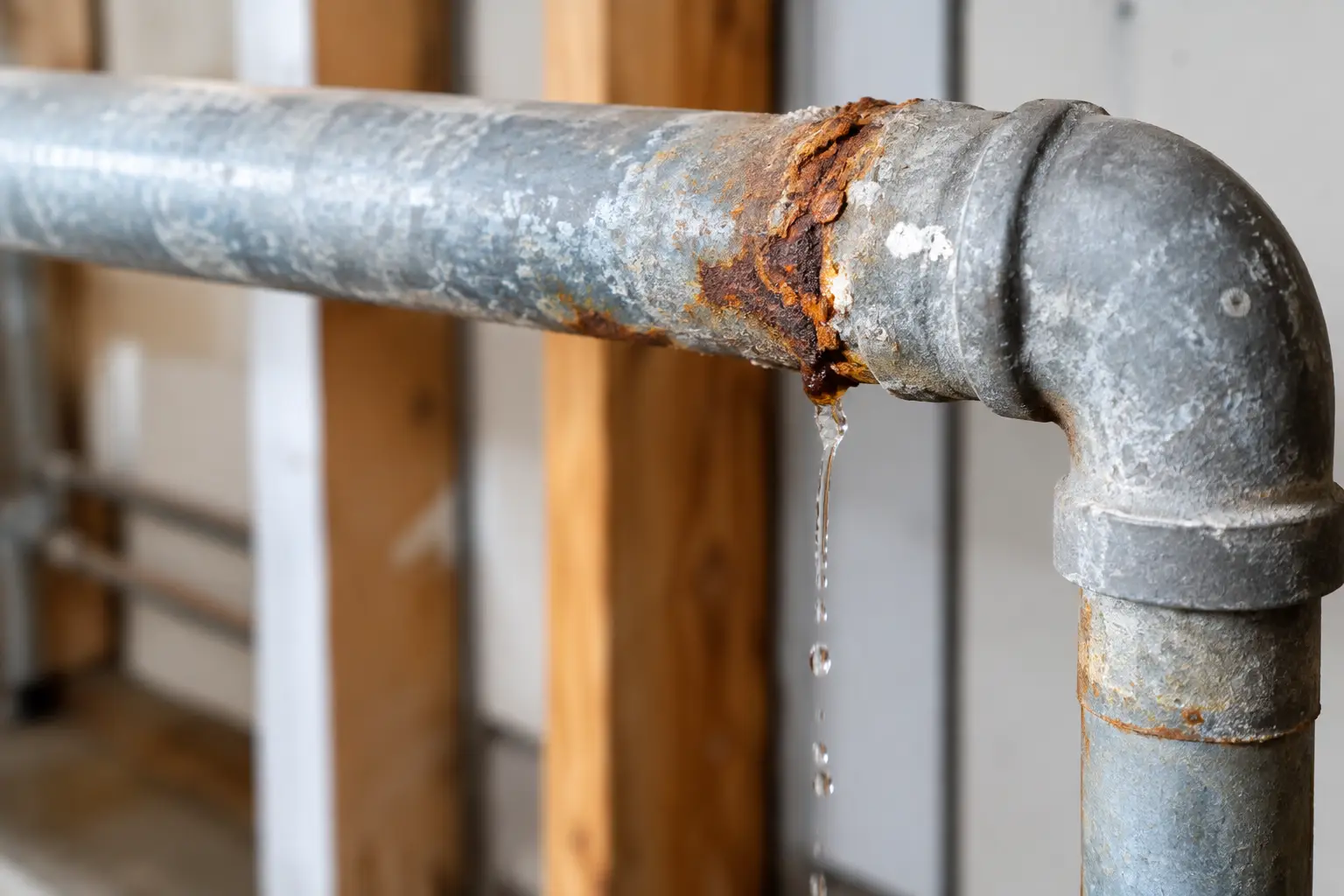
Rust, white mineral buildup, flaking metal, staining, or moisture around exposed pipes should not be ignored. These conditions do not prove that every concealed line is failing, but they indicate age-related wear and may suggest that the piping has reached the point where repairs become more likely.
Inspectors commonly see exposed galvanized pipe near water heaters, under sinks, at exterior hose connections, and in utility areas. If those visible sections are heavily corroded, asking a licensed plumber to evaluate the system before closing may be a prudent next step.
Discolored Water and Fixture Issues
Brown, yellow, or rusty water can result from corrosion in galvanized lines, though it can also originate from a water heater or municipal supply disturbance. If discoloration appears after water has been sitting in the pipes, then clears after running the fixture, older steel piping becomes a stronger consideration.
Frequent clogged aerators, reduced flow through showerheads, and sediment at fixture screens can also occur as rust and scale move through the system. These are not conditions to diagnose from a single observation, but they are worth documenting and discussing during the inspection period.
Mixed Pipe Materials
A mix of plumbing materials is common in older homes and is not inherently wrong. The concern is whether newer pipe was installed as a partial repair while aging galvanized lines remain in service elsewhere. Visible transitions between pipe types may help establish that a system has been modified, but they rarely confirm the full extent of replacement.
Ask the seller for permits, invoices, warranties, and details about prior plumbing work. If the home was advertised as replumbed, find out whether that means a complete repipe or only selected lines were replaced.
What a Home Inspection Can and Cannot Tell You
A professional home inspection provides a practical evaluation of accessible plumbing components and the system’s observed performance at the time of the inspection. An inspector can identify visible galvanized piping, note corrosion, operate representative fixtures, observe drainage behavior, and report deficiencies that warrant repair or further assessment.
There are limits. Pipes behind finishes, under slabs, and in other inaccessible areas cannot be fully inspected without invasive work. A pipe may have internal corrosion that is not visible from the exterior. Likewise, water flow observed during an inspection is a snapshot, not a guarantee that a line will not leak later.
That is why a recommendation for further evaluation is valuable, not vague. When older galvanized supply piping shows warning signs, a licensed plumber can assess the system more closely, discuss replacement options, and help establish whether the concern is isolated or widespread. For a home with older underground drain piping, a sewer line camera inspection may also be appropriate, but it evaluates the drain line rather than the home’s galvanized water supply pipes.
Questions to Ask Before You Buy
If galvanized piping is present, clear answers can make a significant difference in your negotiations and future planning. Ask when the plumbing was last updated, whether any work was permitted, and which portions of the home received new piping. Request records rather than relying only on a verbal statement.
You should also ask whether there have been past leaks, water pressure complaints, insurance claims, or repairs involving walls, ceilings, floors, or plumbing access. A seller may not know the complete history, particularly in a recently purchased or inherited home, but the question still matters.
If a plumbing specialist recommends replacement, obtain enough information to understand the likely scope. Will the work involve only a few exposed lines, or does the condition support a whole-house repipe? Where will access openings be needed? What finish repairs might follow? Buyers do not need every answer before making an offer, but they should avoid treating an aging plumbing system as a minor cosmetic item.
Making a Practical Decision About an Older Plumbing System
The age of a home should be considered alongside its maintenance history and overall condition. Some homes with galvanized piping continue to operate without an immediate leak. Others have enough corrosion, restricted flow, and prior patchwork repairs to justify a more urgent response.
The goal is not to panic over an older material. It is to avoid buying blind. A detailed inspection report can help separate an observable defect from a condition that needs additional evaluation, giving you useful information for negotiations, repair requests, or your post-closing budget.
For buyers in Greater Houston, Cypress, Katy, and nearby communities, CK Inspections approaches older home systems with the practical perspective that comes from construction and renovation experience. Clear documentation and straightforward explanations can help you understand what was observed and what deserves your attention before closing.
A house does not need to be perfect to be a sound purchase. It does need to come with a clear enough picture that you can decide whether its plumbing condition fits your budget, timeline, and tolerance for future repairs.