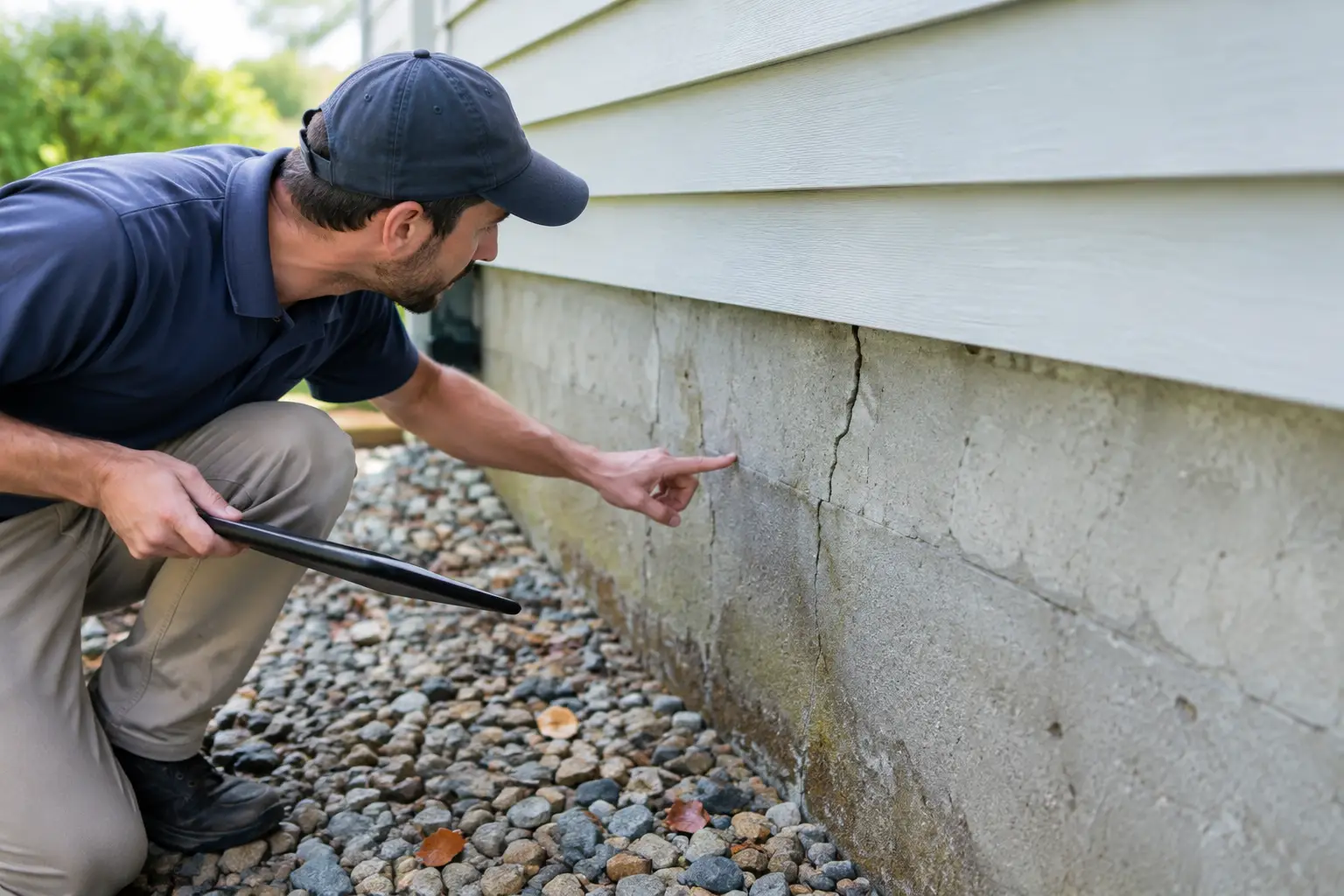

A house can look clean, updated, and move-in ready while the ground beneath it is creating expensive questions. This guide to Texas clay soil is written for buyers who want to understand one of the state’s most common property risks before they close. Clay soil does not automatically mean a house has a foundation problem. It does mean the site, drainage, foundation condition, and repair history deserve careful attention.
Across Greater Houston and nearby communities, soil conditions can vary from one subdivision to the next – and sometimes from one side of a neighborhood to the other. A practical inspection helps identify visible signs of movement and conditions that may contribute to it, so you can make a better-informed decision instead of buying blind.
Why Texas Clay Soil Can Move So Much
Clay particles are extremely small and can hold a significant amount of water. When clay absorbs moisture, it expands. When it dries, it shrinks and can pull away from a foundation. This repeated expansion and contraction is often called soil movement.
The concern is not simply that the soil moves. The concern is uneven movement. If one portion of the foundation is supported by wetter, expanded soil while another sits above drier, contracted soil, the home can experience stress. Over time, that stress may show up as cracks, sticking doors, uneven floors, separated trim, or drainage changes around the structure.
Texas weather can make the cycle more pronounced. Long dry periods, heavy rain events, leaking plumbing, poor grading, and inconsistent irrigation can all change the moisture content around a home. A foundation designed for local conditions can still be affected when water is not being managed consistently.
That does not mean every cosmetic crack signals a major structural defect. Houses settle, building materials expand and contract, and minor cracking is common. The key is evaluating the pattern, location, severity, and supporting evidence rather than reacting to one crack alone.
A Homebuyer’s Guide to Texas Clay Soil Warning Signs
When evaluating a property, buyers should look beyond freshly painted walls or new flooring. Cosmetic updates can improve a home, but they can also make it harder to see older conditions. A thorough inspection considers the building as a system, including the relationship between the foundation, exterior drainage, structure, doors, windows, and interior finishes.
Interior clues worth taking seriously
Diagonal cracks extending from the corners of doors or windows can be associated with movement, especially when they are wider, repeated in several areas, or paired with other symptoms. Cracks at wall and ceiling intersections, separated baseboards, and gaps around trim may also provide useful context.
Pay attention to doors that rub, do not latch, or swing open on their own. Windows that bind can be another clue, although humidity, paint buildup, and normal hardware issues can cause similar problems. A single sticky door is not a diagnosis. Several affected openings in different parts of the home deserve a closer look.
Floor slope is another issue buyers often notice. Some older homes have minor variations that have remained stable for years. More significant or localized slope, especially when combined with cracking or exterior movement, may warrant further evaluation. An inspector can document visible conditions, but determining whether a foundation requires repair or engineering is beyond a standard home inspection and may call for a qualified structural engineer.
Exterior conditions that affect the foundation
The exterior often tells the more useful story. Look for soil that slopes toward the house, low areas near the foundation, standing water, short or missing downspout extensions, and hard surfaces that direct water back toward the home. Roof runoff should be carried away from the foundation, not discharged beside it.
Gaps between the soil and the foundation can occur during dry weather as clay contracts. While a gap alone does not prove damage, it is a reminder that moisture conditions around the home are changing. Large trees close to the house can also affect soil moisture because their roots draw water from the ground. Removing a mature tree is not automatically the answer – that decision has its own risks and should be made with appropriate professional guidance.
Watch for visible cracking in brick veneer, separation at exterior trim, uneven patios, or displaced flatwork. Patios and walkways are separate from the foundation in many homes, so a cracked driveway does not necessarily mean the house is moving. Still, these observations may help establish whether the site has experienced broad soil-related movement.
Drainage Is Often the Deciding Factor
There is no realistic way to keep clay soil from responding to weather. The goal is to avoid dramatic moisture swings near the foundation. That starts with proper surface drainage and controlled roof runoff.
A functional gutter system, properly placed downspout discharge, and grading that directs water away from the home are basic protections. In the Houston area, where intense rain can arrive quickly, those details matter. A property may appear dry on inspection day yet still have a drainage concern if the grading, gutter layout, or discharge points send water toward the structure.
Buyers should also ask whether the yard has French drains, area drains, buried downspout lines, or a sump system. These features can be helpful, but they require maintenance and should not be assumed to work simply because they are present. Ask for available documentation, repair records, warranties, and information about prior flooding or drainage work.
Irrigation needs a balanced approach. Allowing the soil around a foundation to become extremely dry and then soaking it heavily can contribute to uneven moisture conditions. Consistent, moderate watering may be appropriate during dry periods, but the right approach depends on the home, soil, landscaping, restrictions, and current weather. A buyer should not rely on a one-size-fits-all watering schedule from a neighbor or social media post.
What to Ask Before You Buy a Home on Clay Soil
A seller’s disclosure can provide useful history, but it is not a substitute for an inspection or further evaluation. Ask whether the property has had foundation repairs, plumbing leaks beneath or near the slab, drainage modifications, prior engineering reports, or transferable warranties. If repairs were completed, request the scope of work and final documentation.
Foundation repair is not automatically a deal-breaker. A properly designed repair with clear records may be preferable to a home with visible concerns and no history of evaluation. On the other hand, a repair receipt without details, a nontransferable warranty, or signs of ongoing movement may justify more questions before the option period ends.
It is also reasonable to ask about past insurance claims related to water intrusion, plumbing failures, or structural concerns. If the home has recently been renovated, look carefully at areas where new finishes meet older materials. Fresh caulk and paint are common maintenance items, but they can make prior cracking difficult to assess.
What a Home Inspection Can and Cannot Tell You
A professional home inspection provides a visual, noninvasive evaluation of accessible components at the time of inspection. For clay-soil concerns, the inspector can identify and document visible signs that may be consistent with movement, evaluate readily accessible drainage conditions, and explain where additional review is prudent.
An inspection cannot predict future soil movement, guarantee foundation performance, or determine the full cause of every crack. No inspector can see beneath a slab or behind every finished wall without invasive testing. That limitation is not a weakness – it is why clear reporting and appropriate referrals matter.
When visible conditions indicate a potential structural concern, the next step may be evaluation by a licensed structural engineer. When water management is the central issue, a qualified drainage professional may be appropriate. If plumbing leakage is suspected, further plumbing evaluation may be recommended. The right specialist depends on the evidence, not on assumptions.
For buyers in Cypress, Katy, Houston, and surrounding communities, CK Inspections approaches these observations with a practical construction-minded perspective. The goal is not to create alarm over normal wear. It is to help you understand which conditions deserve action before a costly surprise becomes your responsibility.
Protecting the Home After Closing
Once you own the property, keep water management on your maintenance calendar. Clean gutters, confirm downspouts discharge away from the house, monitor low areas in the yard, and address plumbing leaks promptly. After long dry spells or major storms, take a walk around the exterior and look for new gaps, ponding water, or changes in cracks and doors.
Keep records of repairs, drainage improvements, and foundation evaluations. If a condition changes later, those records give you and future professionals a clearer baseline. A Texas home does not need perfect soil to be a sound purchase. It needs a buyer who recognizes the signs, asks for the right information, and makes decisions with clear eyes before closing.