
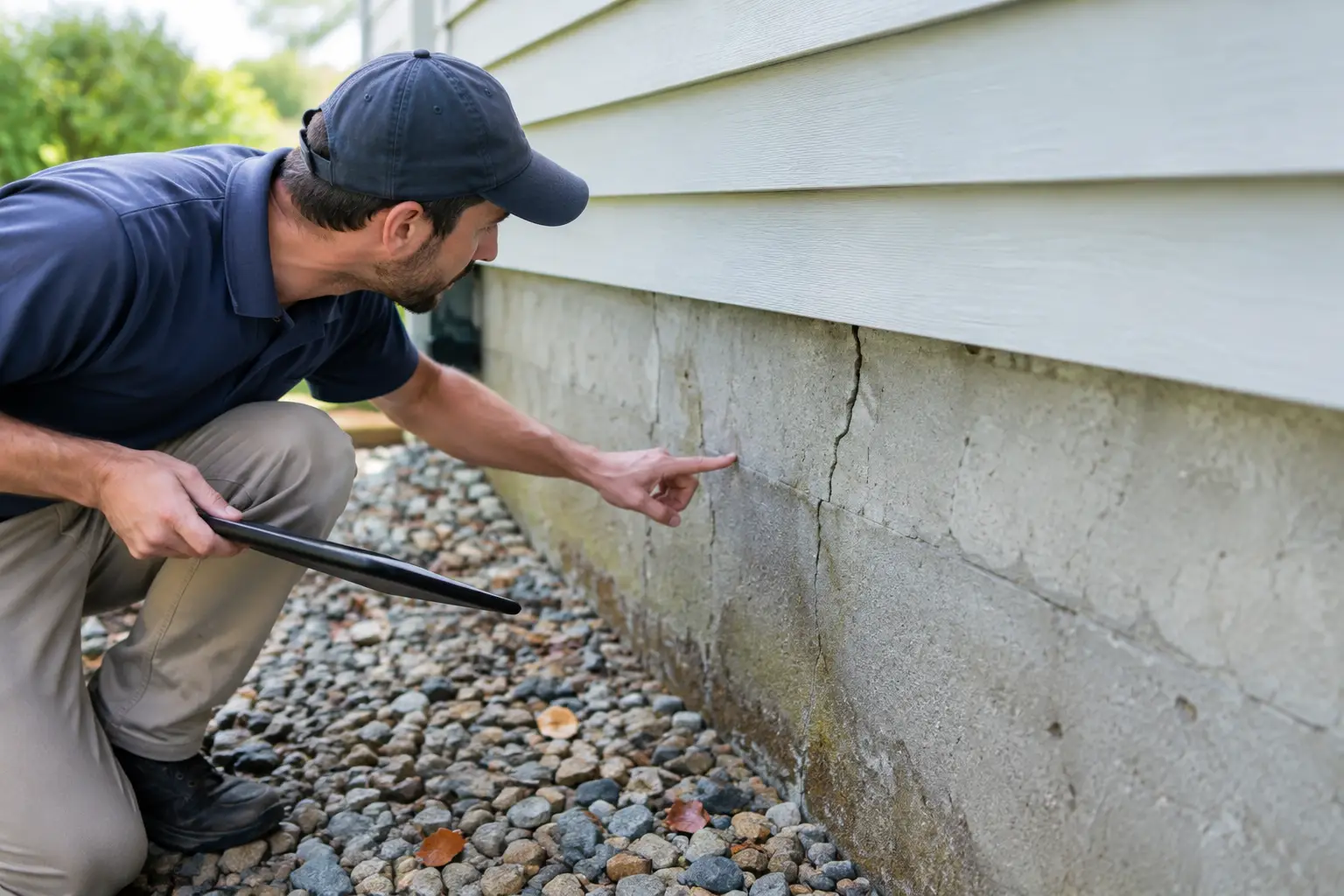
A hairline line across a garage slab may be ordinary concrete shrinkage. A stair-step crack in brick, a sticking exterior door, and an uneven floor nearby can tell a very different story. Foundation cracks deserve attention during a home purchase, but they should not automatically end the deal. The goal is to understand what the cracking may mean, what evidence supports that concern, and whether more evaluation is needed before closing.
For buyers in Greater Houston and surrounding communities, this question carries extra weight. Expansive clay soils, heavy rain, dry spells, drainage conditions, mature trees, and changes around the property can all affect how a home moves over time. A thorough home inspection helps put visible cracking in context so you can avoid costly surprises and make decisions with clearer information.
Not All Foundation Cracks Mean the Same Thing
Concrete is strong under compression, but it can crack as it cures, settles, and responds to movement. Many homes have some cracks in concrete flatwork, garage floors, patios, driveways, or interior slabs. The presence of a crack alone does not establish that the foundation is failing.
What matters is the crack’s location, width, direction, condition, and relationship to other signs of movement. A narrow, stable-looking crack with no displacement may be less concerning than a crack that is widening, offset, or accompanied by damage in walls, trim, masonry, or doors.
During a pre-purchase inspection, the visible condition of accessible structural components is evaluated along with the rest of the home. That broader view is valuable because foundation concerns rarely appear in only one place. A meaningful pattern may include floor slope, cracks in finishes, gaps at trim, misaligned doors, exterior masonry cracking, or drainage conditions that direct water toward the home.
Crack Patterns Buyers Should Take Seriously
A professional inspection report should describe observed conditions clearly, with photos and practical recommendations. While no single sign proves the cause or extent of a problem, the following patterns generally deserve closer attention.
Stair-Step Cracks in Brick or Block
Diagonal cracking that follows mortar joints in brick veneer can be associated with differential movement. It is especially worth noting when the crack is pronounced, appears in multiple areas, or is paired with separations around windows, doors, or exterior trim. Brick veneer is not the foundation itself, but it can reveal how the structure has moved.
Diagonal Cracks at Doors and Windows
Cracks that run diagonally from the corners of doors or windows are common areas to watch. Minor drywall cracking can result from normal seasonal movement or past repairs. However, repeated cracks, wider openings, or cracking combined with doors that no longer latch properly may indicate movement that warrants further review.
Horizontal Cracks or Displacement
Horizontal cracking in a foundation wall, retaining wall, or masonry element can point to pressure or movement that needs prompt assessment. Likewise, a crack with one side visibly higher or farther out than the other is more concerning than a flat, hairline crack. Displacement suggests that movement has occurred, not merely that the concrete cured with a surface crack.
Cracks Near Plumbing Penetrations or Slab Edges
Cracks around plumbing penetrations, at slab edges, or near areas with moisture-related evidence deserve careful attention. Water is not always the cause, but plumbing leaks and poor drainage can contribute to soil movement beneath or around a foundation. The inspection should consider the visible condition of the area and whether additional evaluation is appropriate.
Signs Beyond the Crack Itself
A buyer should be cautious about judging a home based on one visible crack. Fresh paint may cover an old repair, and an older crack may be stable. The more useful question is whether several observations create a consistent pattern.
Look for doors that bind or swing open on their own, windows that are difficult to operate, gaps between cabinets and walls, uneven transitions between rooms, separated caulk lines, or cracked tile. Outside, note low areas near the foundation, downspouts that discharge too close to the home, negative grading, and paving that slopes toward the structure.
These conditions do not all have the same cause. Wood framing naturally expands and contracts, cosmetic finishes can crack independently, and older homes often show evidence of past settling. Still, when multiple signs point in the same direction, buyers should not dismiss them as cosmetic without getting informed guidance.
Why Houston-Area Soil and Drainage Matter
The soils common across much of the Houston area can expand when wet and shrink when dry. Those changes do not affect every property equally. Site grading, drainage maintenance, vegetation, foundation design, irrigation habits, and the home’s age all influence how the structure responds.
Water management is one of the most practical issues a buyer can evaluate. Gutters should discharge away from the foundation where installed, the ground should generally slope away from the home, and water should not pond near the perimeter after normal rainfall. A property with poor drainage is not necessarily a bad purchase, but it may need correction to reduce the chance of ongoing soil-related movement.
Large trees can also be part of the conversation. Roots do not automatically damage every foundation, but mature vegetation near a home can influence moisture levels in the soil. The right response depends on the tree, its location, soil conditions, and the home’s observed condition. Avoid assumptions and rely on evidence.
What a Home Inspection Can and Cannot Determine
A home inspection is a critical due-diligence step, not a substitute for a structural engineering evaluation. An inspector evaluates accessible, visible conditions and identifies signs that may indicate a concern. The inspection report can help you understand where cracks are located, what related symptoms were observed, and whether a specialist should be consulted before closing.
If conditions suggest possible significant movement, further evaluation by a qualified structural engineer may be recommended. An engineer can perform a more focused assessment, consider elevation measurements when appropriate, and provide opinions about structural performance and needed repairs. This additional step can feel inconvenient during a fast-moving transaction, but it is far less costly than buying blind.
It also helps to distinguish between a seller’s repair history and current performance. Prior foundation work does not automatically make a home unsafe or unbuyable. Many homes with documented repairs perform well. Buyers should ask for available records, warranties, permits when applicable, and details about what was repaired. A current inspection and any recommended specialist review can help determine whether there are ongoing concerns.
Smart Questions to Ask Before Closing
When foundation cracking is noted, ask the seller what they know about the history of the condition, including prior repairs, drainage work, plumbing leaks, or insurance claims. Request documents rather than relying only on verbal explanations. If work was completed, find out who performed it and whether transferable warranty information exists.
Then focus on the present condition. Are cracks active-looking or repaired? Are doors and windows functioning normally? Is there visible displacement? Does the site direct water away from the foundation? These questions help shift the conversation from fear to facts.
Your real estate agent can help coordinate requests and timelines, but do not let a closing deadline prevent you from getting the right information. Depending on the findings, you may decide to proceed, negotiate repairs or credits, request additional evaluation, or walk away. The best choice depends on the home’s condition, the specialist’s findings, the contract, and your comfort with the risk.
A Clearer Way to Evaluate Foundation Concerns
Foundation issues are rarely best understood through a quick glance at one crack. They require a practical review of the home as a system: the slab or foundation, framing, finishes, exterior masonry, drainage, and signs of past or current movement.
CK Inspections helps homebuyers document those visible conditions clearly before they commit to a purchase. A detailed inspection will not create certainty where further specialist evaluation is needed, but it can give you the evidence and direction needed to protect your investment. Before you move forward, make sure you understand not just what is cracked, but what the full pattern may be telling you.