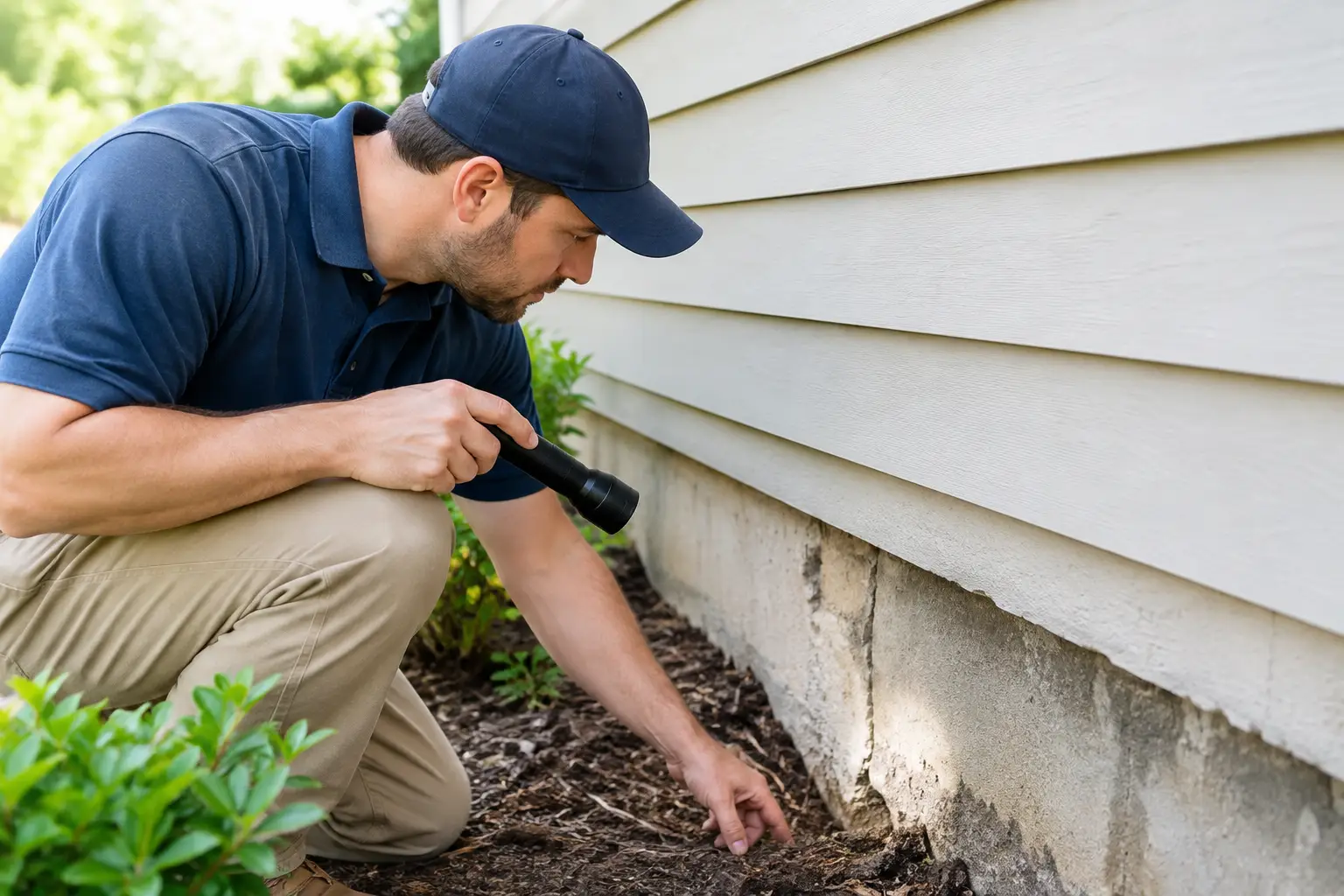

A hairline crack beside a window may be cosmetic. A stair-step crack running through exterior brick may point to movement that deserves a closer look. Knowing how to identify foundation cracks helps homebuyers ask better questions before they remove inspection contingencies, negotiate repairs, or commit to a property that could carry expensive surprises.
In Greater Houston, Cypress, Katy, and surrounding communities, foundation concerns are especially relevant. Expansive clay soils can swell when wet and shrink during dry periods, placing changing pressure on a home’s slab foundation. That does not mean every crack signals a failing foundation. It does mean cracks should be viewed in context, alongside doors, floors, brickwork, drainage, and the home’s overall condition.
How to Identify Foundation Cracks and Related Warning Signs
Start by looking beyond the crack itself. Its location, direction, width, and whether it appears to be changing all matter. A qualified home inspector can document visible signs of movement, but a structural engineer may be needed when conditions suggest a significant concern or when repair recommendations require engineering support.
Foundation cracks are often easiest to spot on exposed portions of the slab, garage floor, exterior masonry, interior drywall, and around openings. Some homes have landscaping, wall finishes, flooring, or stored belongings that limit visibility. A clean-looking interior is not proof that a foundation has no issues.
Look at the crack’s pattern
Vertical hairline cracks in concrete can result from normal curing or minor settlement, particularly when they are narrow and do not show separation. They still deserve documentation, especially during a real estate transaction, but they are not automatically evidence of a major structural defect.
Horizontal cracks, diagonal cracks, and stair-step cracks can be more concerning depending on their location and severity. Stair-step cracking follows mortar joints in brick veneer and may appear near corners, windows, or doors. Diagonal cracks extending from the corners of windows and doors can indicate that parts of the structure are moving differently from one another.
A crack that is wider at one end, has visible offset between surfaces, or continues through multiple materials deserves more attention than an isolated, fine surface crack. For example, a crack in drywall alone may be related to normal seasonal movement, while matching cracks in drywall, brick, and flooring create a stronger reason for further evaluation.
Check doors, windows, and floors
Foundation movement often shows up in everyday parts of the home before buyers notice a slab crack. Walk through the house and operate doors and windows where practical. Doors that rub the frame, stick, swing open on their own, or have uneven gaps may be signs of movement. Windows that are difficult to open can also be a clue, although damaged hardware, paint buildup, and poor installation can cause similar symptoms.
Pay attention to floors as you move from room to room. Noticeable slopes, uneven transitions, cracked tile, separated baseboards, or gaps between cabinetry and walls may warrant additional review. No single condition confirms a foundation problem. The concern increases when several symptoms appear in the same area or form a pattern across the home.
Inspect exterior brick and trim
Brick veneer can reveal movement clearly because mortar joints and openings create visible reference lines. Look around windows, exterior doors, garage corners, and the transition between the main house and an addition. Step cracks, displaced brick, or gaps between brick and trim should be noted.
Also examine fascia boards, soffits, exterior trim, and siding. Separation at joints or areas that appear out of alignment can reflect movement, moisture damage, aging materials, or installation issues. This is why a complete inspection matters. A visible crack should be evaluated with the surrounding conditions, not treated as a stand-alone diagnosis.
Know What Can Be Cosmetic
Homes move. Building materials expand and contract with temperature and humidity changes, and Texas homes are no exception. Small drywall cracks at ceiling corners, minor caulk separation, and isolated hairline cracks in a garage slab may be common maintenance items rather than evidence of a serious foundation issue.
The trade-off is simple: dismissing every crack can leave a buyer exposed, while assuming every crack requires major foundation repair can create unnecessary alarm. The goal is not to diagnose the foundation from one photograph. The goal is to determine whether the visible evidence supports a closer structural review before closing.
Age matters, but it is not the deciding factor. An older home may have small, stable cracks with no active concerns. A newer home may show movement if drainage is poor, soil conditions are changing, or construction details were inadequate. Recent foundation repair is not automatically a reason to walk away either, but it should prompt careful questions about the scope of work, warranties, engineering documentation, permits where applicable, and whether signs of movement remain.
Check Drainage Before Assuming the Worst
Water management is closely connected to foundation performance. During your visit, look at how the ground slopes around the home. Soil should generally direct water away from the foundation rather than toward it. Standing water near the slab, overflowing gutters, missing downspout extensions, leaking exterior plumbing, and low areas beside the home can contribute to changing soil moisture.
On the other hand, overly dry soil can also matter in areas with expansive clay. Large gaps between the soil and the foundation edge, especially during prolonged hot weather, may indicate soil shrinkage. Consistent moisture management is often part of protecting a slab foundation, but the right approach depends on the property, its drainage design, landscaping, and local conditions.
Do not rely on fresh mulch or recently added soil as proof that drainage is adequate. Those materials can improve appearance while concealing the grade below. A thorough inspection considers visible drainage conditions, roof runoff, site grading, and evidence of moisture intrusion where accessible.
Document What You Find During the Showing
If you see a crack or movement-related symptom, take clear photos and note the room or exterior location. Include an object for scale when possible. Rather than asking the seller only, “Is this normal?” ask direct, useful questions: When was it first noticed? Has it changed? Has the home had foundation work? Are there transferable warranties, invoices, or engineering reports? Have there been drainage repairs or plumbing leaks?
Sellers may not know every answer, particularly if they did not own the home for long. Documentation is more useful than verbal reassurance. It can also help your inspector and agent understand the property’s history and decide whether further evaluation belongs in your due-diligence plan.
Avoid making repair decisions based solely on a contractor’s sales estimate. If significant movement is suspected, an independent structural engineer can provide an assessment and repair guidance without having a direct financial interest in performing the repair work.
What a Home Inspection Can Tell You
A pre-purchase home inspection is a visual, noninvasive evaluation of accessible systems and components. It can identify and document visible cracking, uneven surfaces, sticking doors, exterior masonry concerns, drainage issues, and other conditions that may be consistent with foundation movement. Your report should give you organized findings and photographs you can use to make a more informed decision.
An inspector does not replace a structural engineer, and no visual inspection can see through every wall or beneath every floor covering. That limitation is not a weakness. It is a reason to use the inspection as the first layer of protection. When visible evidence indicates a possible structural concern, you can pursue specialist evaluation while you still have time to make decisions before closing.
For buyers, that process creates leverage and clarity. You may negotiate repairs, request documentation, seek a price adjustment, obtain a specialist opinion, or decide the risk does not fit your budget. The right choice depends on the severity of the issue, the property’s price, your repair tolerance, and the quality of the available evidence.
A foundation crack does not have to end a home purchase. But it should never be ignored just because the house is attractive, competitive, or newly renovated. Before you buy, let a careful inspection turn visible clues into practical next steps. CK Inspections helps Houston-area buyers avoid costly surprises and move forward with a clearer picture of the home they are considering.