A home can look move-in ready while its main sewer line has a costly problem buried out of sight. So, what does a sewer camera find? It can reveal the condition of the underground drain line that carries wastewater from the home to the municipal sewer connection or septic system – an area a standard visual inspection cannot fully see.
For Houston-area buyers, a sewer camera inspection can provide valuable information before closing. Repairs to a damaged sewer line can range from manageable cleaning to excavation, pipe replacement, or major plumbing work. Knowing what is below ground helps you avoid costly surprises and make a confident decision about the property.
What Does a Sewer Camera Find?
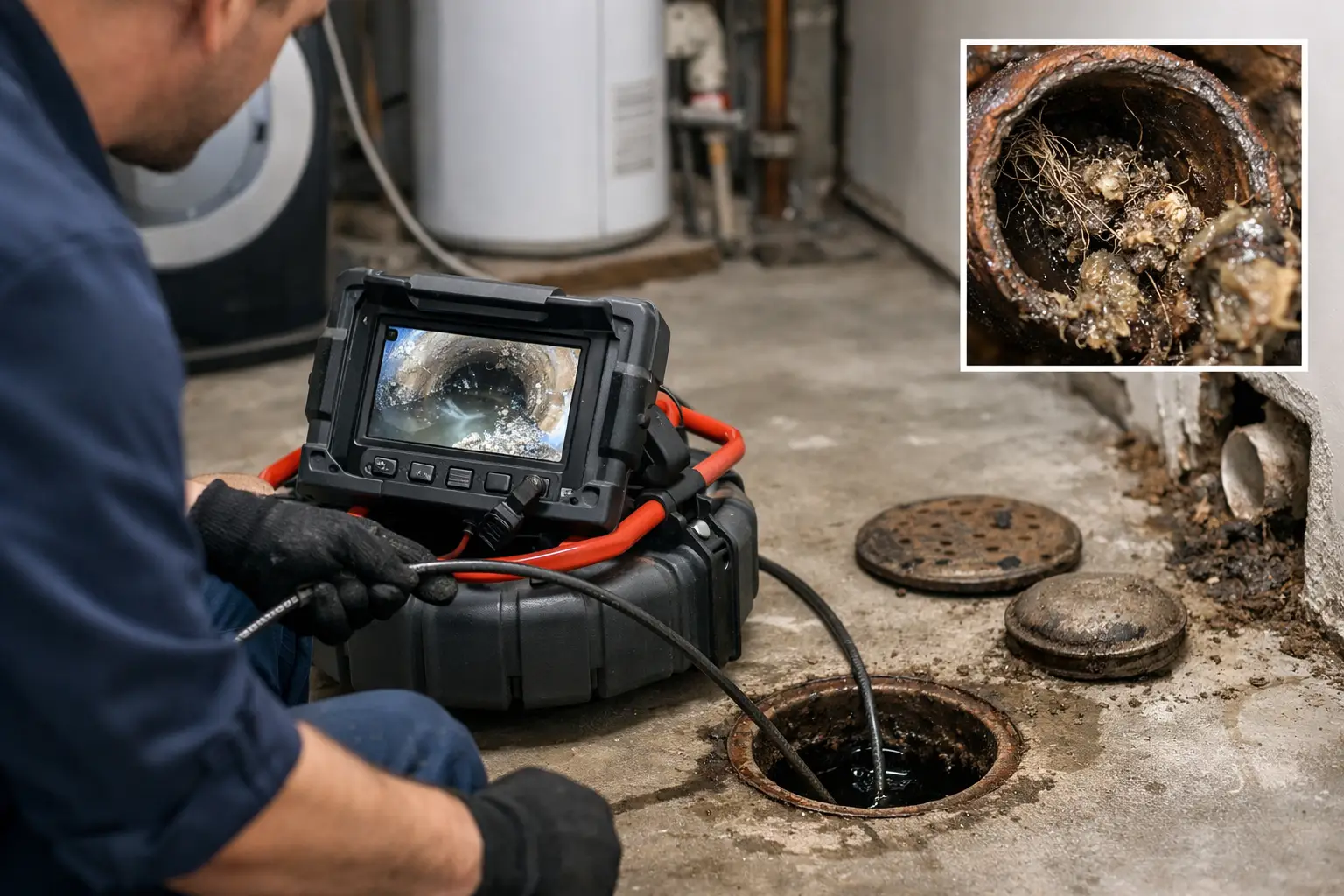
A sewer camera inspection uses a small, waterproof camera attached to a flexible cable. The camera is typically inserted through an accessible cleanout and guided through the home’s main sewer line. As it travels through the pipe, the inspector views and documents the interior condition in real time.
The goal is not simply to confirm that water is currently draining. A line may appear to function normally during a brief walkthrough while still containing root intrusion, cracks, improper slope, deteriorated materials, or blockages that are developing into a larger failure.
A sewer scope can find several types of hidden defects, including:
- Tree roots growing into pipe joints, cracks, or openings
- Cracked, broken, separated, or collapsed pipe sections
- Heavy buildup from grease, scale, sludge, or debris
- Bellies or low areas where waste and water collect instead of flowing properly
- Offset joints where pipe sections have shifted out of alignment
- Corroded or deteriorating cast iron pipe
- Older Orangeburg pipe that may be flattened, blistered, or failing
- Construction debris or foreign objects left in the line
The camera footage helps show where a concern appears and how serious it may be. When a condition is visible, it can be documented in the inspection report so buyers have a clearer basis for further evaluation, repair negotiations, or future planning.
Why a Sewer Line Can Have Problems When Everything Inside Works
A flushing toilet and draining sink do not prove that the sewer line is in good condition. Wastewater may still pass through a compromised line for months or even years before a blockage or backup occurs.
This is especially true when roots have entered through small openings. At first, the roots may only catch toilet paper and debris occasionally. Over time, they can create recurring clogs, restrict flow, and damage the pipe further. A buyer may not see evidence of this during a showing, particularly if the home has been vacant or lightly used.
Soil movement can also affect underground piping. In Greater Houston and surrounding communities, expansive clay soils, moisture changes, drainage conditions, and settlement can all contribute to pipe movement. When sections shift, joints can separate or become offset. A camera inspection can identify signs of these conditions before they turn into a sewage backup inside the home.
Age is another factor. Older homes may have cast iron, clay, or Orangeburg sewer lines. Each material has different vulnerabilities. Cast iron can corrode internally and develop rough surfaces that catch waste. Clay pipe joints may allow root intrusion. Orangeburg, a fiber-based pipe material used in some older properties, can deform and deteriorate over time.
Common Sewer Camera Findings and What They May Mean
Not every finding means the entire sewer line must be replaced. The right next step depends on the location, severity, pipe material, and whether the issue is affecting drainage. A professional inspection should help you understand the difference between a condition to monitor and a condition that needs prompt attention.
Root Intrusion
Roots are one of the most common sewer camera findings. They often enter at pipe joints or through existing cracks because the line provides moisture and nutrients. Light root intrusion may be removable through professional cleaning, but repeated root growth can point to an opening in the pipe that needs repair.
A camera inspection can show whether roots are sparse, dense, or creating a significant obstruction. That distinction matters when you are estimating repair costs or deciding whether to request additional evaluation before closing.
Cracks, Breaks, and Separations
A cracked or broken sewer line may allow wastewater to escape into the soil and allow soil, roots, or debris to enter the pipe. A separated joint can create similar problems. These conditions may eventually cause recurring clogs, soft ground near the line, foul odors, or backups.
The camera can identify visible damage, but a licensed plumbing contractor may need to evaluate the line further to determine the exact repair method. Depending on the location and condition, repairs may involve spot repair, trenchless work, or excavation.
Bellies and Standing Water
A belly is a low section of pipe where water remains after normal drainage. Some residual water can make camera viewing more difficult, but significant standing water may indicate that a portion of the line has settled or lost its proper slope.
Bellies can allow solids to collect in the pipe and increase the risk of recurring clogs. Whether a belly requires repair depends on its depth, length, drainage performance, and the amount of material accumulating in that area.
Scale, Corrosion, and Restricted Flow
Cast iron pipes can corrode from the inside. As corrosion progresses, scale builds along the pipe walls and reduces the interior opening available for waste to pass through. The line may still function, but flow can become increasingly restricted.
A sewer camera can show rough, scaled interiors and areas where corrosion appears advanced. For a buyer, this finding is useful because it identifies a system that may need cleaning, repair, or replacement planning even if no backup has occurred yet.
Misaligned Pipes and Offset Joints
An offset joint occurs when two pipe sections no longer line up properly. This can happen because of settlement, shifting soil, poor installation, or aging materials. Waste can catch at the misalignment, creating repeat clogs and leaving an opening for roots or soil to enter.
A minor offset may be less urgent than a fully separated or collapsed line, but it should not be ignored. The inspection documentation can help a plumbing professional assess the condition and recommend the appropriate next step.
What a Sewer Camera Inspection Cannot Tell You
A sewer scope is highly valuable, but it has limits. The camera can only inspect portions of the line it can access and travel through. Severe blockages, standing water, collapsed sections, or inaccessible cleanouts may prevent a complete view.
The camera also does not guarantee that a line will never fail in the future. It records visible conditions at the time of inspection. Underground pipe systems are affected by soil movement, root growth, usage, and age, so even a line in acceptable condition today should be maintained properly.
In some cases, the camera may identify a concern but not establish the full cause or exact repair cost. Further evaluation by a qualified plumbing contractor may be appropriate, particularly when there is evidence of damage, obstruction, or poor drainage.
Is a Sewer Camera Inspection Worth It for a Homebuyer?
For many buyers, the answer is yes. The potential cost of a sewer line repair is often far greater than the cost of adding a camera inspection before closing. This is particularly true for older homes, properties with mature trees, homes with cast iron or clay piping, and homes where the plumbing history is unknown.
Newer homes can benefit as well. Construction debris, installation defects, pipe damage from site work, and improper connections are not limited to older properties. A new-looking home should not be assumed to have a problem-free sewer line simply because it has not been occupied for long.
A sewer scope is most useful when it is part of a broader pre-purchase inspection strategy. The home inspection evaluates visible and accessible components throughout the property, while the camera inspection adds critical information about a concealed system below ground. Together, they give buyers a more complete picture of risk.
Use the Findings Before You Close
If the camera inspection identifies a concern, do not assume the only option is to walk away. Depending on the issue, you may choose to request repairs, seek a credit, obtain a plumbing estimate, negotiate the price, or plan for maintenance after closing. The right decision depends on your budget, timeline, and comfort level with the condition.
At CK Inspections, the focus is on giving buyers clear findings and visual documentation so they can ask informed questions before making a major financial commitment. Don’t buy blind when an underground sewer line may hold information that could affect your purchase.
Before you remove inspection contingencies, consider whether the property’s sewer line has been evaluated as carefully as its roof, foundation, and electrical system. A short camera inspection may provide the peace of mind – or negotiating leverage – you need to move forward wisely.