
A home can look clean, updated, and move-in ready while serious plumbing problems stay hidden behind walls, under sinks, or below the slab. That is why knowing how to identify plumbing red flags matters before you commit to a purchase. Plumbing defects can turn a promising home into an expensive repair project fast, especially when leaks, drainage problems, or aging materials have been overlooked for years.
For homebuyers in the Houston area, this is not a small detail. Plumbing issues can affect day-to-day comfort, insurance concerns, water bills, and the cost of ownership from the day you get the keys. Some warning signs are obvious. Others show up as subtle clues that deserve a closer look.
How to identify plumbing red flags before closing
The first thing to understand is that plumbing problems rarely stay isolated. A slow drain may point to a local clog, but it can also suggest a damaged sewer line. A water stain under a sink might be a minor fix, or it could be evidence of a long-term leak that has already affected cabinets, flooring, or framing. The goal is not to diagnose every issue on your own. The goal is to recognize when a home may need a more thorough inspection or additional evaluation.
Start by looking at the areas where plumbing problems tend to reveal themselves. Kitchens, bathrooms, laundry rooms, water heater closets, crawlspaces, garages, and exterior hose bibs all tell part of the story. If multiple small issues appear in different places, that pattern matters.
Water stains, discoloration, and soft materials
One of the clearest red flags is visible staining. Brown rings on ceilings, bubbling paint, warped baseboards, and swollen cabinet bottoms can all point to current or past leaks. Fresh paint in a single patch under a bathroom or around a ceiling penetration is not automatic proof of a problem, but it is worth asking about. Cosmetic touch-ups sometimes happen right before listing, and buyers should know whether they are seeing routine maintenance or an attempt to cover damage.
Soft drywall, loose tile, or flooring that feels spongy near tubs, toilets, or sinks should also raise concern. Water has a way of traveling, so the source may not be directly above the damaged area. In Texas homes, long-term moisture can lead to wood deterioration, microbial growth, and expensive repairs that go beyond the plumbing itself.
Slow drains and drainage patterns
A single slow sink can be minor. Multiple slow fixtures are different. If a kitchen sink drains sluggishly, a tub gurgles, and a toilet struggles to clear properly, those signs may point to a broader drainage issue. Sewer line problems, improper venting, or old drain piping can all create symptoms throughout the home.
Pay attention to odors too. Sewer gas smells near drains, bathrooms, or outside cleanouts are not something to ignore. Sometimes the fix is simple, such as a dry trap in an unused fixture. Other times, the smell can suggest a broken drain component, vent issue, or sewer defect. It depends on where the odor is strongest and whether it appears consistently.
Red flags at fixtures and visible plumbing
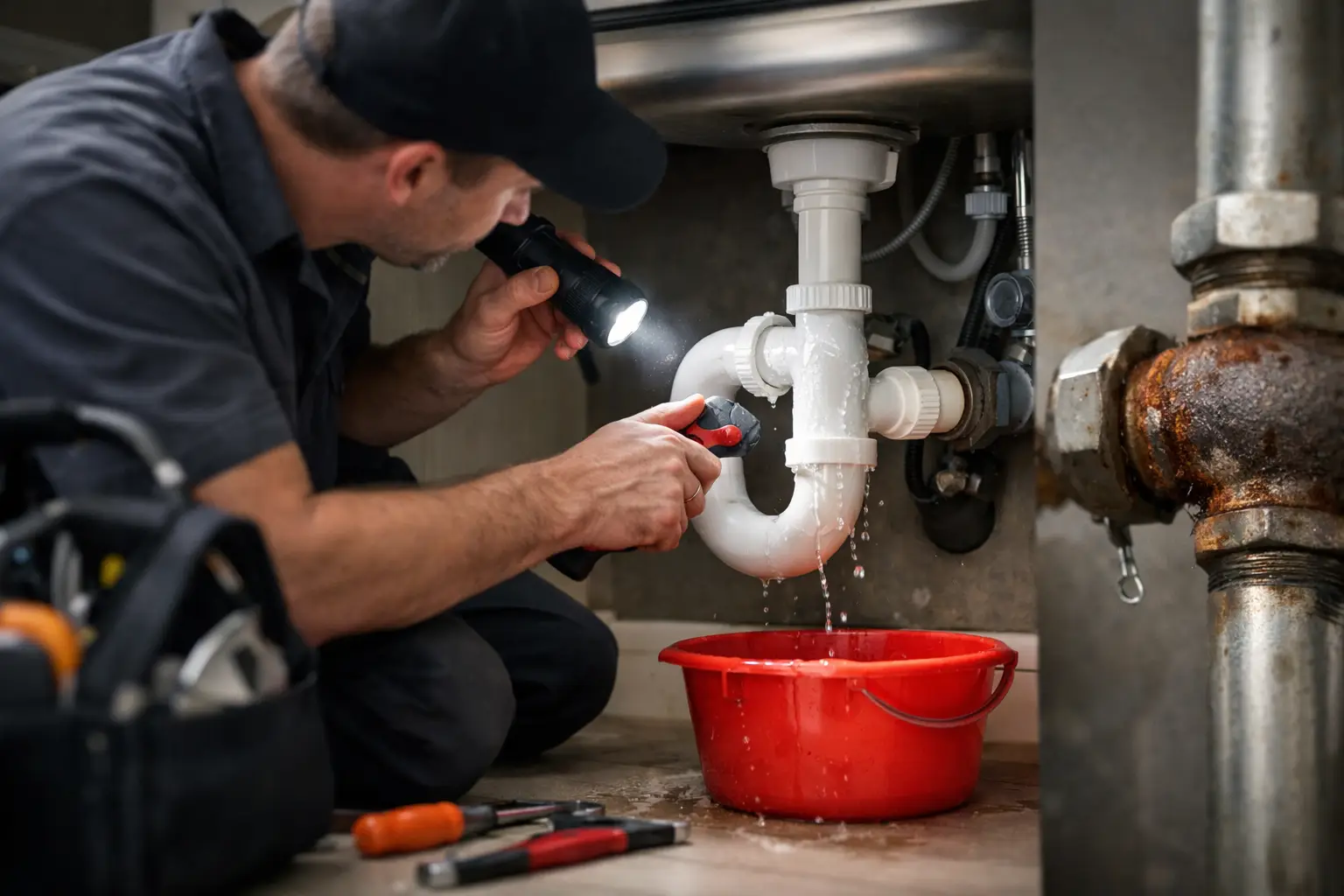
Buyers often focus on countertops, finishes, and appliances, but the visible plumbing connections deserve just as much attention. Under-sink areas can reveal a lot in a short amount of time.
Look for active drips, corrosion on shutoff valves, rust on supply lines, and signs of prior leakage on cabinet floors. Temporary-looking repairs are another concern. Excessive sealant, mismatched fittings, unsupported piping, and flexible drain components used where permanent materials should be installed can suggest shortcuts rather than professional repairs.
Toilets provide another set of clues. A toilet that rocks at the floor, shows staining around the base, or has soft flooring nearby may have an active wax ring leak or prior water damage. Around tubs and showers, loose caulking or damaged grout may seem minor, but over time those openings can allow water into surrounding materials.
Corrosion, age, and outdated plumbing materials
Part of how to identify plumbing red flags is understanding that age matters. Older supply and drain materials may still be functioning, but they carry more risk than newer systems in good condition. Corroded galvanized piping, for example, can lead to reduced water flow and internal buildup. Older cast iron drains may have years of life left, or they may be deteriorating from the inside.
The challenge is that age alone does not tell the full story. A well-maintained older system may perform better than a newer system with poor workmanship. That is why visible corrosion, patched sections, inconsistent materials, and signs of chronic repair history are more useful than age by itself.
Polybutylene and other outdated materials can also be a concern depending on the home. If there is evidence that portions of the plumbing system were replaced but other older sections remain, that mixed condition may deserve closer review. Partial updates are not always bad, but they can signal that prior failures already occurred.
Watch the water heater closely
Water heaters are common sources of hidden trouble. Rust at the tank base, corrosion on connections, staining in the drain pan, or moisture nearby can all suggest leakage or age-related failure. If the water heater is older, its remaining service life may be limited even if it is still operating.
Also look for signs of poor installation. Missing discharge piping at the temperature and pressure relief valve, improper venting on gas units, unstable placement, or a neglected drain pan setup can all matter from both a safety and maintenance standpoint. In some homes, the water heater area shows repeated signs of overflow or past leakage that were cleaned up but not truly corrected.
A water heater issue may not seem as significant as a sewer line problem, but replacement costs add up quickly, especially if surrounding materials were damaged too.
Exterior signs that buyers often miss
Not every plumbing red flag is inside the house. The exterior can reveal drainage and sewer concerns that affect the property in a big way.
Standing water near the foundation, overly lush patches in the yard, soggy soil during dry weather, or foul smells near the cleanout can suggest underground leaks or sewer trouble. In some cases, tree roots have already infiltrated older sewer lines. In others, past foundation movement may have stressed buried piping.
This is one reason a sewer line camera inspection can be so valuable during the due diligence period. A home may show only minor interior symptoms while the main sewer line has cracks, offsets, heavy buildup, or root intrusion. For buyers trying to avoid costly surprises, this is exactly the kind of hidden defect worth uncovering before closing.
How to identify plumbing red flags without overreacting
Not every plumbing flaw should stop a purchase. Some issues are routine repairs, and some are negotiation points rather than deal-breakers. The key is understanding the difference between a manageable fix and a sign of larger risk.
A dripping faucet is annoying, but usually straightforward. Widespread staining, low water pressure at multiple fixtures, sewer odors, active leakage, and evidence of long-term moisture are more serious because they suggest system-level concerns or concealed damage. Context matters. One isolated issue may be minor. Several related signs together deserve more attention.
This is where a professional home inspection adds real value. A trained inspector is not just looking for one broken part. They are evaluating patterns, documenting conditions clearly, and helping buyers understand what may need repair, monitoring, or further specialist review. That kind of clarity supports better decisions and stronger repair negotiations.
For buyers who want peace of mind, a detailed inspection can make the difference between buying with confidence and buying blind. Companies like CK Inspections help identify visible plumbing defects, document concerns with clear reporting, and point buyers toward next steps when a system needs deeper evaluation.
What to do if you spot a plumbing concern
If you notice a plumbing red flag during a showing, do not assume the seller already addressed it or that it is harmless. Make note of it and bring it up during the inspection process. Ask whether there has been past leakage, plumbing replacement, foundation repair, or sewer work. Sellers may disclose some history, but the home still needs an objective evaluation.
If the inspection reveals warning signs, the right response depends on severity. Sometimes the next step is a licensed plumber. Sometimes it is a sewer scope. Sometimes it is simply negotiating repairs or credits based on documented findings. The important part is making that decision before closing, when you still have leverage.
A home purchase always comes with choices, but hidden plumbing problems should not be one of the surprises waiting for you after move-in. When you know how to identify plumbing red flags, you give yourself a better chance to protect your budget, your investment, and your peace of mind.