A Houston-area home can look move-in ready while its air conditioning system is quietly approaching a major repair. On a 95-degree afternoon, that hidden issue can become more than an inconvenience. HVAC problems during home inspection deserve close attention because heating and cooling equipment is expensive to replace, difficult to evaluate after closing, and essential to daily comfort in Texas.
A home inspection does not turn the inspector into the home’s HVAC technician, nor does it guarantee future performance. It does provide a valuable snapshot of the system’s visible condition and basic operation at the time of the inspection. That information helps buyers decide whether to request repairs, seek further evaluation from a licensed HVAC contractor, negotiate for a credit, or reconsider the purchase altogether.
Why HVAC Findings Carry So Much Weight
The HVAC system is one of the home’s largest functional systems. It includes more than the outdoor condenser. Depending on the property, it may involve the furnace or air handler, evaporator coil, refrigerant lines, ductwork, condensate drain, electrical disconnects, thermostats, registers, filters, and attic equipment.
In Greater Houston, Cypress, Katy, and nearby communities, air conditioning works hard for much of the year. High heat, humidity, long cooling seasons, and attic installations can put added stress on equipment. A system that is technically running during an inspection may still have signs of poor maintenance, restricted airflow, drainage trouble, or age-related wear that could lead to a costly surprise later.
Age alone is not a defect. A well-maintained older unit can sometimes continue operating reliably, while a newer system can develop problems from improper installation or neglected service. The key question is not simply, “How old is it?” It is whether the visible condition, operation, and available information point to a reasonable remaining service life or an increased risk of repair.
HVAC Problems During Home Inspection: Common Findings
Inspectors look for conditions that affect safe operation, performance, and the likelihood of further evaluation. The following findings appear often in residential inspections.
A system that does not respond or cool properly
The thermostat may fail to call for cooling or heating, the outdoor unit may not start, or the system may run without producing an appropriate temperature difference. These conditions can stem from something relatively simple, such as a thermostat setting, tripped breaker, or failed capacitor. They can also point to a more significant issue involving the compressor, blower motor, electrical controls, or refrigerant system.
An inspection report should document what was observed rather than guess at a repair from a visual review. If a system is not operating properly, a licensed HVAC contractor should evaluate it before the end of the option period whenever possible.
Deteriorated, damaged, or aging equipment
Rust, corrosion, damaged insulation, missing access panels, deteriorated line-set covering, and heavy debris around the outdoor condenser can all signal deferred maintenance. In coastal or humid Texas conditions, corrosion deserves particular attention, though its significance depends on the component affected and the extent of deterioration.
Manufacture dates can provide useful context. Most central systems have an expected service range rather than an expiration date. If the equipment is near or beyond its typical life expectancy, buyers should prepare for the possibility of replacement even if it is operating on inspection day. That is a budgeting issue as much as a negotiation issue.
Condensate drain concerns
Air conditioning removes moisture from indoor air. That moisture must drain away correctly. A clogged, improperly routed, leaking, or poorly supported condensate drain can cause water damage, microbial growth, ceiling stains, or a shutdown of the system.
In homes with attic air handlers, a missing or damaged secondary drain pan is especially concerning. A small drainage problem above a ceiling can become a drywall, insulation, and flooring repair. Signs such as staining beneath attic equipment, rusted drain pans, or active moisture should not be dismissed as cosmetic.
Ductwork and airflow problems
Ducts that are disconnected, crushed, poorly insulated, or visibly damaged can reduce comfort and efficiency. In an attic, gaps at duct connections may allow conditioned air to escape into a very hot space while pulling dusty attic air into the system.
Buyers may notice rooms that feel warmer, cooler, or more humid than others during the walkthrough. That does not automatically prove a major defect. Furniture placement, sun exposure, closed vents, and undersized returns can affect comfort. Still, uneven temperatures paired with visible duct issues or weak airflow are good reasons to ask for a professional HVAC assessment.
Electrical and safety deficiencies
HVAC equipment relies on electrical components that must be properly protected and accessible. Missing disconnects, damaged wiring, open electrical connections, improper breaker sizing, and absent service access can create safety concerns or complicate future repairs.
Gas furnaces add another layer of consideration. Visible venting defects, corrosion, improper clearances, or combustion-related concerns should be addressed promptly by a qualified professional. A home inspection may identify visible warning signs, but specialized testing and repair recommendations belong to the appropriate licensed contractor.
What an HVAC Inspection Can and Cannot Tell You
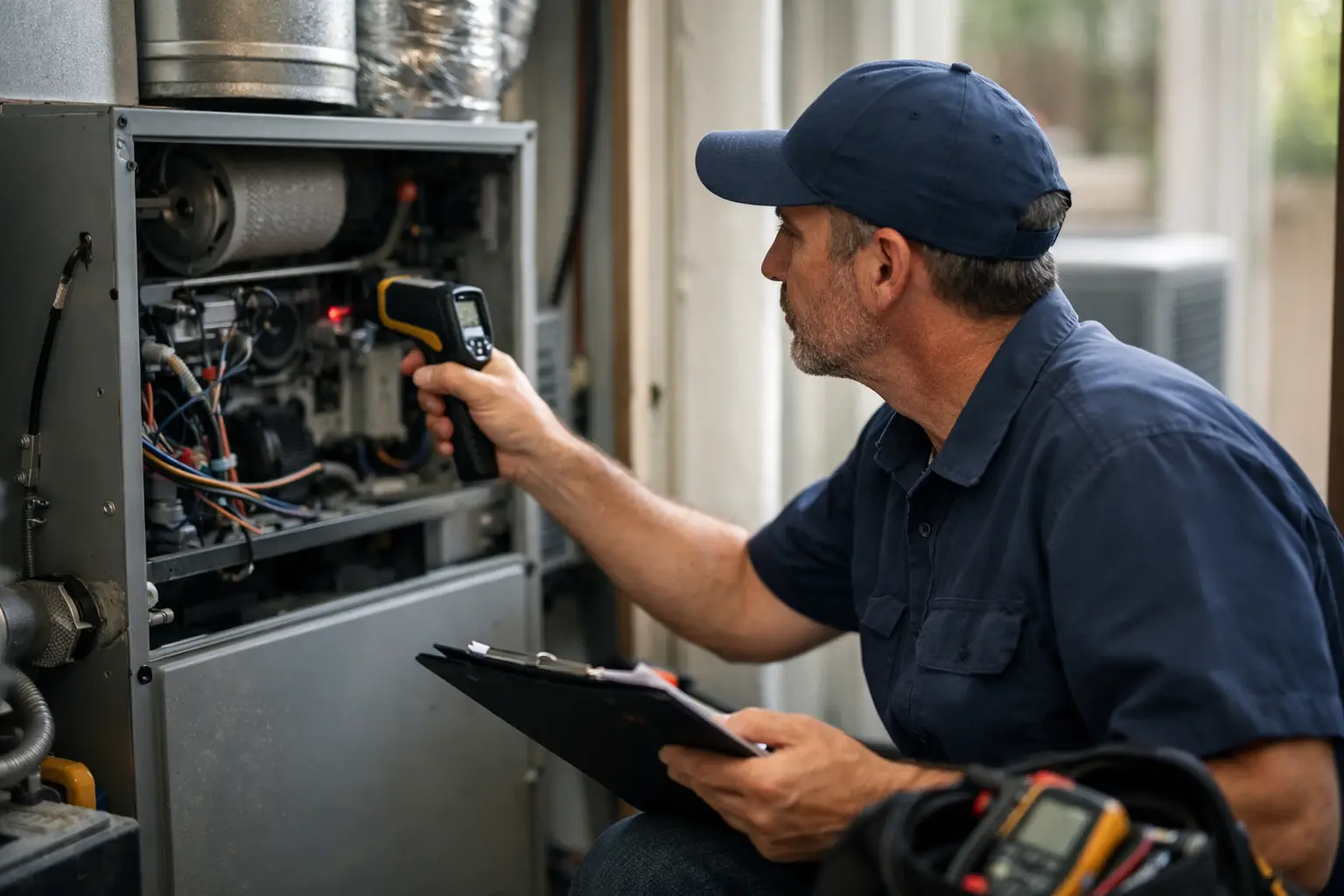
A professional home inspector typically operates accessible controls, observes the equipment, checks visible components, and reports material deficiencies or conditions that warrant further evaluation. The report may include photos, approximate equipment age, location, and clear notes about what was found.
There are limits. Inspectors do not disassemble sealed equipment, pressure-test refrigerant lines, calculate every duct’s design capacity, or predict exactly when a component will fail. They may not operate cooling equipment in unsuitable weather conditions because doing so can damage the system. A system can also pass a basic operational test and still fail later due to an internal component that showed no visible symptom.
That limitation is not a reason to ignore HVAC findings. It is a reason to use them correctly. Think of the inspection as an informed risk assessment. When warning signs appear, the right next step is usually a detailed HVAC evaluation before closing, not an assumption that the seller’s system is fine because it turned on once.
How Buyers Should Respond to HVAC Findings
Start by separating immediate defects from future planning. A non-operational air conditioner, active condensate leak, exposed wiring, or unsafe furnace venting needs prompt attention. An older but functional system may call for a reserve fund and a thoughtful conversation about price rather than a demand for automatic replacement.
When the report recommends further evaluation, schedule it quickly. Ask the HVAC contractor for a written assessment that distinguishes safety repairs, necessary repairs, recommended maintenance, and replacement considerations. Request estimates for the specific issues identified, not just a broad statement that the system is old.
Your real estate agent can help structure a repair request or credit discussion, but the decision should reflect the home’s price, competing offers, and your tolerance for near-term expenses. In a competitive market, a seller may not agree to replace an older operating system. A credit can be more practical if you want control over the contractor and equipment choice after closing. On the other hand, a system that cannot cool, has documented leaks, or has safety defects should not be treated as ordinary wear and tear.
Keep the inspection report, HVAC contractor findings, photos, and estimates together. Clear documentation makes negotiations more productive and gives you a useful starting point for maintenance after you own the home.
Protect Your Comfort Before Closing
The best time to learn about a struggling air conditioner is before it becomes your repair bill. A detailed inspection from CK Inspections can help bring visible HVAC concerns into focus, with organized findings and photos that make the next steps easier to understand.
Do not buy blind when the home’s comfort system shows signs of trouble. Ask questions, obtain the right specialist evaluation when needed, and make your closing decision with a realistic view of both the home’s condition and the costs you may inherit.