A roof can look perfectly acceptable from the driveway and still conceal a leak, failing flashing, storm damage, or years of deferred maintenance. For a Houston-area homebuyer, a professional roof inspection is not just a quick look at shingles. It is a practical way to identify potential repair costs before you take ownership of the home.
Roof problems can be expensive because water rarely stays where it starts. A small opening near a roof penetration may allow moisture into the attic, insulation, ceiling finishes, framing, or electrical components. By the time a stain appears inside, the condition may have been present for much longer. Don’t buy blind when one of the home’s most important protective systems deserves a close evaluation.
Why a Roof Inspection Matters Before Closing
In Greater Houston, Cypress, Katy, and nearby communities, roofs face demanding conditions. Intense heat, high humidity, wind-driven rain, hail, tropical weather, and sudden temperature changes all place stress on roofing materials and the components that keep water out.
A roof nearing the end of its expected service life is not always a reason to walk away from a property. It may be a reasonable purchase if the price, repair negotiation, insurance considerations, and your future budget all account for it. The problem is learning about a major roofing concern after closing, when the decision and the expense are entirely yours.
A home inspection helps put the roof in context with the rest of the house. If roof wear is accompanied by attic moisture, damaged ceiling materials, poor ventilation, or visible signs of prior repairs, the concern may be more significant than a few aging shingles. Clear findings and photos give buyers a foundation for asking informed questions, requesting repairs, or planning future maintenance.
What a Professional Roof Inspection Evaluates
A home inspector evaluates readily accessible, visible roofing components. The goal is to identify material defects, signs of active or past water intrusion, installation concerns, and conditions that may affect the roof’s performance or remaining service life.
Roofing Materials and Surface Conditions
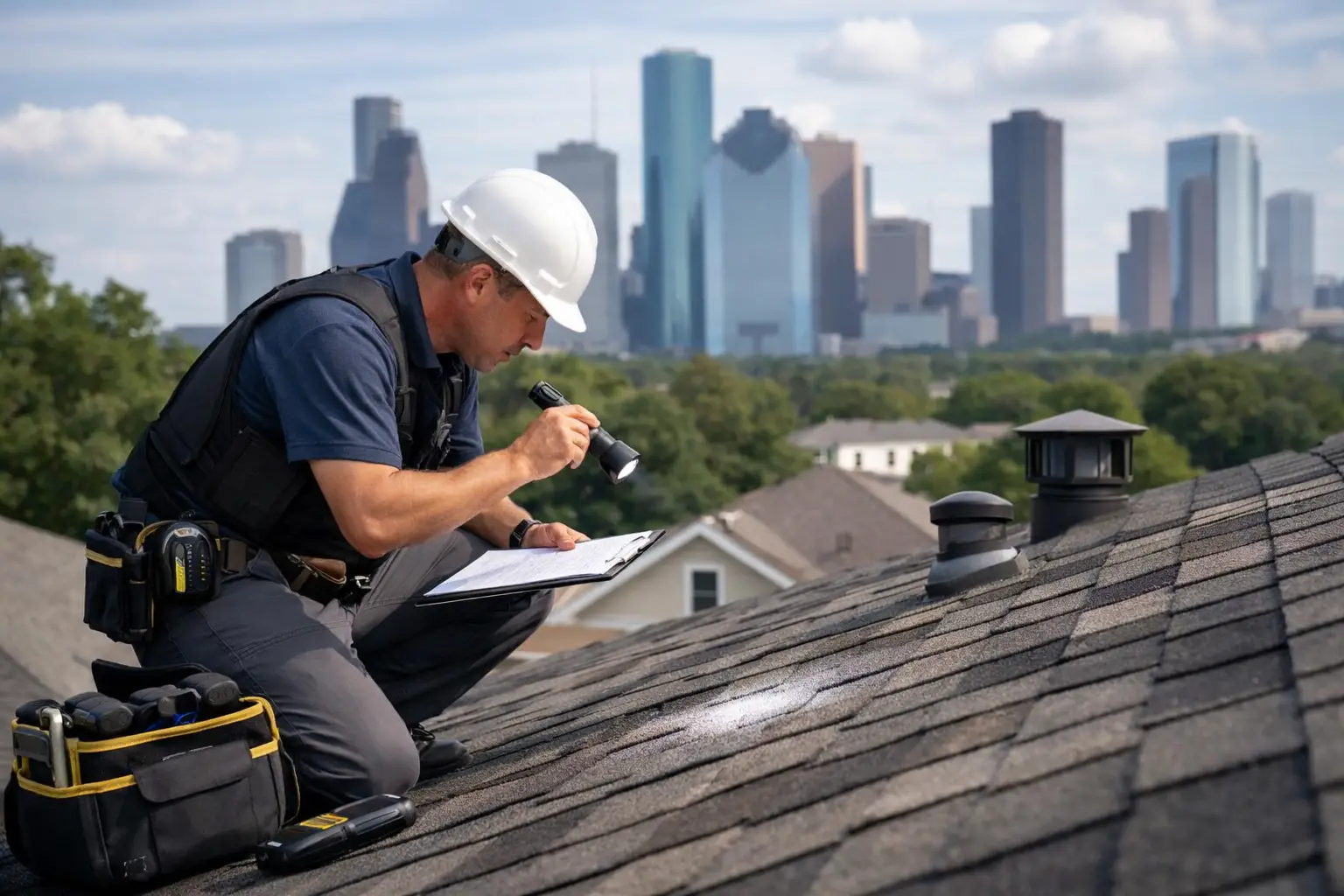
The inspection begins with the roof covering itself. Depending on the home, this may include asphalt shingles, tile, metal, or another material. The inspector looks for conditions such as missing, damaged, curling, loose, worn, or deteriorated materials.
Granule loss on asphalt shingles can be especially relevant in Texas. Granules help protect the shingle from ultraviolet exposure, and widespread loss can indicate aging or weathering. A few isolated imperfections may be manageable. Broad deterioration across multiple roof slopes may point to a roof that needs more immediate attention.
Flashing, Penetrations, and Drainage Details
Many roof leaks occur at transitions rather than in the middle of a shingle field. Flashing around chimneys, vents, skylights, wall intersections, and plumbing penetrations must direct water away from vulnerable openings. Damaged, improperly installed, corroded, or missing flashing can create a pathway for water intrusion.
Inspectors also evaluate visible drainage components, including gutters, downspouts, and roof edges when present and accessible. Gutters do not make a roof watertight, but poor drainage can contribute to moisture problems around the foundation, siding, fascia, and landscaping. Water should be directed away from the home rather than allowed to collect near it.
Attic Evidence and Ventilation
The attic often tells an important part of the roof’s story. An inspector may find staining, damp sheathing, active moisture, rusted fasteners, microbial-like growth, daylight visible through openings, or damaged framing. These conditions can support a concern identified at the roof surface or reveal a problem that is not obvious from outside.
Ventilation matters as well. Inadequate attic ventilation can contribute to excessive heat and moisture buildup, which may shorten roofing material life and affect comfort and energy use. Ventilation concerns are not always simple to correct, particularly on older homes or complex roof designs, but they should be understood before closing.
Can an Inspector Walk Every Roof?
Not every roof can be safely walked, and a careful inspector should never take unnecessary risks. Steep slopes, wet materials, fragile coverings, excessive height, or unsafe access conditions may limit a direct roof-surface inspection. In those cases, the inspector may evaluate the roof from the ground, ladder, accessible edges, attic, or other appropriate vantage points.
This is not a lesser standard of care. It is a safety and property-protection decision. A roof evaluation is visual and noninvasive, meaning inspectors do not remove shingles, dismantle flashing, or intentionally damage materials to search for hidden conditions. When visible evidence suggests a concern, a qualified roofing contractor may be recommended for further evaluation, repair pricing, or a more specialized assessment.
Common Roof Issues Homebuyers Should Take Seriously
Not every noted condition carries the same level of urgency. A few cracked sealant areas may be a maintenance item, while active moisture in the attic requires prompt attention. The report should help distinguish between routine upkeep and conditions that may affect your negotiation, insurance, or move-in plans.
Buyers should pay close attention when an inspection identifies several related conditions, including:
- Missing, lifted, cracked, or extensively worn roofing materials
- Damaged flashing around vents, chimneys, walls, or skylights
- Signs of active leaks or moisture intrusion in the attic or interior
- Sagging roof decking, damaged framing, or visible structural concerns
- A roof covering near the end of its service life
- Evidence of patching or repairs that should be reviewed by a roofer
A single defect does not automatically mean the roof must be replaced. The age of the roof, the extent of the issue, material type, weather exposure, and repair history all matter. Still, buyers should avoid minimizing a condition simply because no water is visible on the day of the inspection. Roof leaks can be intermittent and may only show themselves during heavy rain or wind-driven storms.
How Roof Findings Affect Your Purchase Decision
A detailed inspection report gives you useful information, but it does not tell you what to do with the home. That decision depends on your budget, timeline, risk tolerance, and the overall condition of the property.
If the roof has minor repair needs, you may decide to move forward with a maintenance plan. If the report identifies significant deterioration, obtain an opinion and estimate from a qualified roofing contractor during your option period whenever possible. This can help you understand whether a repair is likely to be limited or whether replacement should be considered.
For homes with older roofs, insurance is another factor worth addressing early. Some carriers consider roof age and condition when determining eligibility, coverage, or premiums. Waiting until just before closing to investigate these questions can create unnecessary pressure. A well-documented roof finding gives you time to discuss options with your agent, insurer, and contractors.
Real estate agents also benefit from clear, organized roof findings. Photos, descriptions, and repair-request tools can make it easier to communicate concerns without overstating them. The goal is not to create alarm. It is to make sure the buyer understands the home’s condition and can negotiate from a position of knowledge.
Questions to Ask When the Roof Is a Concern
When a report identifies roofing issues, focus on practical next steps. Ask whether the condition appears active or historic, whether moisture was found in the attic, and whether a roofing contractor should evaluate the concern further. If replacement is discussed, ask for the approximate age and material type of the existing roof, along with the scope of work included in any estimate.
It is also wise to ask whether related components need attention. A roof replacement may involve more than shingles. Flashing, drip edge, underlayment, decking repairs, ventilation improvements, gutters, and interior repairs can affect the final cost. Understanding the full picture helps prevent a low initial estimate from becoming a larger project later.
Protect Your Investment Before It Becomes Yours
A roof is easy to overlook when you are focused on the layout, finishes, and excitement of a new home. Yet it protects nearly every other component beneath it. CK Inspections helps Houston-area buyers see beyond curb appeal with clear findings, visual documentation, and practical guidance for the decisions ahead. Before your option period ends, make sure you understand what is above you as clearly as what is around you.