A garage door may look like a minor part of a home, but it is often the largest moving object on the property. During a garage door safety inspection, small warning signs can point to a door that is difficult to operate, unsafe around children, or heading toward an expensive repair. For Texas homebuyers, this is one more area where a careful inspection can help you avoid costly surprises after closing.
Many buyers focus on the roof, foundation, HVAC system, and electrical panel – and they should. But overlooking the garage door can mean missing damaged hardware, poor safety performance, water intrusion, or an opener that may fail when you need it most. A garage door is used repeatedly, carries significant weight, and depends on several parts working together correctly.
Why garage door safety matters in a home purchase
A typical sectional garage door can weigh well over 100 pounds. Springs, cables, rollers, tracks, hinges, and the automatic opener all help control that weight. When one component is worn, loose, damaged, or improperly adjusted, the door may bind, reverse unpredictably, or in more serious cases fall unexpectedly.
That does not mean every garage door concern is a deal-breaker. A worn roller or damaged weatherstripping may be a straightforward repair. A badly deteriorated door, compromised mounting, broken spring, or missing safety feature deserves more attention. The value of identifying these concerns before closing is having a clear picture of the home’s condition and a chance to plan, negotiate, or request repairs with supporting documentation.
Houston-area weather adds another consideration. High humidity, heavy rain, wind, and intense summer heat can accelerate corrosion, warp wood components, degrade seals, and expose weaknesses around the garage opening. A door that appears acceptable from the driveway may have performance or safety concerns visible only during closer evaluation.
What a garage door safety inspection looks for
A home inspection is a visual, non-invasive evaluation, not a full garage door service appointment. The inspector does not disassemble the opener or perform hazardous spring repairs. However, a professional inspection can identify many visible and operational conditions that warrant repair by a qualified garage door technician.
Door condition and operation
The inspection begins with the door itself. The panels should be reasonably intact and aligned, without major dents, rot, delamination, impact damage, or loose sections. An inspector also looks for gaps that may permit water, pests, or outside air into the garage.
The door should move in a controlled manner when operated. Jerking, loud grinding, scraping, sagging, or binding can indicate problems with rollers, tracks, hinges, springs, or the opener. A door that is visibly out of alignment is not simply a cosmetic issue. Continued use can place added strain on the system and increase the chance of failure.
Springs, cables, tracks, and hardware
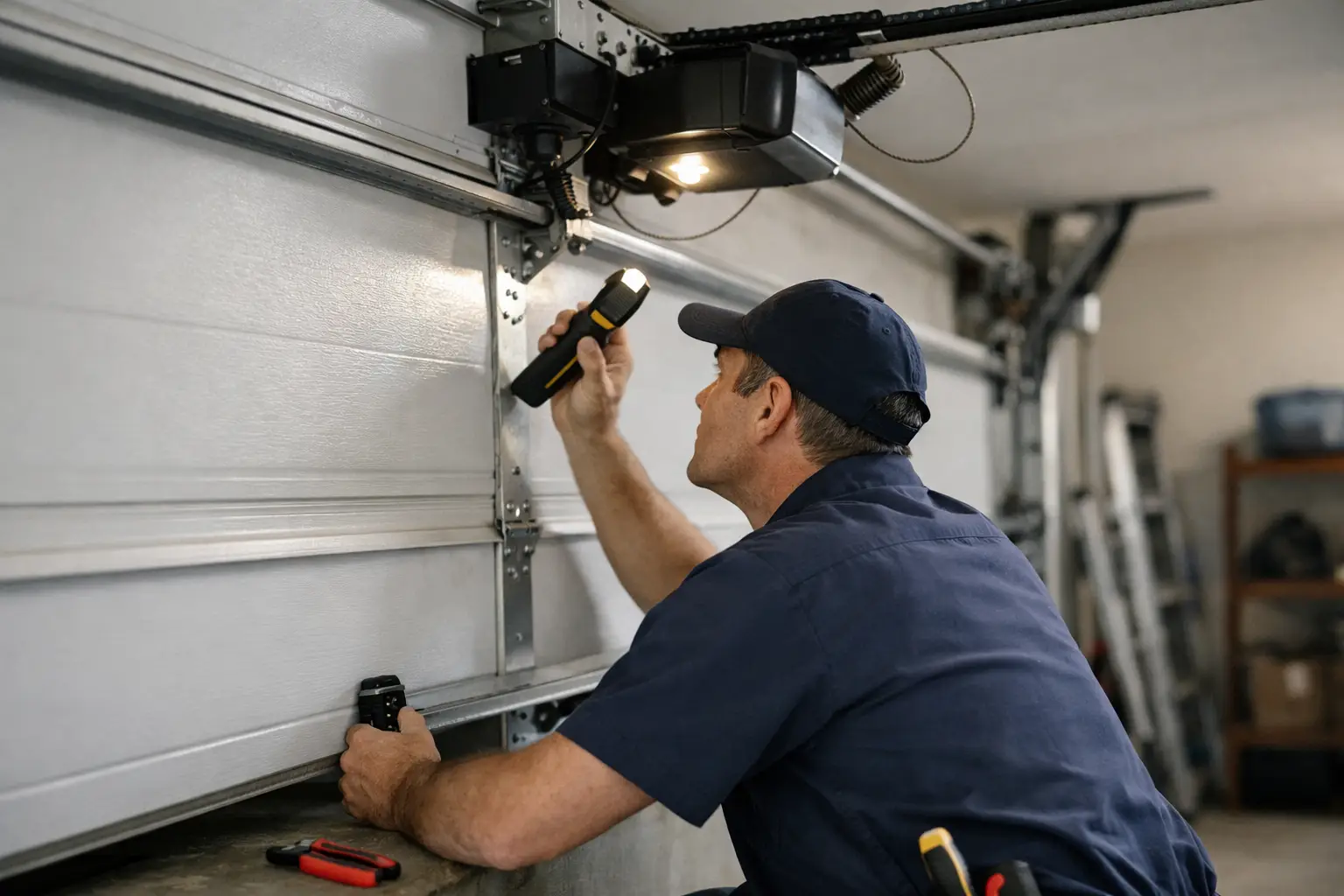
The counterbalance system is one of the most critical parts of a garage door. Springs help offset the door’s weight so the opener is not doing all the work. Cables, drums, brackets, and tracks guide and support movement.
Inspectors watch for visibly broken springs, frayed or loose cables, bent tracks, missing fasteners, damaged rollers, and loose mounting hardware. These components are under substantial tension. Buyers should never attempt to adjust springs, cables, or related hardware themselves. This is a job for an experienced garage door professional.
A door may still open with a damaged spring or weakened component, especially if the opener is forcing it along. That does not mean the system is operating safely. Excessive strain can shorten the life of the opener and create a more urgent repair situation later.
Automatic opener and safety reversal features
Modern automatic garage door openers are expected to have safety features designed to reduce injury and property damage. Two of the most important are the auto-reverse function and photo-eye sensors.
The auto-reverse feature should cause a closing door to reverse direction when it meets an obstruction. Photo-eye sensors are mounted near the bottom of the garage door tracks. They use an invisible beam to detect an object, person, or pet in the path of the door. When the beam is interrupted, the door should not continue closing normally.
An inspector may test these accessible safety features as part of a garage door safety inspection. Sensors that are misaligned, damaged, blocked, improperly mounted, or not functioning as intended should be corrected. This is especially important for households with children, pets, or frequent garage use.
The wall control should also be positioned at an appropriate height and away from the reach of small children. A functioning light, secure opener mounting, and an accessible manual release are additional details that contribute to safe everyday use.
Garage door connection to the home
The garage is not isolated from the rest of the property. Conditions at the garage door can affect moisture control, energy efficiency, security, and even air quality inside the home.
Inspectors look at weatherstripping, thresholds, visible gaps, and the condition of the surrounding trim. Damaged seals can let rainwater enter during a storm, while large openings may allow pests and humid outdoor air into the garage. In attached garages, an inspection also considers the door separating the garage from the home, including whether it appears to be appropriately fire-rated and self-closing where required or expected.
This distinction matters. The overhead garage door protects the vehicle and storage area from the exterior. The door between the garage and living space helps slow the movement of fire, fumes, and carbon monoxide into the home. Both deserve attention during a pre-purchase inspection.
Red flags buyers should not ignore
Some garage door findings are easy to postpone, but others should be addressed before regular use. Pay close attention when the door will not reverse during a safety test, the photo-eye sensors do not work, cables are damaged, springs are broken, tracks are bent, or the opener is pulling away from its mounting.
Visible water damage near the bottom of the door or at the garage framing is also worth investigating. It may be caused by poor grading, an inadequate threshold, deteriorated weatherstripping, or repeated wind-driven rain. The correct repair depends on the source, so replacing the seal alone may not solve the problem.
A garage door that lacks a remote control, keypad, or smart features is generally a convenience issue, not necessarily a safety defect. By contrast, a door that cannot be secured, does not close properly, or has an unreliable reversing function affects daily safety and security. A detailed inspection report helps separate routine maintenance from findings that deserve prompt professional attention.
Questions to ask after an inspection
When garage door issues appear in a report, ask practical questions. Is the concern a safety hazard, a maintenance item, or a sign of a larger problem? Does the door need adjustment, a component replacement, or full replacement? Is there evidence of water intrusion at the garage opening? Can the seller provide records for a recent repair or opener installation?
It is also reasonable to request evaluation by a qualified garage door contractor when there are defects involving springs, cables, opener safety functions, or structural mounting. A home inspector identifies visible concerns and documents them clearly; a specialty contractor can determine the precise repair method and cost.
For buyers negotiating a transaction, written findings and photos can make the conversation more focused. Instead of vaguely asking for the garage door to be fixed, you can identify the specific condition that needs attention. That creates a better path toward a repair request, credit, or informed decision about taking on the work after closing.
A small system with a big daily impact
The garage door may be opened and closed more often than any other exterior door in the home. That frequency makes its condition more than a cosmetic consideration. A safe, properly operating system supports security, protects the garage from weather, and reduces the risk of an abrupt failure after move-in.
CK Inspections evaluates accessible garage door conditions as part of a thorough home inspection, documenting visible concerns so buyers can move forward with clearer expectations. Before you commit to a property, make sure the systems you will use every day – including the garage door – receive the attention they deserve.