A fresh coat of paint can hide a ceiling stain. New flooring can cover a past leak. Even a home that looks clean and well cared for can have moisture where you cannot see it – behind a shower wall, beneath a window, inside an attic, or below a kitchen sink. So, can inspectors find hidden moisture? Often, yes. A qualified home inspector can identify warning signs and use specialized tools to investigate suspicious areas before you take on the cost and responsibility of the property.
For Houston-area buyers, this matters. Heavy rain, high humidity, aging plumbing, active HVAC systems, and storm-driven roof damage all create opportunities for unwanted water to enter or remain in a home. Finding that moisture before closing can help you avoid costly surprises and make repair requests based on documented conditions rather than guesswork.
Can Inspectors Find Hidden Moisture Without Opening Walls?
A standard home inspection is visual and non-invasive. That means an inspector does not cut into drywall, remove finished flooring, or dismantle cabinets simply to look for a possible issue. However, experienced inspectors are trained to recognize the clues moisture leaves behind and to use appropriate tools where conditions warrant further evaluation.
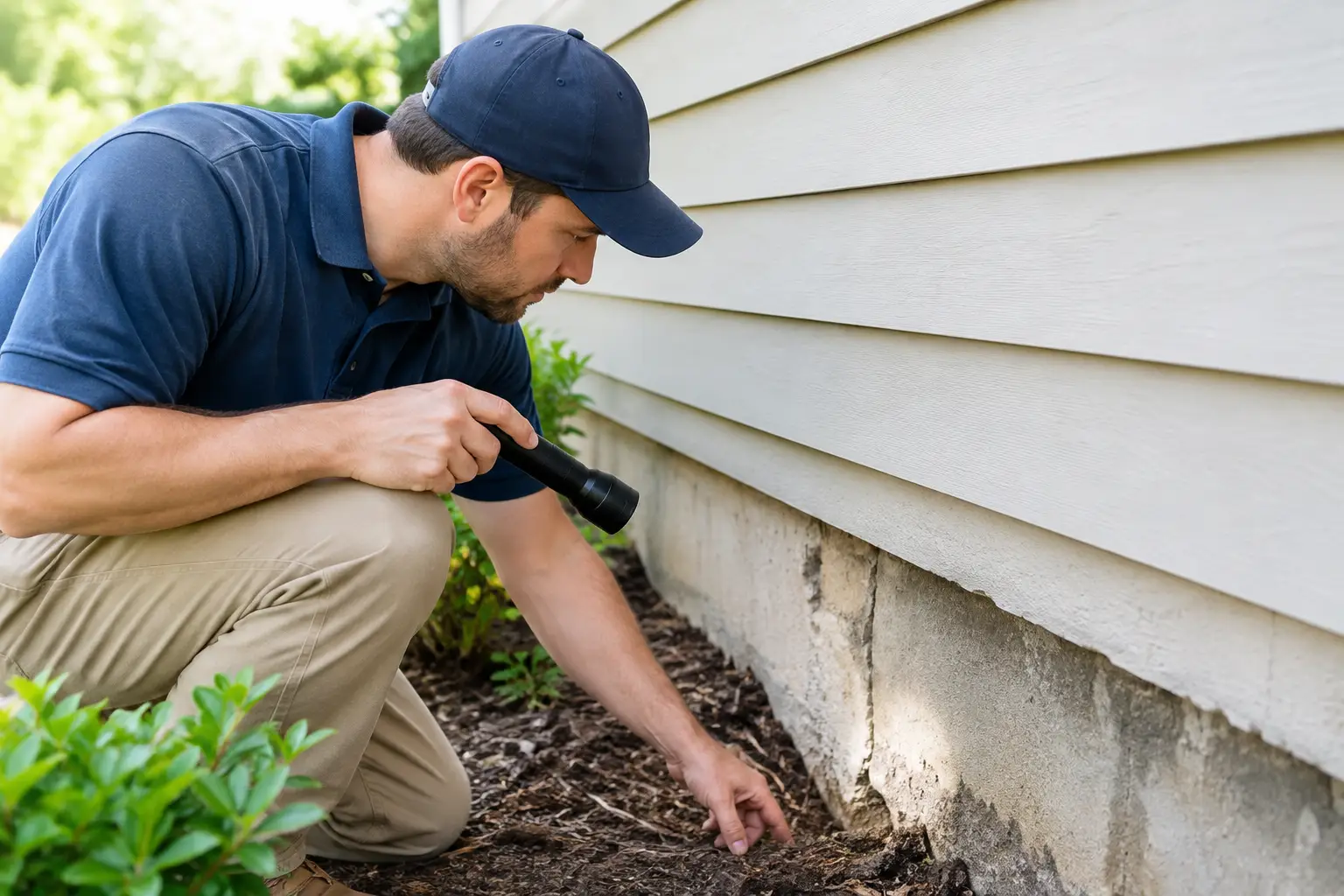
Those clues may be obvious, such as a brown ceiling mark or peeling paint. More often, they are subtle: a soft baseboard near a tub, swollen wood trim, a musty odor in a closet, rust at a water heater connection, warped flooring beside an exterior door, or a discolored area in the attic near a roof penetration.
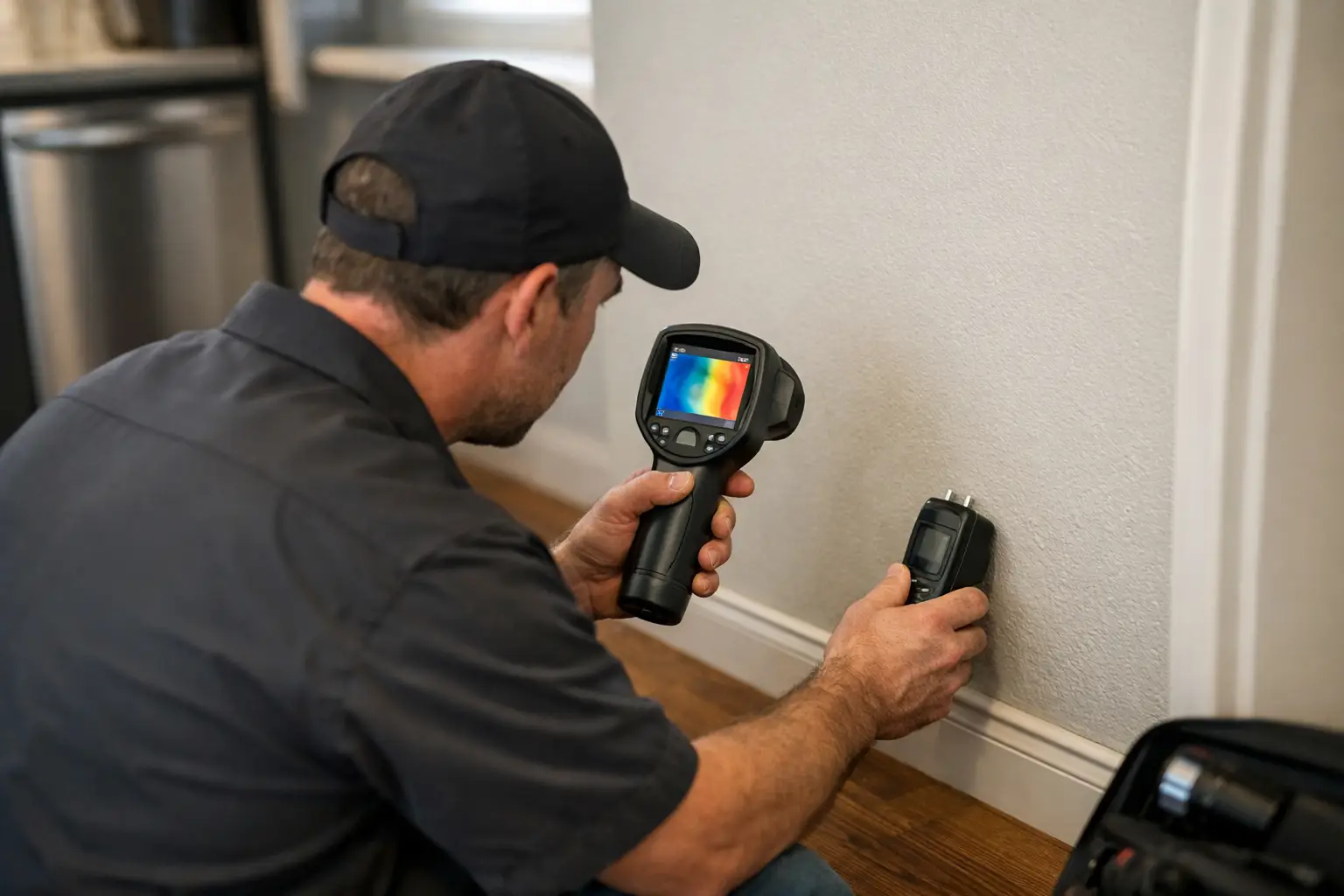
When these indicators appear, an inspector may use a moisture meter to check whether building materials contain elevated moisture. Thermal imaging can also help identify temperature differences that may be consistent with moisture intrusion, plumbing leaks, missing insulation, or air movement. A thermal image is not proof of a leak by itself, but it can direct the inspection toward areas that need closer attention.
The goal is not to make unsupported claims. It is to document visible evidence, test accessible areas when appropriate, explain the concern clearly, and recommend the next step when further evaluation or repair is needed.
Where Hidden Moisture Is Most Common
Water follows gravity, but the source is not always directly above the damage. A roof leak can travel along framing before it reaches a ceiling. A slow plumbing leak can remain inside a vanity cabinet or wall cavity for months. That is why a careful inspection considers both the symptom and the systems nearby.
Bathrooms and laundry areas
Bathrooms contain multiple water supply lines, drain connections, fixtures, shower surrounds, and exhaust requirements. A loose toilet, deteriorated caulk, failed shower enclosure seal, or slow drain leak can damage subflooring and adjacent walls without creating a dramatic puddle.
Laundry rooms deserve the same attention. Washer hoses, drain piping, laundry boxes, and appliance connections can leak intermittently. In homes with an upstairs laundry room, even a small issue can affect ceilings and walls below.
Kitchens and plumbing fixtures
Under-sink cabinets can conceal active drips, past leaks, and water-damaged materials. Dishwashers, refrigerator water lines, garbage disposals, and sink drains all deserve a close look. An inspector may operate accessible fixtures and check the surrounding area for moisture indicators, leaks, deterioration, or improper drainage.
Water heaters are another common source of concerns. Signs of corrosion, a leaking temperature and pressure relief valve discharge line, worn fittings, or pooling at the base should not be ignored. Even if the leak is minor today, it can point to an aging component or an installation issue that needs attention.
Roofs, attics, windows, and exterior walls
In Greater Houston, wind-driven rain can expose weaknesses around roof penetrations, flashing, chimneys, skylights, vents, and wall openings. An attic inspection can reveal stained sheathing, damp insulation, fungal-like growth, rusted fasteners, or active drip patterns that are not visible from the living space.
Windows and exterior doors may also allow water intrusion when flashing, sealant, drainage paths, or siding details fail. Staining or soft materials around an opening can indicate a current or historic problem. The exact source may require a roofing contractor, building envelope specialist, or other qualified professional to confirm, but identifying the evidence before closing gives you the opportunity to ask the right questions.
HVAC systems and condensation
Air conditioning works hard in Texas, and it produces condensation as it cools indoor air. Problems with a condensate drain, drain pan, insulation, or air handler can lead to water damage, especially around attic-mounted equipment or closet installations.
High indoor humidity can create its own concerns. Condensation on supply ducts, registers, windows, or cold surfaces may point to inadequate insulation, air leakage, drainage problems, or HVAC performance issues. These conditions do not always mean there is a hidden plumbing leak, but they still deserve a clear assessment because prolonged moisture can damage materials and contribute to mold-like growth.
What Moisture Meters and Thermal Imaging Can Tell You
Moisture meters measure the moisture content of certain materials or compare readings across an area. A higher-than-expected reading near a stain, plumbing fixture, exterior wall, or floor transition can support the concern that moisture is present or was recently present. Readings must be interpreted carefully because material type, density, salts, metal, and surface conditions can affect results.
Thermal imaging cameras display temperature patterns, not water itself. An area that appears cooler than the surrounding wall may be damp, but it may also reflect insulation differences, air leakage, shade, or a nearby HVAC duct. Used alongside a visual inspection and moisture readings, thermal imaging can be extremely useful for locating areas that warrant attention.
That distinction protects buyers from two mistakes: dismissing a concerning condition because it is not visible to the naked eye, and assuming that every unusual thermal pattern is a confirmed leak. Good inspection findings explain what was observed, why it matters, and what should happen next.
What an Inspection Cannot Guarantee
No inspection can see through every finished surface or predict every future leak. If an area is blocked by furniture, stored belongings, wall coverings, locked doors, insulation, or inaccessible crawlspace conditions, the inspection scope may be limited. A leak that is intermittent may not be active on inspection day, especially if the home has been vacant or the plumbing has not been used normally.
An inspector also does not perform destructive testing, mold sampling, leak detection inside underground piping, or comprehensive building-envelope testing as part of a typical pre-purchase inspection. Those services may be appropriate when evidence points to a larger concern. For example, repeated moisture readings around a shower may call for a licensed plumber or shower specialist, while attic staining with roof defects may call for a qualified roofing contractor.
This is not a reason to skip the inspection. It is a reason to use the findings wisely. A detailed report gives you documented observations, photographs, and recommendations you can use during the option period or while planning ownership costs.
How Buyers Should Respond to a Moisture Finding
First, do not let a vague reassurance such as “it has always been like that” replace a proper evaluation. Ask whether the moisture appears active, whether the likely source is known, what materials may be affected, and what professional should evaluate it further. If repairs were reportedly completed, request invoices, warranties, and any available documentation.
Second, consider the location and potential extent. A minor plumbing drip in an accessible cabinet may be straightforward to repair. Moisture below flooring, recurring roof leakage, a damaged shower assembly, or evidence of long-term water intrusion may involve concealed deterioration and a more significant budget. The concern is not just the visible stain. It is what may be behind it and whether the source has truly been corrected.
Finally, move quickly while your purchase timeline allows. CK Inspections provides organized reporting and visual documentation so buyers can understand the issue, discuss it with their agent, and pursue qualified evaluations when needed. That clarity can help you negotiate from facts rather than fear.
A home does not need to be perfect to be a sound purchase. It does need to be understood. When moisture concerns are found early, you have room to investigate, plan, and decide with greater confidence before the keys are in your hand.