
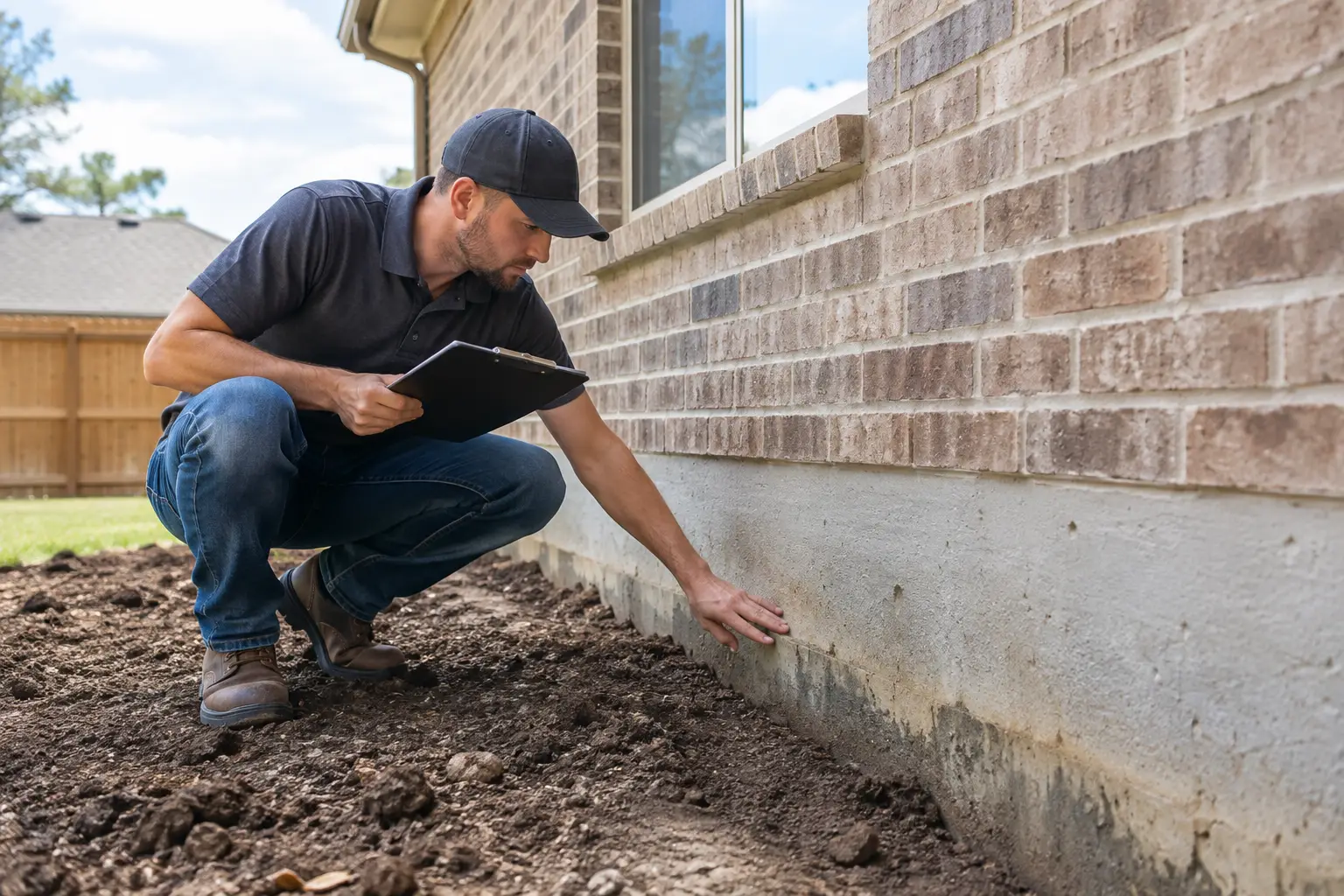
A hairline crack above a bedroom door may be a normal cosmetic imperfection. A door that suddenly will not latch, paired with widening brick cracks and a sloping floor, deserves a closer look. This Texas foundation movement guide helps homebuyers separate ordinary aging from signs that could affect a major purchase decision.
Foundation movement is common enough in Greater Houston that buyers should expect questions about it during an inspection. That does not mean every crack signals a failing foundation or that every home with movement should be avoided. It means the condition needs to be understood in context before you move forward, negotiate repairs, or accept a problem you did not budget for.
Why Texas Homes Experience Foundation Movement
Much of the Houston-area region sits on expansive clay soils. These soils change volume as their moisture content changes. During wet periods, clay can absorb water and expand. During prolonged dry weather, it can shrink and pull away from portions of a foundation. That uneven support can cause sections of a slab to rise or settle at different rates.
Water management plays a major role. Poor drainage, short downspouts, standing water near the home, leaking plumbing, and improperly graded landscaping can keep soil overly saturated around one area of the foundation. On the other hand, extended drought, large trees close to the home, and inconsistent watering can contribute to drying and shrinkage.
Construction details matter as well. A home may have an older slab, additions built at different times, roof drainage directed toward the structure, or site conditions that have changed since the house was built. Foundation movement is rarely explained by one visible crack alone. A careful evaluation looks for patterns across the structure and considers the conditions around it.
Texas Foundation Movement Guide: Signs Worth Watching
Homebuyers often first notice foundation concerns indoors. Doors may rub against their frames, fail to latch, or swing open on their own. Windows can become difficult to open or close. Floors may feel uneven, and cracks may appear at the corners of doors and windows, along ceilings, or where walls meet.
Outside, look for cracks in brick veneer, especially stepped cracks following mortar joints. Separation at trim, gaps around exterior doors or windows, cracks in a slab edge, and separations between an attached porch and the home can also provide useful clues. A crack that is wider at one end, has displaced edges, or appears alongside several other symptoms is generally more concerning than a single fine surface crack.
Still, no individual sign provides a complete diagnosis. Drywall can crack because of normal seasonal movement, framing shrinkage, previous repairs, or vibration. Brick veneer can develop minor cracking without proving that the structural foundation has a serious defect. The key is whether signs are isolated, recurring, expanding, or occurring together in a pattern that suggests differential movement.
Signs That Often Call for Further Evaluation
A home inspection should prompt a more specialized review when there is substantial evidence of movement, such as multiple interior and exterior cracks, notable floor elevation changes, visible displacement, or doors and windows that are significantly out of alignment. Previous foundation repairs, especially when documentation is limited, also deserve careful attention.
The goal is not to alarm a buyer. It is to identify when the available visual evidence exceeds what can responsibly be concluded during a standard home inspection. In those cases, a qualified structural engineer or foundation specialist may be the appropriate next step. Their evaluation can help determine the likely cause, significance, and recommended scope of repair, if repair is needed.
What a Home Inspection Can Tell You
A thorough pre-purchase inspection evaluates accessible, visible components of the home and documents observed conditions that may indicate movement. This commonly includes the foundation perimeter where visible, exterior cladding, brick veneer, windows, doors, interior walls and ceilings, floors, framing areas that are accessible, drainage conditions, and signs of past repair.
Just as important, the inspection puts findings into practical terms. Buyers need to know whether an observed crack appears minor and monitorable, whether it should be addressed through maintenance or drainage improvements, or whether it warrants an additional professional opinion before the option period ends.
A home inspection is not a structural engineering analysis, and it cannot predict precisely how a foundation will perform in every future season. No inspector can see through finished walls or verify conditions that are not accessible at the time of the inspection. But a detailed inspection can give you a clear picture of the visible evidence, the risks that deserve attention, and the right questions to ask before closing.
Do Not Overlook Drainage and Water Control
Foundation performance and water control are closely connected. During a home tour, buyers tend to focus on cracks, but the property’s drainage setup often explains why movement may continue or worsen.
Check whether the ground slopes away from the home, whether gutters and downspouts direct roof runoff away from the foundation, and whether water appears to pond near exterior walls. Look at hard surfaces too. Patios, walkways, and driveways that slope toward the house can direct substantial water to the foundation during heavy rain.
A leaking supply line or drain line can also affect soil conditions, though confirmation may require additional evaluation. If a property has a history of plumbing leaks, foundation repair, recurring interior cracks, or unexplained water-related damage, do not treat each issue as separate by default. Ask whether the available documentation shows a connection and whether the underlying condition was corrected.
How Buyers Should Review a Home With Movement History
A history of foundation repair is not automatically a reason to walk away. Many Texas homes have undergone repairs and continue to perform satisfactorily. What matters is the quality of the documentation, the scope of the repair, whether a transferable warranty exists, and whether current conditions suggest active or continuing movement.
Request records before the end of your inspection or option period. Useful documents include engineering reports, repair proposals and invoices, warranty terms, permits when applicable, drainage work records, and seller disclosures. Review the dates. A repair completed years ago with no evidence of continuing distress presents a different situation from a recent repair followed by new cracking or sticking doors.
Be cautious about assuming that a warranty resolves every concern. Warranties have terms, exclusions, transfer requirements, and limits. They may cover only a particular repair system, not cosmetic cracking, plumbing issues, drainage corrections, or future movement in another area of the structure. Read the paperwork rather than relying on a verbal assurance.
Questions to Ask Before You Commit
When foundation movement is noted, ask the seller whether cracks have changed over time, whether doors or windows have become harder to operate, and whether the home has had prior foundation or drainage work. Ask for photos, invoices, engineering opinions, and warranty information instead of accepting a general statement that the issue was “fixed.”
Your inspection findings should also guide the conversation with your real estate agent. Depending on the condition, you may request further evaluation, seek repairs or concessions, ask for documentation, or decide the uncertainty is greater than you are willing to accept. The right choice depends on your budget, risk tolerance, the age and price of the home, and the expert information available during the transaction.
For a first-time buyer, an unresolved structural question can be especially difficult because repair costs may compete with moving expenses and early homeownership needs. For a move-up buyer, a known issue may be manageable if the purchase price and repair plan reflect the risk. Either way, guessing is not a strategy.
Protect Your Purchase With Clear Information
Foundation movement can sound intimidating because the stakes are high, but clarity changes the decision. A careful inspection, complete repair records, and further evaluation when the visible evidence calls for it can replace assumptions with useful facts.
CK Inspections helps buyers understand what observed conditions may mean for the home they are considering, without burying them in technical language or minimizing legitimate concerns. Before you buy, make sure the condition of the home supports the confidence you need to move forward.